

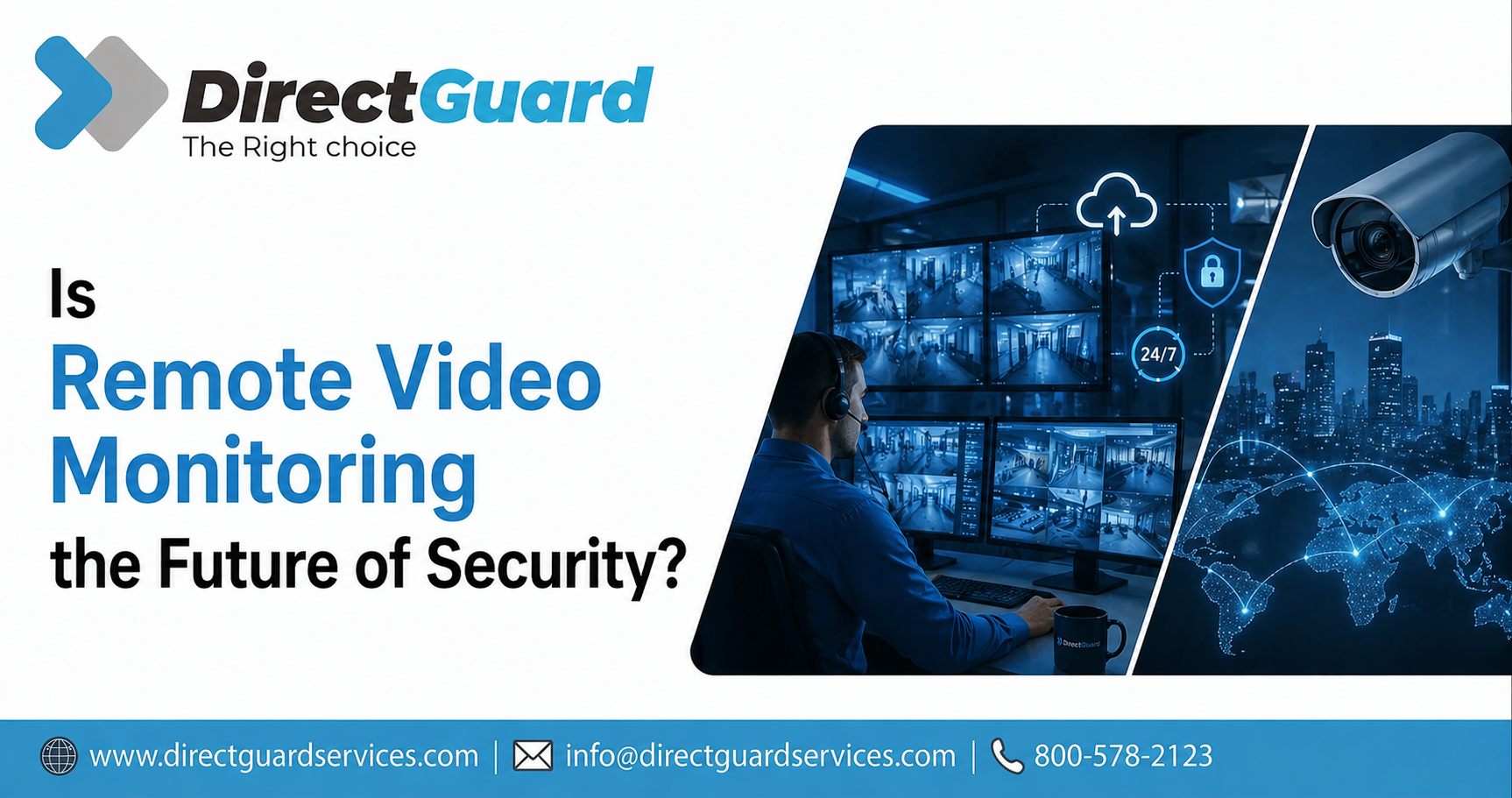
Security is evolving—and fast.
Not long ago, businesses relied almost entirely on on-site guards and basic CCTV systems. Today, a smarter, more efficient solution is taking over: remote video monitoring.
So the real question is:
Is remote video monitoring the future of security, or just another trend?
If you’re a business owner, property manager, or decision-maker, this isn’t just a theoretical question. It directly impacts your costs, safety, and operational efficiency.
In this guide, we’ll break down the reality behind the remote video monitoring future of security, including how it works, why it’s growing so fast, and whether it’s the right choice for you.
What Is Remote Video Monitoring?
Remote video monitoring is a security system where trained professionals monitor your property in real time using cameras, AI technology, and smart alerts.
Direct Answer:
Remote video monitoring uses live surveillance, AI detection, and remote guards to identify and respond to threats instantly without needing on-site personnel.
How Remote Video Monitoring Works (Step-by-Step)
Understanding how it works helps you see why it’s becoming the future of security.
1. Continuous Surveillance
Cameras monitor your property 24/7.
2. AI-Powered Detection
The system detects:
- Motion
- Unauthorized access
- Suspicious behavior
3. Instant Alerts
Alerts are triggered in real time.
4. Human Verification
A remote security professional reviews the situation.
5. Immediate Action
- Audio warning
- Alarm activation
- Police dispatch
This process ensures faster and more accurate responses than traditional methods.
Why Traditional Security Methods Are Changing
Security challenges today are different from those of the past.
Key Problems with Traditional Security
- High labor costs
- Limited coverage
- Human fatigue
- Delayed response
For example:
A guard patrolling a large warehouse may miss an incident happening on the other side of the property.
This is where remote monitoring provides a major advantage.
Key Benefits of Remote Video Monitoring (Deep Dive)
1. 24/7 Real-Time Protection
Unlike traditional guards, remote systems never stop monitoring.
Result: Zero gaps in surveillance
2. Faster Threat Detection
AI identifies suspicious activity instantly.
Example:
- Motion detected at 2 AM
- Alert triggered immediately
- Guard responds within seconds
This reduces response time dramatically.
3. Significant Cost Savings
Hiring multiple guards is expensive.
Remote monitoring reduces:
- Salaries
- Overtime
- Training costs
Businesses can save up to 60% on security expenses.
4. Crime Prevention (Not Just Detection)
Remote monitoring actively prevents crime.
How:
- Loudspeaker warnings
- Immediate intervention
- Visible camera presence
Most intruders leave before committing a crime.
5. Scalable Security Solution
You can monitor multiple locations from one system.
Ideal for:
- Retail chains
- Warehouses
- Construction companies
Data and Reporting
Remote systems provide:
- Video recordings
- Incident reports
- Analytics
Helps improve long-term security strategy.
How Remote Video Monitoring Prevents Crime
Many people think security is about reacting—but modern systems focus on prevention.
Step-by-Step Prevention Model
- Detect suspicious activity early
- Verify the threat
- Issue a real-time warning
- Escalate if needed
Real Example
An intruder enters a restricted area:
- The camera detects movement
- The guard speaks through the speaker
- The intruder leaves immediately
Result: No damage, no loss
Real-World Use Cases
1. Construction Sites
Construction sites are highly vulnerable after hours.
Remote monitoring helps:
- Prevent equipment theft
- Detect unauthorized access
2. Warehouses
Large spaces are difficult to patrol manually.
Remote monitoring:
- Covers all areas simultaneously
- Detects activity instantly
3. Retail Stores
Stores use remote monitoring for:
- After-hours security
- Theft prevention
4. Parking Lots
Parking areas are common targets for crime.
Remote systems:
- Monitor multiple entry points
- Deter suspicious activity
Cost Comparison: Remote Monitoring vs Traditional Security
Remote Monitoring
Direct Answer:
Remote video monitoring is significantly more cost-effective than traditional security due to lower labor and operational expenses.
Breakdown
Traditional Security Costs
- Salaries
- Overtime
- Benefits
- Training
Remote Monitoring Costs
- Equipment setup
- Monitoring service
Over time, remote monitoring is more scalable and affordable.
Limitations of Remote Video Monitoring
Direct Answer:
Remote monitoring depends on technology and cannot physically intervene in emergencies.
Key Limitations
- No physical presence
- Requires a stable internet
- Equipment setup is essential
This is why it may not fully replace guards in all situations.
Is Remote Video Monitoring Better Than Security Guards?
Direct Answer:
Remote monitoring is better for cost efficiency, continuous surveillance, and large properties, while security guards are better for physical response and human interaction.
The Future of the Security Industry
So, is remote video monitoring the future of security?
Short Answer:
Yes—remote monitoring is a major part of the future, but not the only solution.
Industry Trend
Businesses are moving toward:
- AI-powered monitoring
- Automation
- Hybrid security models
The future is technology-driven security combined with human response.
Hybrid Security: The Real Future
The most effective solution today is a combination of both.
How It Works
- Remote monitoring detects threats
- On-site guards respond when needed
Why It Works
- Reduces costs
- Improves efficiency
- Ensures full protection
How to Choose the Right Security Solution
Choose Remote Monitoring If:
- You need 24/7 coverage
- You want to reduce costs
- Your property is large
Choose Traditional Security If:
- You need physical presence
- Your environment is high-risk
Choose Hybrid If:
- You want maximum protection
- You need both monitoring and response
Final Verdict
So, is remote video monitoring the future of security?
Yes—but as part of a smarter, hybrid system.
- Remote monitoring = efficiency, speed, cost savings
- Traditional security = physical presence, human response
- Hybrid approach = the future of complete protection
Ready to upgrade your security?
Direct Guard Services offers advanced remote video monitoring solutions designed to protect your property 24/7 while reducing costs.
FAQs
1. Is remote video monitoring reliable?
Yes, it provides consistent, real-time surveillance with AI support, reducing human error.
2. Does remote monitoring reduce crime?
Yes, proactive detection and real-time intervention significantly lower crime rates.
3. How much does remote video monitoring cost?
It is generally more affordable than hiring multiple security guards.
4. Can remote monitoring call the police?
Yes, monitoring teams can immediately alert law enforcement.
5. Is remote monitoring suitable for small businesses?
Yes, it is scalable and cost-effective for businesses of all sizes.