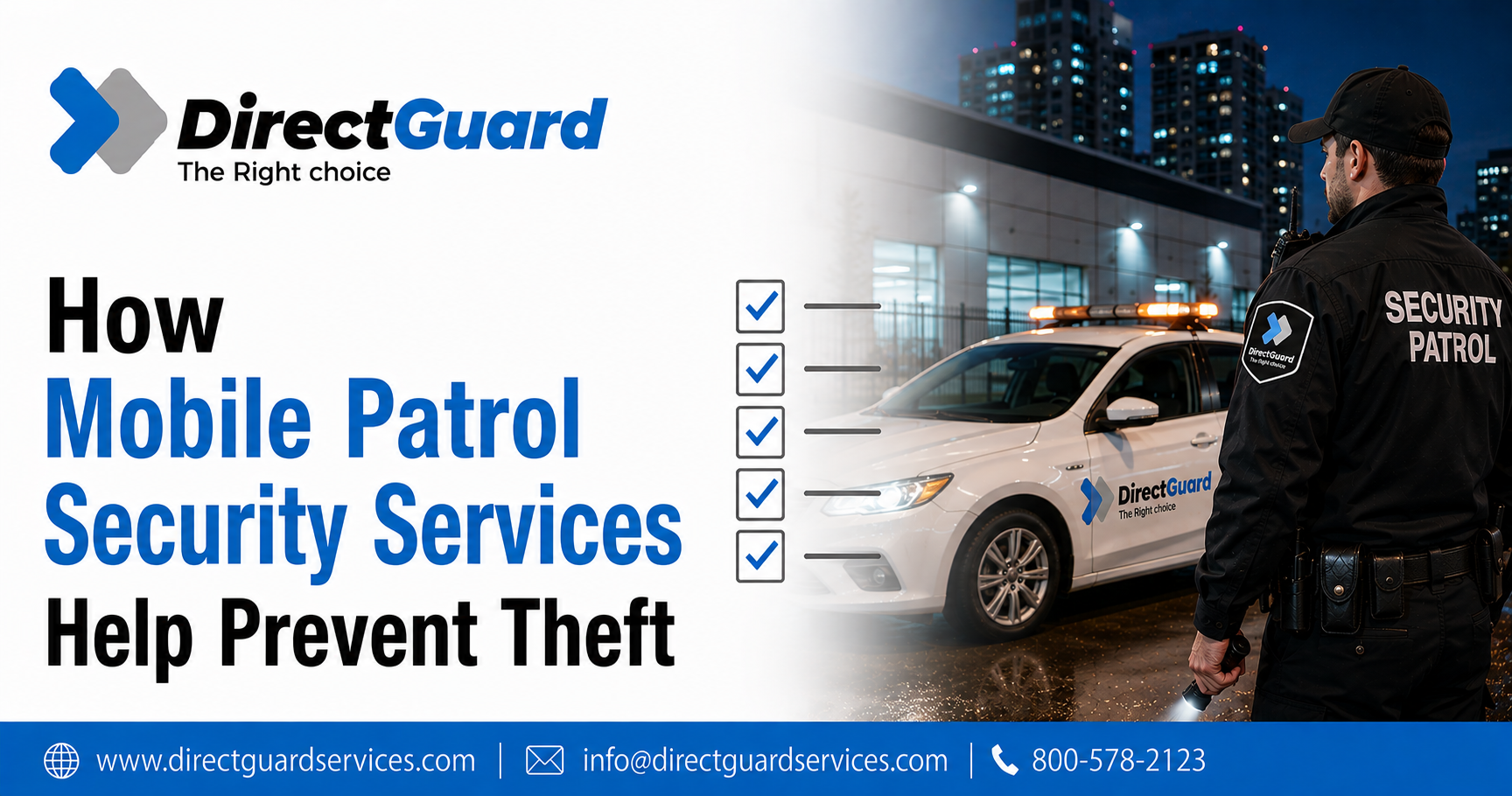
How Mobile Patrol Security Services Help Prevent Theft

Theft is a serious concern for businesses, construction sites, warehouses, commercial properties, and vacant buildings. Even when a property has locks, cameras, alarms, and other security measures, criminals may still look for opportunities to enter when a site is unattended.

Mobile patrol security services provide an additional layer of protection by placing trained security personnel on the property at scheduled or random intervals. Unlike a permanently stationed guard, a mobile patrol officer travels between locations in a marked or designated security vehicle, inspecting the property and responding to potential security concerns.

In this guide, we’ll explain how mobile patrol services can help prevent theft, what patrol officers typically do, and why businesses may choose mobile security patrols as part of their overall security strategy.

What Are Mobile Patrol Security Services?

Mobile patrol security is a security service in which trained officers use vehicles to visit and inspect one or more properties.

Patrols can be scheduled at specific times or conducted randomly, depending on the security plan. Random patrols can make it more difficult for potential offenders to predict when security personnel will arrive.

During a patrol, officers may inspect:

  • Building entrances
  • Gates and fences
  • Parking areas
  • Loading zones
  • Storage areas
  • Construction equipment
  • Windows and doors
  • Exterior lighting
  • Other vulnerable areas

If an officer identifies something unusual, they can follow the property’s established security procedures, document the issue, and notify the appropriate contacts or emergency services when necessary.

How Mobile Patrol Services Help Prevent Theft

1. A Visible Security Presence Deters Criminal Activity

One of the biggest advantages of mobile patrol security is visibility.

A marked security vehicle regularly entering a property can signal that the location is actively monitored. Potential thieves may be less likely to target a property when they know security personnel could arrive unexpectedly.

This deterrent effect is particularly useful for locations that are difficult to staff continuously.

2. Random Patrols Make Security Less Predictable

Scheduled patrols have advantages, but random patrols can provide an additional layer of unpredictability.

If someone knows that a security officer visits a property at exactly 10:00 p.m. every night, they may attempt to take advantage of the periods between visits.

Randomized patrol schedules make it harder to predict when an officer will arrive.

Patrol frequency can be customized according to the property’s risk level, operating hours, and security requirements.

3. Officers Can Identify Signs of Unauthorized Access

During a patrol, officers can look for indications that someone may have attempted to enter the property.

This can include:

  • Damaged fences
  • Open gates
  • Broken locks
  • Forced doors
  • Damaged windows
  • Suspicious vehicles
  • Unusual activity
  • Missing equipment

Identifying these warning signs early can allow property owners or managers to address vulnerabilities before a larger theft occurs.

4. Mobile Patrols Can Cover Large Properties

Some properties are too large or have too many locations to justify keeping a security guard at every point.

A mobile patrol officer can travel around a large site and inspect multiple areas during a single patrol.

This can be particularly useful for:

  • Construction sites
  • Industrial facilities
  • Warehouses
  • Commercial properties
  • Parking lots
  • Storage facilities
  • Vacant buildings
  • Property management portfolios

The patrol route can be designed around the areas that require the most attention.

Mobile Patrols for Construction Sites

Construction sites can be especially vulnerable to theft because they may contain expensive machinery, tools, building materials, fuel, and equipment.

Mobile patrol security services can provide after-hours inspections when construction crews have left the site.

Patrol officers may check:

  • Equipment and machinery
  • Storage containers
  • Perimeter fencing
  • Gates
  • Material storage areas
  • Temporary buildings
  • Vehicles
  • Lighting
  • Access points

Regular patrols can discourage trespassing and help identify security problems before they result in significant losses.

Mobile Patrols for Warehouses and Commercial Properties

Warehouses and commercial facilities may hold valuable inventory, electronics, machinery, or other assets.

After-hours patrols can provide an additional security layer when employees are not present.

Officers can inspect exterior areas, check access points, observe suspicious activity, and document anything that requires attention.

For businesses operating across multiple locations, mobile patrol services can also provide a practical way to maintain a security presence across several properties.

5. Faster Response to Security Concerns

Mobile patrol officers are already moving between properties, which can allow them to respond to certain security concerns when they are nearby.

For example, if an alarm is triggered or a property manager reports suspicious activity, a patrol officer may be dispatched to investigate the location according to the company’s procedures.

The officer can assess the situation, secure the area when appropriate, contact emergency services if necessary, and provide an incident report.

Response capabilities vary by provider and location, so businesses should confirm the response procedures before hiring a patrol company.

6. Security Checks Can Identify Vulnerabilities

Theft prevention isn’t only about catching criminals. It is also about identifying weaknesses that make a property easier to target.

During routine patrols, security officers may notice issues such as:

  • Unlocked doors
  • Poor exterior lighting
  • Open gates
  • Damaged fencing
  • Unsecured equipment
  • Blocked access points
  • Broken security cameras

Reporting these issues allows property managers to make improvements that can reduce future security risks.

7. Detailed Patrol Reports Improve Accountability

Professional security patrol services often include documentation of patrol activities.

A patrol report may record:

  • Date and time of the visit
  • Areas inspected
  • Security issues discovered
  • Suspicious activity
  • Access-point conditions
  • Actions taken
  • Notifications made

Depending on the security company, reports may be completed electronically and may include photographs or other supporting information.

This documentation gives property owners greater visibility into what happened during each patrol.

Mobile Patrol Security vs. Stationary Security Guards

Both mobile patrols and stationary guards can provide valuable protection, but they serve different purposes.

A stationary security guard remains at a specific location for the duration of their shift. This can be useful when a property needs continuous monitoring at an entrance, lobby, checkpoint, or other critical location.

A mobile patrol officer travels around the property or between multiple properties, conducting inspections and responding to security concerns.

Some businesses may benefit from using both services together.

For example, a large commercial property could have a stationary guard at the main entrance while a mobile patrol officer periodically checks the parking areas and perimeter.

Are Mobile Patrol Services Cost-Effective?

For some businesses, mobile patrol services can be a cost-effective alternative or supplement to full-time on-site security.

Instead of assigning a dedicated guard to a property throughout the night, a business can schedule regular patrol visits based on its security needs.

The actual cost depends on factors such as:

  • Patrol frequency
  • Property size
  • Number of locations
  • Travel distance
  • Risk level
  • Required response services
  • Patrol hours
  • Additional security requirements

The best option depends on the property’s specific risks rather than simply choosing the lowest-cost service.

How to Choose a Mobile Patrol Security Company

Before hiring a mobile patrol security company, evaluate several important factors.

Experience

Ask whether the provider has experience protecting properties similar to yours.

Patrol Frequency

Find out how often officers will visit your property and whether patrol times can be randomized.

Vehicle Visibility

A clearly identifiable security vehicle can strengthen the deterrent effect of mobile patrols.

Reporting

Ask what type of patrol reports you will receive and how quickly incidents are communicated.

Response Procedures

Understand how the company handles alarms, suspicious activity, property damage, and emergencies.

Licensing and Training

Verify that the security company and its personnel meet applicable licensing and training requirements.

Technology

Some providers use electronic patrol verification, GPS tracking, mobile reporting, photographs, and other technologies to improve accountability.

How Often Should a Property Be Patrolled?

There is no single patrol schedule that works for every property.

A low-risk commercial property may require fewer visits, while a construction site with expensive equipment may require more frequent checks.

Your security provider should consider:

  • Property size
  • Crime risk
  • Previous incidents
  • Operating hours
  • Asset value
  • Number of access points
  • Lighting and fencing
  • Existing security systems

Randomized patrols can also be incorporated into the schedule to make security activity less predictable.

Can Mobile Patrols Replace Other Security Measures?

Mobile patrols are most effective when they are part of a broader security strategy.

They can work alongside:

  • CCTV cameras
  • Alarm systems
  • Access control
  • Security lighting
  • Fencing
  • Locks and gates
  • On-site security guards

No single security measure can guarantee that theft will never occur. However, combining physical security, technology, monitoring, and professional patrols can create multiple barriers against unauthorized activity.

Frequently Asked Questions About Mobile Patrol Security

Do mobile patrol services prevent theft?

Mobile patrols cannot guarantee that theft will never occur, but visible and unpredictable security patrols can deter potential offenders, identify vulnerabilities, and provide a response to suspicious activity.

Are mobile patrols useful for construction sites?

Yes. Construction sites often contain valuable equipment and materials and may be unattended overnight. Regular patrols can help deter trespassing, theft, and vandalism.

Can mobile patrol officers respond to alarms?

Many security companies offer alarm response as part of their mobile patrol services. However, the exact response process varies by provider, so businesses should confirm the service details before signing a contract.

Are mobile patrols cheaper than stationary security guards?

They can be, depending on the property’s requirements. Mobile patrols may provide periodic security checks without requiring a dedicated guard to remain on-site for an entire shift.

Can patrol times be randomized?

Many security providers can incorporate randomized patrol schedules. This can make security activity less predictable and potentially strengthen its deterrent effect.

Final Thoughts

Mobile patrol security services can provide businesses and property owners with a flexible way to improve security and reduce opportunities for theft.

By maintaining a visible security presence, conducting regular or random inspections, identifying vulnerabilities, documenting incidents, and responding to security concerns, mobile patrol officers can become an important part of a property’s overall security strategy.

For businesses with large properties, multiple locations, construction sites, warehouses, or vacant buildings, mobile patrol services can provide an effective layer of protection without necessarily requiring a permanently stationed guard.

The key is to choose a reputable security provider and develop a patrol plan based on the property’s actual risks, operating schedule, and security requirements.
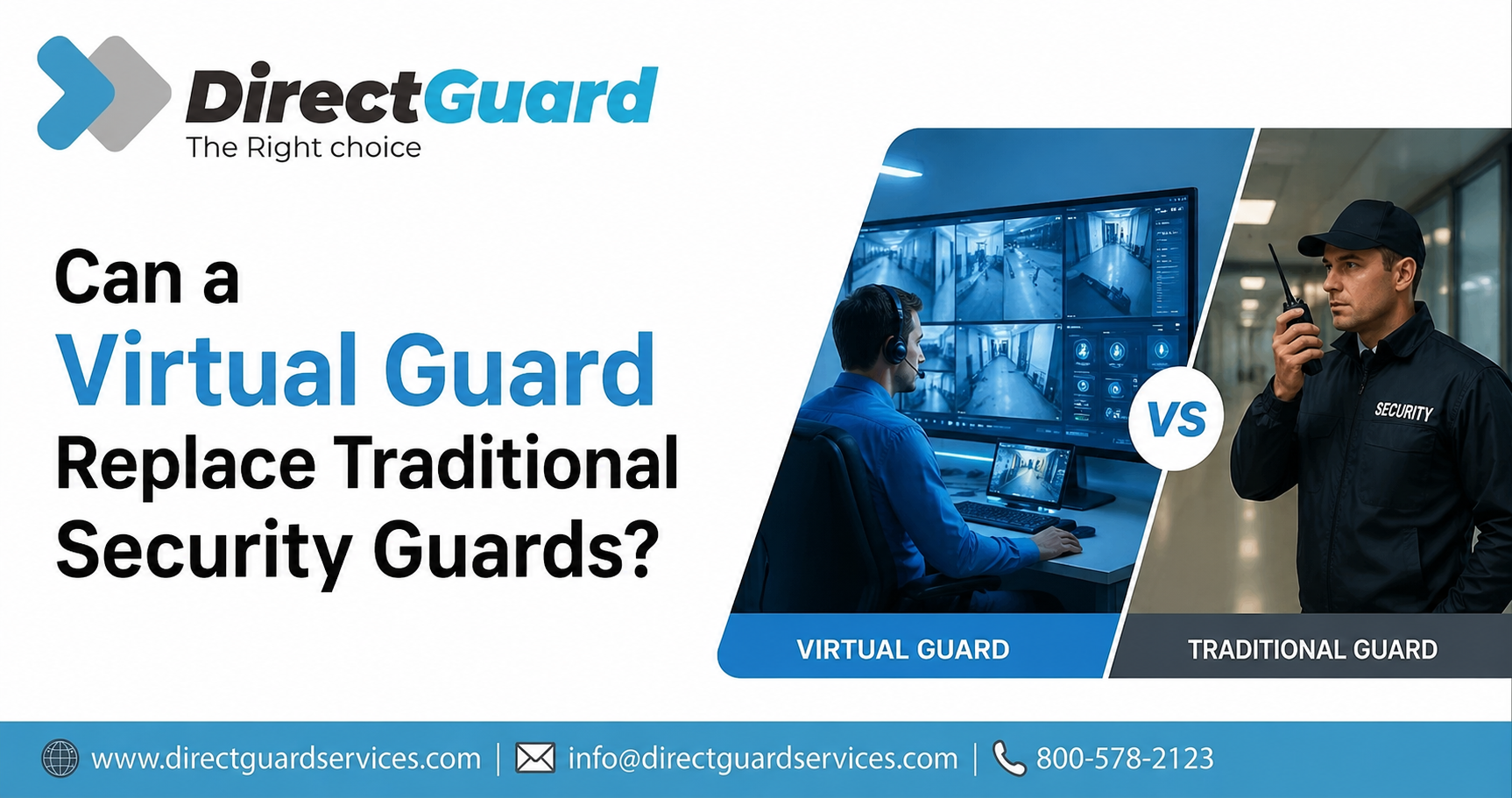
Can a Virtual Guard Replace Traditional Security Guards?

Quick Answer

Hiring security today isn’t as simple as it used to be.

On one hand, traditional guards offer a physical presence. On the other hand, virtual guards promise 24/7 monitoring, faster detection, and lower costs. So naturally, businesses are asking:
Can a virtual guard actually replace traditional security guards?

This isn’t just a trend-driven question—it’s a business-critical decision that affects safety, costs, and operational efficiency.

In this guide, we’ll break down the virtual guard vs traditional security guards debate in depth—covering not just features, but real-world performance, risks, and the smartest way to secure your property.

What Is a Virtual Guard?

A virtual guard is a remote security professional supported by advanced surveillance technology to monitor and protect properties in real time.

How Virtual Guards Work in Practice

Virtual guarding is not just “watching cameras.” It’s an active, layered system:

  1. Smart cameras monitor your property 24/7
  2. AI detects unusual activity (movement, loitering, intrusion)
  3. Alerts are triggered instantly
  4. A trained remote guard verifies the threat
  5. Action is taken (audio warning, alarm, or police dispatch)

Why This Matters

Unlike passive CCTV systems, virtual guards actively intervene, which significantly reduces crime before it escalates.

What Are Traditional Security Guards?

Traditional security guards are physically present personnel responsible for protecting a location through observation and direct action.

Direct Answer:

Traditional guards provide on-site security by patrolling, monitoring activity, and physically responding to incidents.

How They Operate Daily

  • Conduct patrols across the property
  • Monitor entry and exit points
  • Respond to suspicious activity
  • Assist employees or visitors

Why They Are Still Important

Their physical presence creates an immediate sense of control and authority—something technology alone cannot fully replicate.

Virtual Guard vs Traditional Security Guards: Key Differences Explained

FeatureVirtual GuardTraditional Guard
Monitoring24/7 nonstopShift-based
CoverageMultiple locationsOne location
CostLowerHigher
Response SpeedInstant alertsDepends on proximity
Physical ActionNoYes
AccuracyAI-assistedHuman-dependent

How Virtual Guards Actually Prevent Crime

Many people assume virtual guards only “watch” incidents—but in reality, they prevent them.

Step-by-Step Crime Prevention

  • Detection: AI identifies suspicious behavior early
  • Verification: A remote guard confirms the threat
  • Intervention: Loudspeaker warnings are issued
  • Escalation: Authorities are contacted if needed

Real Impact

For example, if someone enters a restricted area at night:

  • A loud voice warns them immediately
  • Most intruders leave before committing a crime

This proactive approach often stops incidents before damage occurs.

Advantages of Virtual Guards (Deep Dive)

1. True 24/7 Monitoring Without Human Limitations

Traditional guards work in shifts and can experience fatigue. Virtual guards operate continuously without breaks.

Result: No blind spots in surveillance

2. Major Cost Savings Over Time

Hiring multiple guards for round-the-clock coverage is expensive.

Example:

  • 3 shifts per day = multiple guards
  • Salaries + overtime + benefits

Virtual systems eliminate most of these costs.

Businesses often save 40–60% annually

3. Faster Detection and Response

AI systems don’t “miss” activity.

Example:

  • A guard might overlook movement during patrol
  • AI detects it instantly and triggers an alert

Result: Faster response = reduced risk

4. Scalable Across Multiple Locations

A single monitoring center can handle multiple properties.

Ideal for:

  • Multi-site businesses
  • Warehouses
  • Retail chains

5. Data-Driven Security

Virtual systems provide:

  • Incident reports
  • Recorded footage
  • Analytics

This helps improve long-term security planning.

Advantages of Traditional Security Guards (Deep Dive)

1. Immediate Physical Intervention

If a situation escalates, a guard can act instantly.

Example:

  • Stop a trespasser
  • Assist during emergencies

This is something virtual guards cannot do.

2. Strong Visual Deterrence

A physical guard can prevent crimes simply by being visible.

Criminals often avoid guarded locations entirely.

3. Human Judgment in Complex Situations

Not all threats are obvious.

Humans can:

  • Read behavior
  • De-escalate situations
  • Make quick decisions

4. Customer Interaction and Support

In places like offices or malls, guards also:

  • Guide visitors
  • Provide assistance

This adds value beyond security.

Real-World Use Cases

1. Warehouses

Virtual guards monitor large spaces efficiently.

Result:

  • Faster intrusion detection
  • Lower costs

2. Construction Sites

These sites are often empty at night, making them vulnerable.

Virtual monitoring detects:

  • Equipment theft
  • Unauthorized access

3. Corporate Offices

Most offices now use a hybrid approach:

  • Virtual monitoring overnight
  • Physical guards during working hours

Hidden Costs of Traditional Security Guards

Many businesses underestimate the real cost of hiring guards.

Beyond Salary, You Pay For:

  • Training and onboarding
  • Employee turnover
  • Insurance and liability
  • Overtime and scheduling issues

Over time, these costs add up significantly.

Limitations of Virtual Guards

Direct Answer:

Virtual guards cannot physically intervene and rely heavily on technology.

Key Limitations

  • No on-site presence
  • Dependence on the internet and equipment
  • Not ideal for high-risk or unpredictable environments

This is why they don’t fully replace guards in every scenario.

Risk of Choosing the Wrong Security Model

Choosing the wrong solution can lead to serious consequences:

Common Mistakes

  • Using only guards for large areas → high costs
  • Using only cameras in high-risk areas → weak response
  • Ignoring hybrid solutions → missed opportunities

The wrong choice can mean:

  • Increased theft
  • Delayed response
  • Higher long-term expenses

Hybrid Security Model: The Best Strategy Today

Instead of choosing one, many businesses combine both.

How It Works

  • Virtual guards monitor continuously
  • Physical guards respond when needed

Why It Works Best

  • Reduces costs
  • Improves response time
  • Provides complete coverage

This is considered the most effective modern security solution.

How to Choose the Right Security Solution

1. Choose Virtual Guards If:

  • You need 24/7 monitoring
  • You want to reduce costs
  • Your property is large or remote

2. Choose Traditional Guards If:

  • You need physical presence
  • Your location is high-risk
  • Customer interaction is required

3. Choose Hybrid Security If:

  • You want the best overall protection
  • You need both efficiency and response

Expert Insight

Based on industry trends, most businesses are not fully replacing guards—they are optimizing them with virtual systems.

The future of security is not replacement—it’s integration.

Final Verdict

So, can a virtual guard replace traditional security guards?

Yes—but only in the right situations.

  • Virtual guards = efficiency, cost savings, constant monitoring
  • Traditional guards = physical presence, human response
  • Hybrid model = the smartest and most effective solution

Call to Action

If you’re ready to upgrade your security with a smarter and more cost-effective approach, Direct Guard Services offers tailored solutions combining virtual monitoring and on-site protection.

FAQs

1. Can a virtual guard replace traditional security guards?

Yes, virtual guards can replace traditional guards in low-risk environments, but not where physical presence is required.

2. Are virtual guards reliable?

Yes, they offer consistent, real-time monitoring with AI support, reducing human error.

3. Do virtual guards prevent crime?

Yes, real-time detection and audio warnings help stop incidents before they escalate.

4. How much does a virtual guard cost?

Virtual guards can reduce costs by up to 60% compared to traditional security.

5. Is hybrid security better?

Yes, combining both provides the best balance of cost, coverage, and protection.

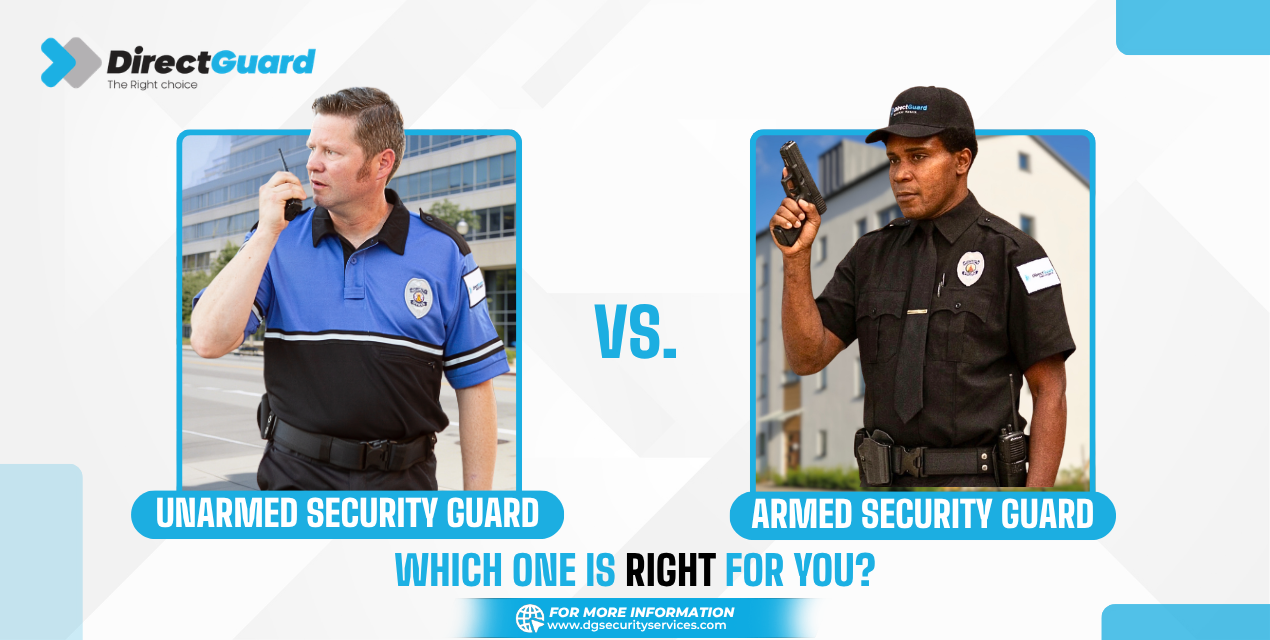
Unarmed vs Armed Security Guard Services: Which One Is Right for You?

Choosing the right security for your business or property can feel overwhelming—especially when deciding between unarmed vs. armed security guard services.

Do you need a visible presence to prevent everyday issues, or a higher level of protection for serious risks?

The truth is, both options serve important roles. The right choice depends on your environment, risk level, and specific security needs.

In this guide, we’ll break down the key differences between unarmed vs. armed security guard services so you can confidently decide what works best for you.

Unarmed vs Armed Security Guard Services

  • Unarmed security guards focus on prevention, observation, and customer-friendly protection.
  • Armed security guards are trained to handle high-risk situations and carry firearms for added protection.

For most businesses, unarmed security guard services are sufficient, while armed guards are used in higher-risk environments.

What Are Unarmed Security Guard Services?

Unarmed security guard services involve trained professionals who protect people and property without carrying weapons.

Key Features

  • Visible presence to deter crime
  • Patrol and monitoring duties
  • Access control and visitor management
  • Conflict resolution and de-escalation

They are ideal for maintaining a safe and welcoming environment.

What Are Armed Security Guard Services?

Armed security guard services include guards who carry firearms and are trained for high-risk situations, such as responding to potential threats, managing crowd control, and ensuring the safety of individuals in vulnerable environments.

Key Features

  • Advanced security training
  • Ability to respond to serious threats
  • Protection in high-risk environments
  • Strong deterrence against violent crime

They are used where maximum security is required.

Key Differences: Unarmed vs. Armed Security Guard Services

FeatureUnarmed Security GuardsArmed Security Guards
WeaponsNo firearmsCarry firearms
Risk LevelLow to mediumHigh-risk environments
CostMore affordableHigher cost
ApproachFriendly and approachableMore authoritative
TrainingObservation & communicationTactical & firearms training

Benefits of Unarmed Security Guard Services

1. Cost-Effective Security

Unarmed security guard services are budget-friendly, making them ideal for:

  • Offices
  • Retail stores
  • Residential properties

2. Non-Threatening Presence

They create a welcoming environment by:

  • Building trust with customers
  • Reducing fear or discomfort
  • Providing assistance when needed

3. Strong Deterrence

Even without weapons, they:

  • Prevent theft and vandalism
  • Discourage unauthorised access
  • Maintain order

4. Versatility

They are suitable for a wide range of industries and environments.


Hire Professional Security Unarmed Security Guards


Benefits of Armed Security Guard Services

1. Enhanced Protection

Armed guards provide a higher level of security for serious threats.

2. Ideal for High-Risk Environments

They are commonly used in:

  • Banks
  • Jewellery stores
  • High-value asset locations

3. Immediate Threat Response

They are trained to respond quickly to dangerous situations.

4. Strong Psychological Deterrent

The presence of armed guards discourages violent crime.

When Should You Choose Unarmed Security Guard Services?

Choose unarmed security guard services if:

  • Your environment has low to moderate risk.
  • You want a friendly and approachable presence
  • You need cost-effective security
  • Customer interaction is important.

Best for:

  • Offices
  • Retail stores
  • Residential communities
  • Schools and hospitals

When Should You Choose Armed Security Guard Services?

Choose armed guards if:

  • You face high-security risks.
  • You handle valuable assets.
  • There is a threat of violence.
  • You need maximum protection

Best for:

  • Banks
  • High-end retail
  • Critical infrastructure

Cost Comparison: Unarmed vs. Armed Security Guard Services

Cost is a major factor when choosing security.

Unarmed Security Guards

  • Lower hourly rates
  • More affordable for long-term use

Armed Security Guards

  • Higher costs due to training and licensing
  • Best suited for high-risk scenarios

For most businesses, unarmed security guard services provide the best value.

How to Choose the Right Option for Your Needs

1. Assess Your Risk Level

  • Low risk → Unarmed guards
  • High risk → Armed guards

2. Consider Your Budget

  • Limited budget → Unarmed security
  • Higher budget → Armed security

3. Evaluate Your Environment

  • Customer-facing → Unarmed
  • High-value or sensitive → Armed

4. Think About Public Perception

  • Friendly environment → Unarmed
  • High-security environment → Armed

Conclusion

When comparing unarmed vs armed security guard services, the right choice comes down to your specific needs.

If you’re looking for affordable, professional, and approachable protection, unarmed security guard services are the perfect fit.

However, if your environment involves higher risks or valuable assets, armed security may be necessary.

The key is to match your security level with your actual risk—so you get the best protection without overspending.

Frequently Asked Questions

  1. What is the main difference between unarmed vs. armed security guard services?
  2. The main difference is that armed guards carry firearms and handle high-risk situations, while unarmed guards focus on prevention, monitoring, and maintaining safety without weapons.
  3. Which is better: unarmed or armed security guards?
  4. It depends on your needs. Unarmed security guard services are ideal for most environments, while armed guards are better for high-risk situations, such as those involving valuable assets or potential threats to safety.
  5. Are unarmed security guards effective?
  6. Yes, they are highly effective in preventing crime through visibility, patrols, and quick response.
  7. Are armed security guards necessary for businesses?
  8. Only businesses with high-risk threats or valuable assets typically require armed guards.
  9. Which option is more cost-effective?
  10. Unarmed security guard services are more affordable and suitable for most businesses.

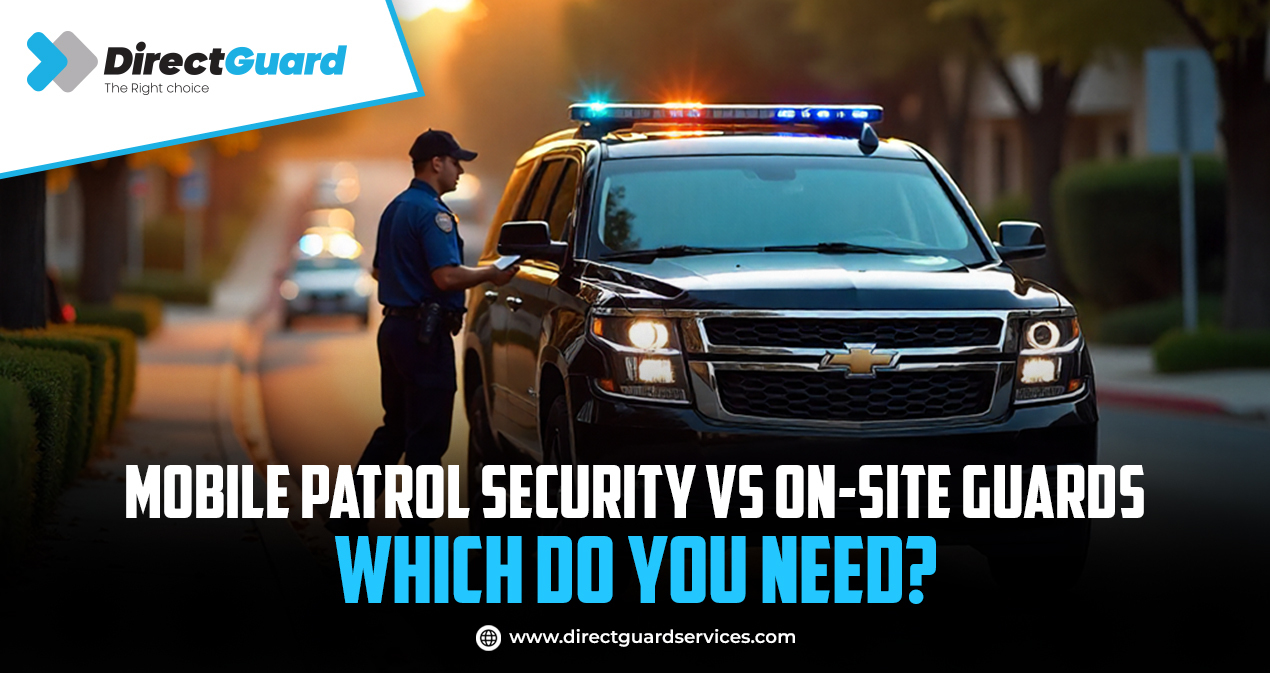
Mobile Patrol Security vs On-Site Guards: Which Do You Need?

Quick Decision Summary

Choose Mobile Patrol Security if you want:

  • Cost efficiency
  • Randomized deterrence
  • Multiple property coverage
  • Alarm response

Choose On-Site Guards if you need:

  • Immediate response
  • Access control
  • High-traffic monitoring
  • Continuous supervision

Introduction

Imagine arriving at your property and discovering vandalism, theft, or unauthorized access. The real question isn’t whether you need security — it’s whether you need mobile patrol security or on-site guards.

The decision between Mobile Patrol Security vs On-Site Guards directly affects your budget, safety level, response time, and overall risk management strategy.

In this complete guide, we’ll break down the real differences, benefits, costs, industry use cases, and how to confidently decide which option fits your property.

What Is Mobile Patrol Security?

Mobile patrol security involves trained officers who patrol multiple locations in marked vehicles. They conduct scheduled or randomized inspections, respond to alarms, and ensure your property remains secure.

Key Features of Mobile Patrol Services

  • Randomized security checks
  • Vehicle patrol visibility
  • Alarm response services
  • Lock/unlock services
  • Perimeter inspections
  • Incident reporting

Mobile patrol security works as a cost-effective deterrent solution for properties that do not require constant supervision.

What Are On-Site Security Guards?

On-site guards (also called manned guarding services) are stationed at one location for continuous monitoring.

They handle:

  • Access control
  • Visitor verification
  • CCTV monitoring
  • Conflict management
  • Emergency response
  • Theft prevention

According to data from the Bureau of Labor Statistics, demand for security guards continues to grow as businesses increase investments in physical security solutions.

On-site guards provide maximum presence and immediate response capability.

Mobile Patrol Security vs On-Site Guards: Direct Comparison

1. Cost Efficiency

Mobile Patrol Security

  • Lower monthly cost
  • Pay per patrol or schedule
  • Ideal for multiple properties

On-Site Guards

  • Higher cost (hourly wages)
  • 24/7 coverage requires multiple guards
  • Higher payroll & management expense

If the budget is limited, mobile patrol security is usually more affordable.

2. Coverage Level

FeatureMobile Patrol SecurityOn-Site Guards
PresenceIntermittentContinuous
ResponseDuring visit or alarmImmediate
Property SizeLarge areasSpecific entry points
Best ForLow–Medium riskHigh-risk sites

3. Visibility & Crime Deterrence

  • Mobile patrol security creates unpredictability, which deters criminal planning.
  • On-site guards provide constant authority presence, ideal for high-traffic commercial environments.

Security standards organizations like ASIS International emphasize layered protection strategies — combining visibility and surveillance.

4. Response Time

  • On-site guards respond instantly.
  • Mobile patrol officers respond during patrol rounds or alarm calls.

If your business requires immediate threat neutralization, on-site guards have the advantage.

When Should You Choose Mobile Patrol Security?

Choose mobile patrol security if:

  • Your property is vacant overnight
  • You manage multiple locations
  • You need alarm response services
  • Your risk level is moderate
  • You want a visible but cost-effective solution

Industries that benefit:

  • Warehouses
  • Construction sites
  • Industrial parks
  • Gated communities
  • Office buildings after hours

When Should You Choose On-Site Guards?

Choose on-site security guards if:

  • Your location has heavy foot traffic
  • You require access control
  • You operate in a high-crime area
  • Customer interaction is necessary
  • Immediate emergency handling is required

Industries that benefit:

  • Hospitals
  • Hotels
  • Retail stores
  • Corporate offices
  • Event venues

The Hybrid Security Model: Best of Both Worlds

Many businesses now use a hybrid approach:

  • On-site guards during operating hours
  • Mobile patrol security overnight

This layered security model reduces cost while maintaining strong protection.

Risk Assessment Checklist

Before deciding between Mobile Patrol Security vs On-Site Guards, ask:

  • What is my crime exposure level?
  • How quickly must incidents be handled?
  • Do I need customer-facing security?
  • Is my property vacant after hours?
  • What is my monthly security budget?

A professional security audit can identify vulnerabilities and recommend the right mix.

Cost Breakdown Example

Example Scenario:

Small warehouse (low traffic, night vacancy)

  • Mobile patrol security: 3–5 visits nightly → Lower cost
  • On-site guard: 8–12 hour shift → Higher monthly expense

For many similar properties, patrol services provide sufficient deterrence.

Final Verdict: Mobile Patrol Security vs On-Site Guards

There is no universal answer in the debate of Mobile Patrol Security vs On-Site Guards. The right solution depends on your risk profile, operational hours, property size, and security goals.

If you’re unsure, consider a layered security approach for maximum protection and cost balance.

Investing in the right business security solution protects your assets, employees, and reputation.

Frequently Asked Questions (FAQ)

  1. Is mobile patrol security enough for businesses?
    Yes, for low to moderate risk properties. However, high-risk businesses often require on-site guards.
  2. Are on-site guards better than patrol security?
    Not necessarily. It depends on your risk level, activity level, and required response time.
  3. Can I switch between both services?
    Yes. Many providers offer flexible contracts to scale protection as your needs change.
  4. Which is better for construction sites?
    Mobile patrol security is commonly used for after-hours construction site monitoring.