Theft is a serious concern for businesses, construction sites, warehouses, commercial properties, and vacant buildings. Even when a property has locks, cameras, alarms, and other security measures, criminals may still look for opportunities to enter when a site is unattended.
Mobile patrol security services provide an additional layer of protection by placing trained security personnel on the property at scheduled or random intervals. Unlike a permanently stationed guard, a mobile patrol officer travels between locations in a marked or designated security vehicle, inspecting the property and responding to potential security concerns.
In this guide, we’ll explain how mobile patrol services can help prevent theft, what patrol officers typically do, and why businesses may choose mobile security patrols as part of their overall security strategy.
What Are Mobile Patrol Security Services?
Mobile patrol security is a security service in which trained officers use vehicles to visit and inspect one or more properties.
Patrols can be scheduled at specific times or conducted randomly, depending on the security plan. Random patrols can make it more difficult for potential offenders to predict when security personnel will arrive.
During a patrol, officers may inspect:
- Building entrances
- Gates and fences
- Parking areas
- Loading zones
- Storage areas
- Construction equipment
- Windows and doors
- Exterior lighting
- Other vulnerable areas
If an officer identifies something unusual, they can follow the property’s established security procedures, document the issue, and notify the appropriate contacts or emergency services when necessary.
How Mobile Patrol Services Help Prevent Theft
1. A Visible Security Presence Deters Criminal Activity
One of the biggest advantages of mobile patrol security is visibility.
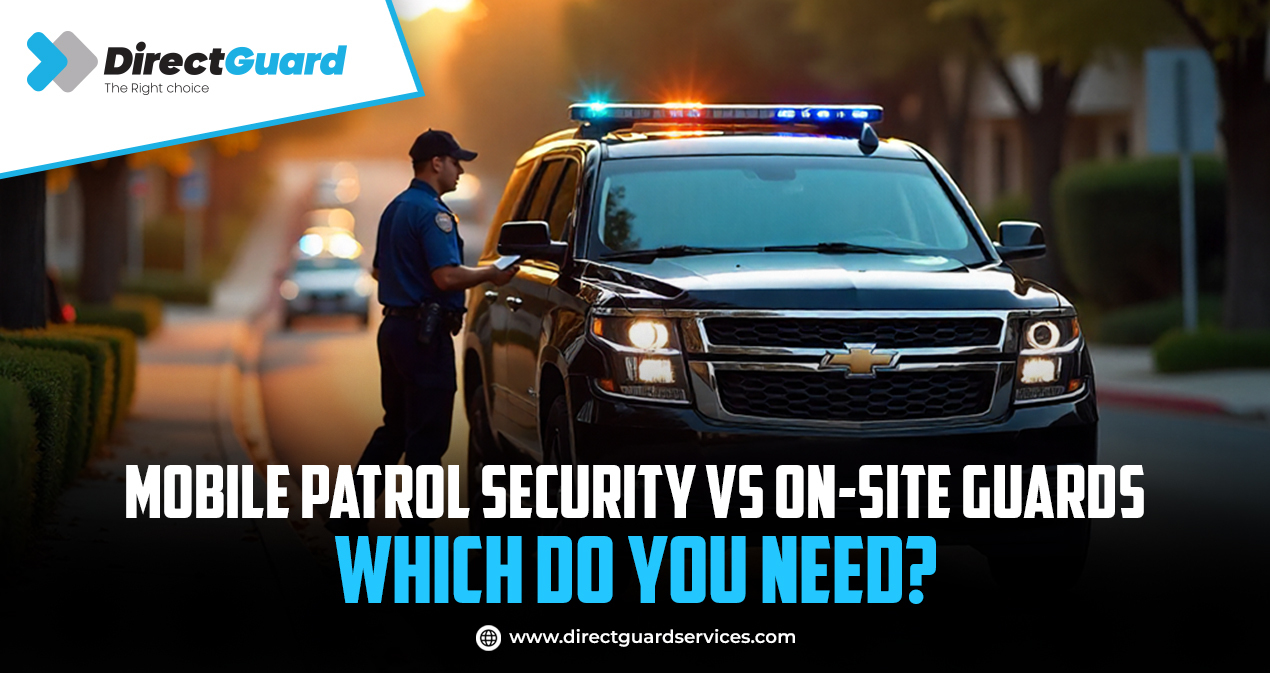
A marked security vehicle regularly entering a property can signal that the location is actively monitored. Potential thieves may be less likely to target a property when they know security personnel could arrive unexpectedly.
This deterrent effect is particularly useful for locations that are difficult to staff continuously.
2. Random Patrols Make Security Less Predictable
Scheduled patrols have advantages, but random patrols can provide an additional layer of unpredictability.
If someone knows that a security officer visits a property at exactly 10:00 p.m. every night, they may attempt to take advantage of the periods between visits.
Randomized patrol schedules make it harder to predict when an officer will arrive.
Patrol frequency can be customized according to the property’s risk level, operating hours, and security requirements.
3. Officers Can Identify Signs of Unauthorized Access
During a patrol, officers can look for indications that someone may have attempted to enter the property.
This can include:
- Damaged fences
- Open gates
- Broken locks
- Forced doors
- Damaged windows
- Suspicious vehicles
- Unusual activity
- Missing equipment
Identifying these warning signs early can allow property owners or managers to address vulnerabilities before a larger theft occurs.
4. Mobile Patrols Can Cover Large Properties
Some properties are too large or have too many locations to justify keeping a security guard at every point.
A mobile patrol officer can travel around a large site and inspect multiple areas during a single patrol.
This can be particularly useful for:
- Construction sites
- Industrial facilities
- Warehouses
- Commercial properties
- Parking lots
- Storage facilities
- Vacant buildings
- Property management portfolios
The patrol route can be designed around the areas that require the most attention.
Mobile Patrols for Construction Sites
Construction sites can be especially vulnerable to theft because they may contain expensive machinery, tools, building materials, fuel, and equipment.
Mobile patrol security services can provide after-hours inspections when construction crews have left the site.
Patrol officers may check:
- Equipment and machinery
- Storage containers
- Perimeter fencing
- Gates
- Material storage areas
- Temporary buildings
- Vehicles
- Lighting
- Access points
Regular patrols can discourage trespassing and help identify security problems before they result in significant losses.
Mobile Patrols for Warehouses and Commercial Properties
Warehouses and commercial facilities may hold valuable inventory, electronics, machinery, or other assets.
After-hours patrols can provide an additional security layer when employees are not present.
Officers can inspect exterior areas, check access points, observe suspicious activity, and document anything that requires attention.
For businesses operating across multiple locations, mobile patrol services can also provide a practical way to maintain a security presence across several properties.
5. Faster Response to Security Concerns
Mobile patrol officers are already moving between properties, which can allow them to respond to certain security concerns when they are nearby.
For example, if an alarm is triggered or a property manager reports suspicious activity, a patrol officer may be dispatched to investigate the location according to the company’s procedures.
The officer can assess the situation, secure the area when appropriate, contact emergency services if necessary, and provide an incident report.
Response capabilities vary by provider and location, so businesses should confirm the response procedures before hiring a patrol company.
6. Security Checks Can Identify Vulnerabilities
Theft prevention isn’t only about catching criminals. It is also about identifying weaknesses that make a property easier to target.
During routine patrols, security officers may notice issues such as:
- Unlocked doors
- Poor exterior lighting
- Open gates
- Damaged fencing
- Unsecured equipment
- Blocked access points
- Broken security cameras
Reporting these issues allows property managers to make improvements that can reduce future security risks.
7. Detailed Patrol Reports Improve Accountability
Professional security patrol services often include documentation of patrol activities.
A patrol report may record:
- Date and time of the visit
- Areas inspected
- Security issues discovered
- Suspicious activity
- Access-point conditions
- Actions taken
- Notifications made
Depending on the security company, reports may be completed electronically and may include photographs or other supporting information.
This documentation gives property owners greater visibility into what happened during each patrol.
Mobile Patrol Security vs. Stationary Security Guards
Both mobile patrols and stationary guards can provide valuable protection, but they serve different purposes.
A stationary security guard remains at a specific location for the duration of their shift. This can be useful when a property needs continuous monitoring at an entrance, lobby, checkpoint, or other critical location.
A mobile patrol officer travels around the property or between multiple properties, conducting inspections and responding to security concerns.
Some businesses may benefit from using both services together.
For example, a large commercial property could have a stationary guard at the main entrance while a mobile patrol officer periodically checks the parking areas and perimeter.
Are Mobile Patrol Services Cost-Effective?
For some businesses, mobile patrol services can be a cost-effective alternative or supplement to full-time on-site security.
Instead of assigning a dedicated guard to a property throughout the night, a business can schedule regular patrol visits based on its security needs.
The actual cost depends on factors such as:
- Patrol frequency
- Property size
- Number of locations
- Travel distance
- Risk level
- Required response services
- Patrol hours
- Additional security requirements
The best option depends on the property’s specific risks rather than simply choosing the lowest-cost service.
How to Choose a Mobile Patrol Security Company
Before hiring a mobile patrol security company, evaluate several important factors.
Experience
Ask whether the provider has experience protecting properties similar to yours.
Patrol Frequency
Find out how often officers will visit your property and whether patrol times can be randomized.
Vehicle Visibility
A clearly identifiable security vehicle can strengthen the deterrent effect of mobile patrols.
Reporting
Ask what type of patrol reports you will receive and how quickly incidents are communicated.
Response Procedures
Understand how the company handles alarms, suspicious activity, property damage, and emergencies.
Licensing and Training
Verify that the security company and its personnel meet applicable licensing and training requirements.
Technology
Some providers use electronic patrol verification, GPS tracking, mobile reporting, photographs, and other technologies to improve accountability.
How Often Should a Property Be Patrolled?
There is no single patrol schedule that works for every property.
A low-risk commercial property may require fewer visits, while a construction site with expensive equipment may require more frequent checks.
Your security provider should consider:
- Property size
- Crime risk
- Previous incidents
- Operating hours
- Asset value
- Number of access points
- Lighting and fencing
- Existing security systems
Randomized patrols can also be incorporated into the schedule to make security activity less predictable.
Can Mobile Patrols Replace Other Security Measures?
Mobile patrols are most effective when they are part of a broader security strategy.
They can work alongside:
- CCTV cameras
- Alarm systems
- Access control
- Security lighting
- Fencing
- Locks and gates
- On-site security guards
No single security measure can guarantee that theft will never occur. However, combining physical security, technology, monitoring, and professional patrols can create multiple barriers against unauthorized activity.
Frequently Asked Questions About Mobile Patrol Security
Do mobile patrol services prevent theft?
Mobile patrols cannot guarantee that theft will never occur, but visible and unpredictable security patrols can deter potential offenders, identify vulnerabilities, and provide a response to suspicious activity.
Are mobile patrols useful for construction sites?
Yes. Construction sites often contain valuable equipment and materials and may be unattended overnight. Regular patrols can help deter trespassing, theft, and vandalism.
Can mobile patrol officers respond to alarms?
Many security companies offer alarm response as part of their mobile patrol services. However, the exact response process varies by provider, so businesses should confirm the service details before signing a contract.
Are mobile patrols cheaper than stationary security guards?
They can be, depending on the property’s requirements. Mobile patrols may provide periodic security checks without requiring a dedicated guard to remain on-site for an entire shift.
Can patrol times be randomized?
Many security providers can incorporate randomized patrol schedules. This can make security activity less predictable and potentially strengthen its deterrent effect.
Final Thoughts
Mobile patrol security services can provide businesses and property owners with a flexible way to improve security and reduce opportunities for theft.
By maintaining a visible security presence, conducting regular or random inspections, identifying vulnerabilities, documenting incidents, and responding to security concerns, mobile patrol officers can become an important part of a property’s overall security strategy.
For businesses with large properties, multiple locations, construction sites, warehouses, or vacant buildings, mobile patrol services can provide an effective layer of protection without necessarily requiring a permanently stationed guard.
The key is to choose a reputable security provider and develop a patrol plan based on the property’s actual risks, operating schedule, and security requirements.