Casinos are busy environments where large amounts of money, valuable equipment, employees, and guests are present every day. With so many people and transactions taking place at the same time, maintaining a safe and controlled environment is a major priority.
This is where casino security guards play an important role. Their responsibilities go far beyond simply standing at an entrance. Professional casino security teams help protect guests and employees, monitor suspicious activity, respond to incidents, control access, and support the overall safety of the property.
In this guide, we’ll explain what casino security guards do, their key responsibilities, and why professional casino security is important for gaming facilities.
What Is Casino Security?
Casino security refers to the people, procedures, technology, and systems used to protect a casino’s guests, employees, property, and financial assets.
A casino security team may work alongside surveillance operators, management, law enforcement, and other departments to identify potential risks and respond to incidents.
Depending on the facility, casino security services may include:
- Security guard patrols
- Access control
- Guest and employee monitoring
- Incident response
- Theft prevention
- Crowd management
- Emergency response
- Surveillance support
- Property protection
- Safety inspections
The exact responsibilities can vary depending on the size of the casino, local regulations, and the facility’s security requirements.
What Do Casino Security Guards Do?
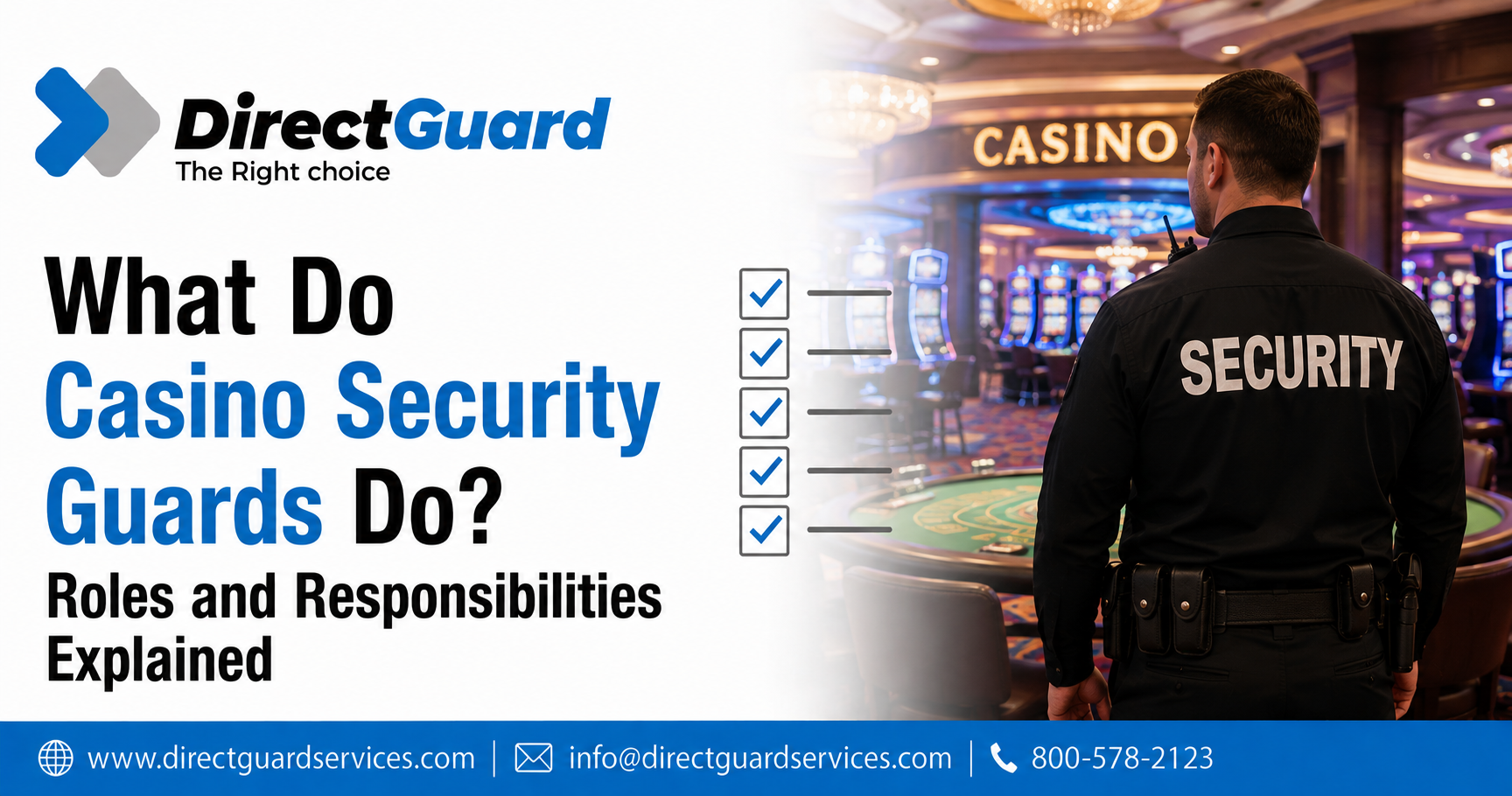
The primary responsibility of casino security guards is to help maintain a safe and secure environment. Their daily duties can vary considerably depending on their assigned position and the needs of the casino.
1. Monitor the Casino Property
Security guards routinely patrol gaming floors, entrances, parking areas, hallways, employee areas, and other parts of the property.
Regular patrols can help deter unauthorized activity and allow guards to identify potential problems before they become more serious.
Guards may look for:
- Suspicious behavior
- Unauthorized access
- Property damage
- Safety hazards
- Disturbances
- Unattended items
- Violations of casino policies
Visible security presence can also discourage criminal or disruptive behavior.
2. Protect Guests and Employees
Guest and employee safety is one of the most important responsibilities of casino security.
Security personnel may respond to disputes, disturbances, medical emergencies, accidents, or other situations that could put people at risk.
They are trained to remain professional under pressure and follow established procedures when responding to incidents.
3. Prevent Theft and Unauthorized Activity
Casinos handle significant financial transactions and contain valuable equipment and property. Security personnel help reduce opportunities for theft and unauthorized activity through observation, patrols, access control, and incident reporting.
Security guards may monitor areas where valuable equipment, cash-handling operations, or restricted materials are located.
They also work with casino surveillance teams when suspicious activity requires further investigation.
4. Control Access to Restricted Areas
Not every part of a casino is open to the public.
Cash-handling areas, employee-only spaces, surveillance rooms, offices, storage areas, and other restricted locations may require controlled access.
Casino security guards can verify credentials, monitor entrances, and help ensure that only authorized individuals enter restricted areas.
Effective access control reduces the risk of unauthorized entry and helps protect sensitive areas.
Casino Security and Surveillance
Surveillance technology is an important part of modern casino security.
Many casinos use extensive camera systems to monitor gaming floors, entrances, cash areas, parking facilities, and other locations.
Security guards and surveillance personnel can work together to respond to potential incidents.
For example, a surveillance operator may identify suspicious behavior on camera and communicate the information to security personnel on the casino floor. A guard can then respond to the location and follow the casino’s established procedures.
This combination of technology and trained personnel creates multiple layers of protection.
5. Respond to Security Incidents
When an incident occurs, casino security guards may be among the first personnel to respond.
Depending on the situation, this can include:
- Verbal disputes
- Physical altercations
- Suspected theft
- Unauthorized access
- Guest disturbances
- Property damage
- Suspicious packages
- Medical emergencies
- Safety concerns
Security personnel should follow the casino’s response procedures and escalate incidents to management, emergency services, or law enforcement when appropriate.
The goal is to control the situation safely while protecting guests, employees, and property.
6. Handle Crowd Control
Casinos can become particularly busy during weekends, holidays, special promotions, concerts, sporting events, or other major occasions.
Large crowds can create additional safety and security challenges.
Casino security guards may help manage:
- Entrances and exits
- Lines and queues
- Crowded gaming areas
- Event spaces
- Parking areas
- Guest movement
- Emergency evacuations
Effective crowd management helps reduce congestion and allows staff to respond more efficiently if an emergency occurs.
7. Monitor for Suspicious Behavior
Security guards are trained to remain alert to unusual or suspicious activity.
This does not mean assuming that someone is committing a crime based solely on appearance or behavior. Instead, professional security personnel observe objectively and follow established procedures when something requires attention.
Suspicious activity may include unauthorized attempts to enter restricted areas, unusual interactions, property tampering, or behavior that violates casino policies.
When appropriate, guards document and report their observations.
8. Prepare Incident Reports
Documentation is another important part of casino security.
After an incident, security personnel may prepare a report describing what happened, when it occurred, where it occurred, who was involved, and what actions were taken.
Accurate reporting can help casino management:
- Review incidents
- Identify recurring problems
- Improve security procedures
- Support investigations
- Maintain accurate records
- Coordinate with authorities when necessary
Clear and factual documentation is essential for professional security operations.
9. Assist During Emergencies
Casino security teams may also have emergency response responsibilities.
Depending on their training and the casino’s emergency plan, guards may assist with situations such as:
- Fires
- Medical emergencies
- Evacuations
- Severe weather
- Power outages
- Security threats
- Other urgent incidents
Security personnel can help direct guests, secure affected areas, communicate with management, and support emergency responders.
Their role should always follow the property’s emergency procedures and applicable laws.
10. Protect Casino Property
Casino security is not only about protecting people. The physical property also requires protection.
Security guards may monitor:
- Gaming equipment
- Furniture and fixtures
- Vehicles
- Building entrances
- Storage areas
- Cash-handling areas
- Technology equipment
- Employee facilities
Regular patrols and access control can help reduce vandalism, unauthorized access, and property-related incidents.
Why Is Professional Casino Security Important?
A professional security team provides more than a visible presence.
Effective casino security can help create an environment where guests feel comfortable, employees can perform their jobs safely, and management has established procedures for handling security incidents.
Professional security may help casinos:
- Deter criminal activity
- Protect guests and employees
- Reduce property-related risks
- Control access to restricted areas
- Respond to incidents quickly
- Manage large crowds
- Support emergency procedures
- Maintain detailed incident records
Security should be viewed as part of the casino’s overall risk-management strategy rather than simply an additional operational expense.
What Skills Should Casino Security Guards Have?
Working in a casino requires security personnel to deal with a wide range of situations and people.
Important qualities can include:
Strong Observation Skills
Guards need to remain attentive while monitoring busy environments where many activities happen simultaneously.
Communication Skills
Professional communication can help security personnel de-escalate disputes and communicate effectively with guests, employees, supervisors, and emergency responders.
Conflict-Resolution Skills
Casino environments can occasionally involve disagreements or disruptive behavior. Security personnel should know how to remain calm and follow appropriate procedures.
Professionalism
Security guards represent the casino while performing their duties. Professional conduct, respect, confidentiality, and appropriate judgment are important.
Emergency Response Training
Guards may need to respond quickly during emergencies, making appropriate training and knowledge of site procedures essential.
How to Choose a Casino Security Company
If you operate or manage a casino and are considering professional security services, evaluate potential providers carefully.
Look for a company that offers:
- Experienced security personnel
- Appropriate licensing and training
- Casino or gaming-facility experience
- Strong supervision
- Reliable staffing
- Detailed reporting procedures
- Emergency response capabilities
- Effective communication systems
- Customized security plans
The right provider should be able to understand your facility’s layout, operating hours, security risks, guest traffic, and specific requirements before recommending a staffing plan.
Casino Security Guards vs. Casino Surveillance
These two functions often work together but have different responsibilities.
Casino security guards are typically positioned throughout the property and can physically respond to incidents, monitor access points, patrol the facility, and interact directly with guests and employees.
Casino surveillance teams primarily monitor cameras and other security systems to identify suspicious activity and provide information to security personnel and management.
A strong casino security strategy can combine both functions to create multiple layers of protection.
Frequently Asked Questions About Casino Security
What is the main role of a casino security guard?
The main role is to help protect guests, employees, property, and restricted areas while responding to security incidents and supporting the casino’s safety procedures.
Do casino security guards monitor cameras?
Some casino security personnel may have surveillance-related responsibilities, but dedicated surveillance operators often monitor the casino’s camera systems. The exact division of responsibilities depends on the facility.
Can casino security guards remove disruptive guests?
Security personnel may enforce casino policies and follow established procedures for dealing with disruptive guests. Specific authority and procedures depend on local laws and the casino’s policies.
Why do casinos need security guards?
Casinos have high guest traffic, valuable property, financial transactions, restricted areas, and potential safety risks. Professional security helps manage these risks and provides an immediate response when incidents occur.
What should casinos look for in a security company?
Casinos should consider licensing, training, experience, staffing reliability, supervision, incident reporting, emergency procedures, and the provider’s ability to develop a security plan tailored to the facility.
Final Thoughts
Casino security involves much more than monitoring entrances. Professional casino security guards can help protect guests and employees, patrol the property, control access, deter theft, manage crowds, respond to incidents, support emergencies, and document security events.
Because every gaming facility has different risks and operational requirements, security plans should be customized rather than using a one-size-fits-all approach.
By working with an experienced security provider and combining trained personnel with appropriate surveillance and access-control systems, casinos can create a safer and more controlled environment for everyone on the property.