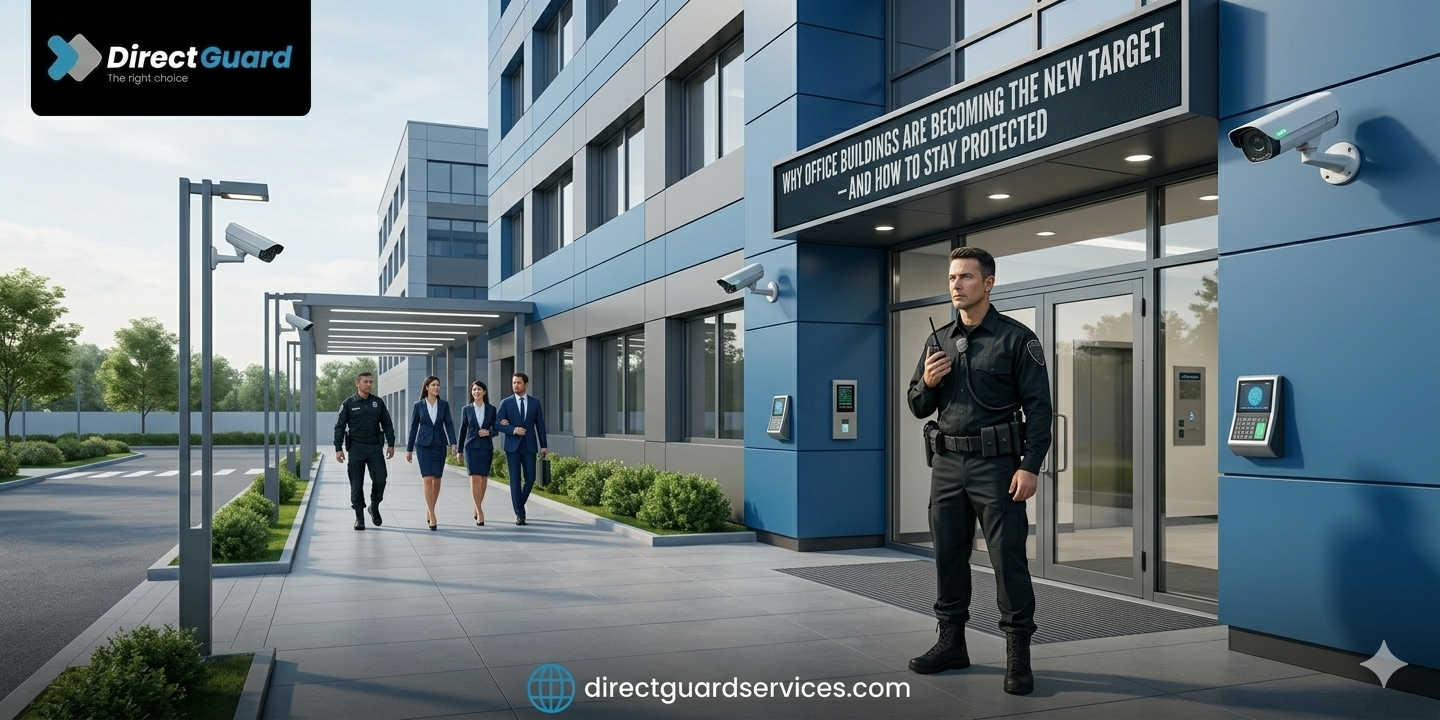
Why Office Buildings Are Becoming the New Target — And How to Stay Protected

Introduction

Office buildings were once considered safe and controlled environments where employees could work without major security concerns. However, that reality has changed.

Today, office spaces are increasingly becoming targets for theft, unauthorized access, and workplace incidents. As businesses evolve, so do the risks surrounding them. A lack of proper security can expose companies to serious financial and operational damage.

Understanding why this shift is happening is the first step toward building a strong protection strategy.

Why Office Buildings Are Becoming Easy Targets

Modern office environments have introduced several vulnerabilities that make them attractive targets.

Increased Public Access

Many office buildings allow frequent entry for visitors, vendors, and delivery personnel. Without proper monitoring, this creates opportunities for unauthorized access, suspicious activity, and theft.

Hybrid Work Environment

Flexible work schedules mean offices are often partially empty. This creates gaps in monitoring and increases the chances of incidents going unnoticed.

High-Value Equipment

Office spaces contain valuable assets such as computers, servers, and sensitive data systems. These items are easy targets when proper protection is not in place.

Lack of Visible Security

Buildings without a visible security presence often appear vulnerable. This can attract individuals looking for easy opportunities.

Rising Workplace Safety Concerns

Workplace incidents, including unauthorized entry and internal conflicts, are becoming more common, increasing the need for proactive measures.

Common Security Risks in Office Buildings

Understanding the risks helps businesses prepare effectively.

Unauthorized Access

Individuals entering restricted areas without permission can compromise safety and operations.

Theft and Burglary

Office equipment, employee belongings, and sensitive materials are common targets.

Vandalism

Property damage often occurs after working hours when buildings are less monitored.

Data Security Threats

Physical access to systems can lead to serious data breaches.

Workplace Violence

Conflicts within or outside the organization can escalate if not properly managed.

How to Stay Protected

A proactive approach to office building security can significantly reduce risks.

Hire Professional Security Guards

A trained security presence provides real-time monitoring, quick response, and strong deterrence against threats.

Implement Access Control Systems

Using ID cards, visitor logs, and controlled entry points ensures only authorized individuals can enter the premises.

Install Surveillance Systems

CCTV systems help with continuous monitoring, evidence collection, and threat detection.

Secure Entry and Exit Points

Limiting and monitoring entrances improves overall control and reduces vulnerability.

Conduct Regular Risk Assessments

Evaluating potential weaknesses allows businesses to identify risks early and take preventive action.

Emergency Preparedness

Having clear procedures for emergencies ensures quick and organized responses to unexpected situations.

The Impact on Employees

Security plays a major role in employee well-being.

When employees feel safe:

  • Productivity improves
  • Stress levels decrease
  • Workplace satisfaction increases

A secure environment supports both individual performance and overall business success.

Long-Term Benefits of Strong Security

Investing in office building security provides long-term advantages.

  • Reduced financial losses
  • Lower legal and liability risks
  • Improved business reputation
  • Higher employee retention
  • Better operational stability

Security is not just about preventing incidents—it supports long-term growth and continuity.

Real-World Perspective

Consider a situation where an office building operates without proper security measures.

An unauthorized individual enters unnoticed, leading to stolen equipment and compromised data. The business then faces financial losses, operational delays, and reputational damage.

Such incidents highlight how easily risks can turn into serious problems when security is overlooked.

Final Thoughts

Office buildings are no longer low-risk environments. As threats continue to evolve, businesses must take security seriously.

A well-planned approach helps protect assets, employees, and daily operations. Ignoring security is no longer an option, especially when the cost of inaction can be far greater than the investment in protection.

Businesses that prioritize security are better prepared, more resilient, and positioned for long-term success.
Security Is Not an Expense — It’s a Business Survival Strategy

Introduction

Most business owners think of security as just another cost on the balance sheet. Something to “handle later” or reduce when budgets get tight.

But here’s the truth: a strong business security strategy is not an expense — it’s what keeps your business alive.

From theft and vandalism to liability risks and safety threats, businesses today face more challenges than ever before. Without proper protection, one incident can cost thousands—or even shut operations down completely.

In this blog, we’ll break down why investing in a business security strategy is one of the smartest decisions you can make.

The Real Cost of Ignoring Security

Many businesses underestimate how expensive not having security can be.

Here’s what you risk without a proper business security strategy:

  • Financial Losses: Theft, property damage, and fraud
  • Operational Downtime: Business interruptions due to incidents
  • Legal Liability: Lawsuits due to negligence or unsafe environments
  • Reputation Damage: Loss of customer trust
  • Employee Safety Risks: Unsafe workplaces reduce productivity and morale

One security breach can cost far more than years of professional security services.

What Is a Business Security Strategy?

A business security strategy is a complete plan designed to protect your:

  • Property
  • Employees
  • Customers
  • Assets
  • Daily operations

It combines:

  • Physical security (guards, patrols)
  • Surveillance systems
  • Risk assessment
  • Emergency response planning

Instead of reacting to problems, it helps you prevent them before they happen.

Why Security Is a Business Survival Strategy

1. Prevention Is Always Cheaper Than Recovery

Recovering from an incident is expensive and time-consuming.

With a solid business security strategy:

  • Risks are identified early
  • Threats are reduced before escalation
  • Losses are minimized or completely avoided

Prevention saves money, time, and stress.

2. Protecting Revenue and Assets

Your business relies on:

  • Equipment
  • Inventory
  • Infrastructure

Without proper security:

  • Theft can disrupt operations
  • Damage can delay projects
  • Losses directly impact profits

Professional security ensures your assets are protected 24/7.

3. Enhancing Employee Safety and Productivity

Employees perform better when they feel safe.

A strong business security strategy:

  • Reduces workplace incidents
  • Builds confidence among staff
  • Improves overall productivity

Safe environments lead to better performance and lower turnover.

4. Building Customer Trust

Customers notice security.

Whether it’s a retail store, office building, or event:

  • Visible security creates confidence
  • Customers feel protected
  • Businesses appear more professional

Trust leads to repeat business and long-term growth.

5. Avoiding Legal and Compliance Issues

Many industries require security measures to meet regulations.

Without proper protection:

  • You may face fines
  • You risk lawsuits
  • You can lose operating licenses

A proper business security strategy helps ensure:

  • Compliance with safety standards
  • Reduced legal risks
  • Smooth operations

Industries That Need Strong Security the Most

Every business benefits from security, but some industries face higher risks:

Commercial Buildings

  • Unauthorized access
  • Property damage
  • Employee safety concerns

Construction Sites

  • Equipment theft
  • Vandalism
  • Trespassing

Retail Stores

  • Shoplifting
  • Organized retail crime
  • Inventory loss

Warehouses

  • High-value goods storage
  • Internal theft risks

Events and Public Spaces

  • Crowd control
  • Emergency situations
  • Safety management

Each industry requires a tailored business security strategy.

Key Components of an Effective Business Security Strategy

To truly protect your business, your security plan should include:

1. Professional Security Guards

  • On-site presence deters crime
  • Quick response to incidents
  • Monitoring of suspicious activity

2. Risk Assessment

  • Identifying weak points
  • Evaluating threats
  • Creating prevention plans

3. Surveillance Systems

  • CCTV monitoring
  • Real-time tracking
  • Evidence collection

4. Access Control

  • Restricted entry points
  • Visitor management
  • Employee access systems

5. Emergency Response Planning

  • Fire incidents
  • Security breaches
  • Evacuation procedures

Real-World Scenario: One Incident Can Change Everything

Imagine this:

A business skips security to save money.

One night:

  • Equipment gets stolen
  • Property is damaged
  • Operations stop for days

The result:

  • Thousands in losses
  • Missed deadlines
  • Lost clients

This is exactly why a business security strategy is not optional—it’s essential.

Security as a Long-Term Investment

Security doesn’t just protect—it adds value.

With a proper business security strategy:

  • Insurance costs may decrease
  • Business risks are minimized
  • Operations become more stable
  • Growth becomes easier

Smart businesses treat security as an investment, not an expense.

Final Thoughts

At the end of the day, security is not about spending money—it’s about protecting everything you’ve worked hard to build.

A strong business security strategy ensures:

  • Stability
  • Safety
  • Long-term success

Because when security fails, businesses don’t just lose money—they risk losing everything.

The Growing Need for Residential Security in Modern Communities

There was a time when locking your doors felt like enough. Today, that’s no longer the reality.

Modern communities are growing faster, becoming more connected—but also more vulnerable. With increasing population density, evolving crime patterns, and busy lifestyles, homeowners are realizing one thing: security can’t be taken for granted anymore.

That’s why residential security services are no longer a luxury—they’re a necessity for safe and stress-free living.

In this guide, you’ll discover why residential security is more important than ever, the risks modern communities face, and how to protect your home effectively.

What Are Residential Security Services?

Residential security services involve professional measures designed to protect homes, families, and communities from potential threats.

These services include:

  • Security guards and patrols
  • Access control systems
  • CCTV monitoring
  • Emergency response support

The goal is simple: prevent incidents and ensure rapid response when needed.

Why Residential Security Is Increasingly Important

Modern living brings convenience—but also new challenges.

Key reasons for rising demand:

  • Increased urbanization
  • Higher population density
  • Growing security concerns
  • Busy lifestyles leaving homes unattended

Without proper security, communities face:

  • Break-ins and theft
  • Unauthorized access
  • Vandalism
  • Safety concerns for families

Common Security Risks in Modern Communities

1. Unauthorized Access

Gated communities are not immune to intrusion.

Risks:

  • Tailgating at entry points
  • Fake visitors
  • Lack of identity verification

Solution:

  • Controlled access points
  • Visitor management systems
  • Trained security personnel

2. Theft and Burglary

Homes are often targeted when security is weak.

Common scenarios:

  • Unattended houses
  • Poor lighting
  • Lack of surveillance

Prevention:

  • Install CCTV systems
  • Use security patrols
  • Improve lighting

3. Lack of Surveillance

Without monitoring, incidents go unnoticed.

Risks:

  • Delayed response
  • Increased crime opportunities

Fix:

  • 24/7 monitoring systems
  • Visible security presence

4. Poor Emergency Response

Quick response is critical during emergencies.

Issues:

  • Delayed action
  • Lack of coordination

Solution:

  • On-site security personnel
  • Clear emergency protocols

5. Package Theft and Delivery Risks

With online shopping rising, so are thefts.

Risks:

  • Stolen deliveries
  • Unauthorized access during drop-offs

Fix:

  • Secure delivery zones
  • Guard supervision

6. Community-Wide Safety Gaps

Security isn’t just individual—it’s collective.

Problems:

  • Weak perimeter control
  • No coordinated security plan

Solution:

  • Community-wide security systems
  • Regular patrols

How to Improve Residential Security in Your Community

Step 1: Conduct a Security Assessment

Identify:

  • Vulnerable entry points
  • Blind spots
  • Existing security gaps

Step 2: Hire Professional Security Services

Trained professionals provide:

  • Active monitoring
  • Immediate response
  • Risk prevention

Step 3: Install Modern Security Systems

Use:

  • CCTV cameras
  • Access control systems
  • Alarm systems

Step 4: Strengthen Access Control

Ensure:

  • Visitor verification
  • Controlled entry/exit points
  • Resident identification

Step 5: Build Community Awareness

Encourage:

  • Reporting suspicious activity
  • Following security protocols
  • Participation in safety programs

Benefits of Residential Security Services

Investing in security provides:

  • Peace of mind: Feel safe at all times
  • Crime prevention: Reduce risks before they occur
  • Fast response: Immediate action in emergencies
  • Community safety: Protect everyone, not just individuals

Who Needs Residential Security Services?

Residential security is ideal for:

  • Gated communities
  • Apartment complexes
  • Housing societies
  • Private residences
  • Luxury villas

No matter the size, every community benefits from strong security measures.

How to Identify Weak Security in Your Community

Ask these questions:

  • Are entry points properly monitored?
  • Is there 24/7 security presence?
  • Are surveillance systems in place?
  • Is there a clear emergency plan?
  • Are residents aware of safety protocols?

If not, it’s time to upgrade your security.

Final Thoughts

Modern communities are evolving—and so are the risks that come with them.

Relying on basic safety measures is no longer enough. To truly protect your home and loved ones, you need a proactive approach.

By investing in professional residential security services, you create a safer, stronger, and more secure environment for everyone.

Don’t wait for a problem to happen. Take control of your community’s safety today.

FAQs

What are residential security services?

Residential security services include professional protection like guards, surveillance, and monitoring to keep homes and communities safe.

Why is residential security important today?

Rising population, crime risks, and modern lifestyles make security essential for safety and peace of mind.

What is the best security for a residential area?

A combination of trained guards, CCTV, access control, and community awareness works best.

Do small communities need security services?

Yes, even small communities benefit from preventive security measures.

Event Security: The One Thing You Can’t Afford to Get Wrong

No matter how well you plan an event—perfect venue, great guests, smooth schedule—one mistake in security can ruin everything.

It only takes a single incident to turn a successful event into chaos. Whether it’s a corporate gathering, concert, wedding, or public event, safety is not optional—it’s essential.

That’s why event security services are the one thing you simply can’t afford to get wrong.

In this guide, you’ll learn why event security matters, the biggest risks to watch for, and how to ensure your event runs safely from start to finish.

What Are Event Security Services?

Event security services involve professional planning, monitoring, and protection to ensure the safety of guests, staff, and property during an event.

These services include:

  • Crowd control
  • Access management
  • Emergency response
  • Risk prevention

The goal is simple: prevent problems before they happen and respond quickly if they do.

Why Event Security Is So Important

Events bring people together—but they also bring risks.

Without proper security, you may face:

  • Uncontrolled crowds
  • Unauthorized access
  • Theft or property damage
  • Safety hazards
  • Legal liability

Strong event security ensures:

  • Smooth event flow
  • Guest safety
  • Peace of mind for organizers

The Biggest Event Security Risks You Must Avoid

1. Poor Crowd Management

Large gatherings can quickly become dangerous without control.

Risks include:

  • Overcrowding
  • Panic situations
  • Stampedes

Solution:

  • Trained personnel for crowd control
  • Clear entry and exit points
  • Capacity management

2. Unauthorized Access

Uninvited individuals can cause serious disruptions.

Common issues:

  • Gatecrashers
  • Fake credentials
  • Restricted area breaches

Fix:

  • ID verification systems
  • Controlled access points
  • Security checkpoints

3. Lack of Emergency Preparedness

Emergencies can happen anytime.

Examples:

  • Medical incidents
  • Fire hazards
  • Security threats

Prevention:

  • Emergency response planning
  • On-site trained security staff
  • Clear evacuation procedures

4. Theft and Property Damage

Events are easy targets for theft.

Risks:

  • Pickpocketing
  • Equipment theft
  • Vandalism

Solution:

  • Surveillance monitoring
  • Security patrols
  • Restricted access zones

5. Poor Communication

Miscommunication can lead to confusion and delays.

Problems:

  • Slow response times
  • Lack of coordination

Fix:

  • Use communication devices
  • Assign clear roles
  • Establish command structure

6. Alcohol-Related Incidents

Events with alcohol increase risk levels.

Issues:

  • Aggressive behavior
  • Loss of control
  • Safety hazards

Solution:

  • Monitor guest behavior
  • Limit access if needed
  • Trained security intervention

7. Inadequate Entry and Exit Planning

Poor layout can create bottlenecks and danger.

Risks:

  • Congestion
  • Delayed evacuation

Fix:

  • Clearly marked exits
  • Multiple entry points
  • Controlled flow of people

How to Plan Effective Event Security

Step 1: Conduct a Risk Assessment

Before the event, identify:

  • Potential threats
  • Crowd size
  • Venue vulnerabilities

Step 2: Hire Professional Security Services

Experienced professionals know how to:

  • Handle crowds
  • Manage emergencies
  • Prevent incidents

Step 3: Create a Security Plan

Your plan should include:

  • Entry and exit strategy
  • Emergency response
  • Staff responsibilities

Step 4: Use Technology

Enhance security with:

  • CCTV monitoring
  • Access control systems
  • Communication tools

Step 5: Train Your Team

Ensure everyone knows:

  • Emergency procedures
  • Communication protocols
  • Their specific roles

Who Needs Event Security Services?

Event security is essential for:

  • Corporate events
  • Concerts and festivals
  • Weddings
  • Private parties
  • Public gatherings
  • Trade shows and exhibitions

No matter the size, every event needs a safety plan.

Benefits of Professional Event Security Services

Hiring professionals provides:

  • Risk prevention: Stop issues before they start
  • Quick response: Handle emergencies efficiently
  • Crowd control: Maintain order
  • Peace of mind: Focus on your event, not risks

How to Identify Weak Security in Your Event

Ask yourself:

  • Are entry points controlled?
  • Is there a clear emergency plan?
  • Are trained guards present?
  • Is crowd size properly managed?
  • Is communication organized?

If the answer is “no” to any of these, your event is at risk.

Final Thoughts

A successful event isn’t just about planning—it’s about protection.

No matter how big or small your event is, security should never be an afterthought. One mistake can cost you everything.

By investing in professional event security services, you ensure safety, control, and peace of mind—so your event goes exactly as planned.

Don’t take chances. Secure your event the right way.

FAQs

What are event security services?

Event security services include professional protection, crowd management, and risk prevention to ensure a safe event.

Why is event security important?

It prevents incidents, protects guests, and ensures smooth event operations.

How many security guards do I need for an event?

It depends on event size, location, and risk level. A professional assessment is recommended.

What is the biggest risk at events?

Crowd mismanagement and lack of emergency planning are the most common risks.

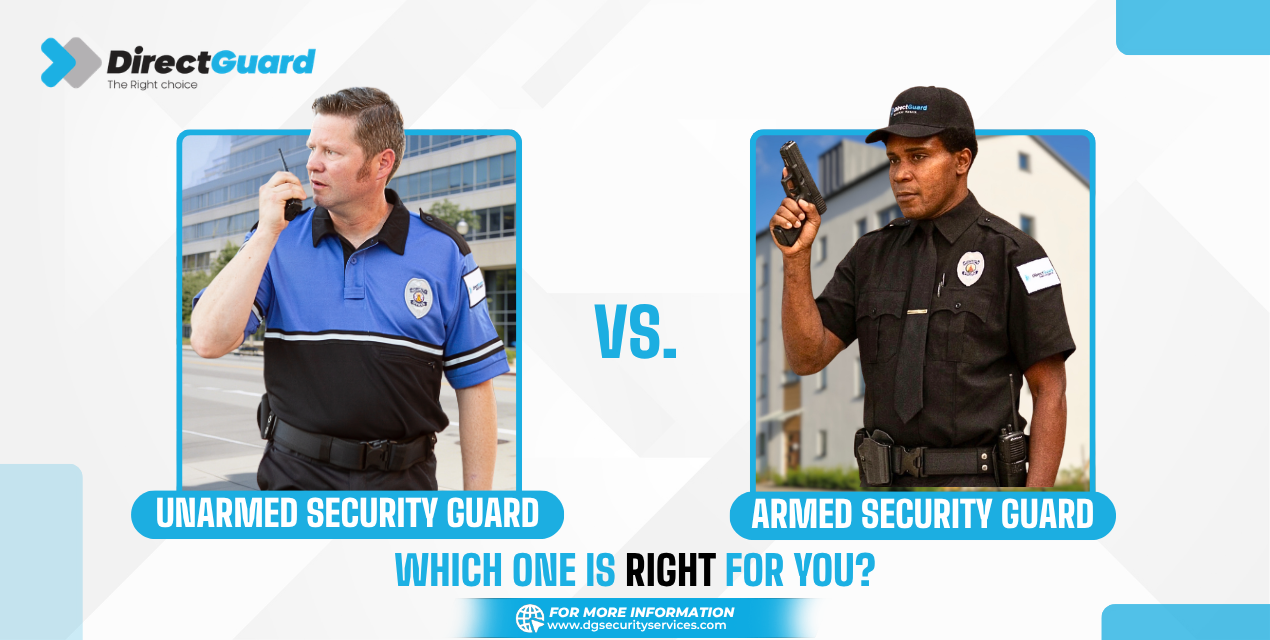
Unarmed vs Armed Security Guard Services: Which One Is Right for You?

Choosing the right security for your business or property can feel overwhelming—especially when deciding between unarmed vs. armed security guard services.

Do you need a visible presence to prevent everyday issues, or a higher level of protection for serious risks?

The truth is, both options serve important roles. The right choice depends on your environment, risk level, and specific security needs.

In this guide, we’ll break down the key differences between unarmed vs. armed security guard services so you can confidently decide what works best for you.

Unarmed vs Armed Security Guard Services

  • Unarmed security guards focus on prevention, observation, and customer-friendly protection.
  • Armed security guards are trained to handle high-risk situations and carry firearms for added protection.

For most businesses, unarmed security guard services are sufficient, while armed guards are used in higher-risk environments.

What Are Unarmed Security Guard Services?

Unarmed security guard services involve trained professionals who protect people and property without carrying weapons.

Key Features

  • Visible presence to deter crime
  • Patrol and monitoring duties
  • Access control and visitor management
  • Conflict resolution and de-escalation

They are ideal for maintaining a safe and welcoming environment.

What Are Armed Security Guard Services?

Armed security guard services include guards who carry firearms and are trained for high-risk situations, such as responding to potential threats, managing crowd control, and ensuring the safety of individuals in vulnerable environments.

Key Features

  • Advanced security training
  • Ability to respond to serious threats
  • Protection in high-risk environments
  • Strong deterrence against violent crime

They are used where maximum security is required.

Key Differences: Unarmed vs. Armed Security Guard Services

FeatureUnarmed Security GuardsArmed Security Guards
WeaponsNo firearmsCarry firearms
Risk LevelLow to mediumHigh-risk environments
CostMore affordableHigher cost
ApproachFriendly and approachableMore authoritative
TrainingObservation & communicationTactical & firearms training

Benefits of Unarmed Security Guard Services

1. Cost-Effective Security

Unarmed security guard services are budget-friendly, making them ideal for:

  • Offices
  • Retail stores
  • Residential properties

2. Non-Threatening Presence

They create a welcoming environment by:

  • Building trust with customers
  • Reducing fear or discomfort
  • Providing assistance when needed

3. Strong Deterrence

Even without weapons, they:

  • Prevent theft and vandalism
  • Discourage unauthorised access
  • Maintain order

4. Versatility

They are suitable for a wide range of industries and environments.


Hire Professional Security Unarmed Security Guards


Benefits of Armed Security Guard Services

1. Enhanced Protection

Armed guards provide a higher level of security for serious threats.

2. Ideal for High-Risk Environments

They are commonly used in:

  • Banks
  • Jewellery stores
  • High-value asset locations

3. Immediate Threat Response

They are trained to respond quickly to dangerous situations.

4. Strong Psychological Deterrent

The presence of armed guards discourages violent crime.

When Should You Choose Unarmed Security Guard Services?

Choose unarmed security guard services if:

  • Your environment has low to moderate risk.
  • You want a friendly and approachable presence
  • You need cost-effective security
  • Customer interaction is important.

Best for:

  • Offices
  • Retail stores
  • Residential communities
  • Schools and hospitals

When Should You Choose Armed Security Guard Services?

Choose armed guards if:

  • You face high-security risks.
  • You handle valuable assets.
  • There is a threat of violence.
  • You need maximum protection

Best for:

  • Banks
  • High-end retail
  • Critical infrastructure

Cost Comparison: Unarmed vs. Armed Security Guard Services

Cost is a major factor when choosing security.

Unarmed Security Guards

  • Lower hourly rates
  • More affordable for long-term use

Armed Security Guards

  • Higher costs due to training and licensing
  • Best suited for high-risk scenarios

For most businesses, unarmed security guard services provide the best value.

How to Choose the Right Option for Your Needs

1. Assess Your Risk Level

  • Low risk → Unarmed guards
  • High risk → Armed guards

2. Consider Your Budget

  • Limited budget → Unarmed security
  • Higher budget → Armed security

3. Evaluate Your Environment

  • Customer-facing → Unarmed
  • High-value or sensitive → Armed

4. Think About Public Perception

  • Friendly environment → Unarmed
  • High-security environment → Armed

Conclusion

When comparing unarmed vs armed security guard services, the right choice comes down to your specific needs.

If you’re looking for affordable, professional, and approachable protection, unarmed security guard services are the perfect fit.

However, if your environment involves higher risks or valuable assets, armed security may be necessary.

The key is to match your security level with your actual risk—so you get the best protection without overspending.

Frequently Asked Questions

  1. What is the main difference between unarmed vs. armed security guard services?
  2. The main difference is that armed guards carry firearms and handle high-risk situations, while unarmed guards focus on prevention, monitoring, and maintaining safety without weapons.
  3. Which is better: unarmed or armed security guards?
  4. It depends on your needs. Unarmed security guard services are ideal for most environments, while armed guards are better for high-risk situations, such as those involving valuable assets or potential threats to safety.
  5. Are unarmed security guards effective?
  6. Yes, they are highly effective in preventing crime through visibility, patrols, and quick response.
  7. Are armed security guards necessary for businesses?
  8. Only businesses with high-risk threats or valuable assets typically require armed guards.
  9. Which option is more cost-effective?
  10. Unarmed security guard services are more affordable and suitable for most businesses.

What Do Unarmed Security Guards Do? Duties, Skills & Responsibilities Explained

When you walk into a building and see a security guard at the entrance, you might think their job is simple—just standing and watching. But in reality, their role is far more important and active than it appears.

So, what do unarmed security guards do? They are trained professionals responsible for maintaining safety, preventing incidents, and ensuring everything runs smoothly—without carrying weapons.

From monitoring activity to handling unexpected situations, unarmed security guards play a vital role in protecting people and property every day.

What Do Unarmed Security Guards Do?

Unarmed security guards monitor premises, control access, patrol areas, prevent security threats, respond to incidents, and assist visitors—all without using firearms.

Their main goal is to prevent problems before they happen and respond quickly when needed.


Need Professional Security Services?


Core Duties of Unarmed Security Guards

To fully understand what unarmed security guards do, it’s important to break down their daily responsibilities.

1. Monitoring and Surveillance

One of the most important duties is keeping a constant watch on surroundings.

  • Monitor CCTV cameras
  • Observe suspicious behaviourbehaviour
  • Identify potential risks early
  • Report unusual activity

This proactive approach helps prevent incidents before they escalate.

2. Patrolling the Premises

Unarmed security guards regularly patrol assigned areas to maintain visibility.

  • Check entry and exit points
  • Inspect restricted areas
  • Ensure everything is secure
  • Deter criminal activity

Visible patrols act as a strong deterrent against theft and vandalism.

3. Access Control and Visitor Management

Controlling who enters a property is a key responsibility.

  • Verify IDs and credentials
  • Maintain visitor logs
  • Allow authorisedauthorised access only
  • Prevent unauthorisedunauthorised entry

This ensures that only approved individuals enter the premises.

4. Handling Incidents and Emergencies

Another critical part of what unarmed security guards do is responding to unexpected situations.

  • Manage conflicts calmly
  • Respond to alarms
  • Assist during emergencies
  • Contact emergency services when needed

Their training allows them to stay calm and take control of situations.

5. Customer Service and Assistance

Unarmed guards are often the first point of contact.

  • Greet visitors
  • Provide directions
  • Assist customers
  • Maintain a professional presence

This makes them an important part of the overall customer experience.


Hire Trained Unarmed Security Guards Today


Key Skills Required for Unarmed Security Guards

Understanding what unarmed security guards do also means understanding the skills they need.

1. Observation Skills

  • Notice small details
  • Detect unusual behaviourbehaviour
  • Stay alert at all times

2. Communication Skills

  • Speak clearly and professionally
  • Handle conflicts calmly
  • Provide clear instructions

3. Problem-Solving Ability

  • Think quickly in emergencies
  • Make smart decisions
  • Handle unexpected situations

4. Physical Fitness

  • Patrol large areas
  • Stand for long hours
  • Respond quickly when needed

5. Integrity and Professionalism

  • Follow rules and procedures
  • Remain honest and responsible
  • Maintain discipline

Responsibilities of Unarmed Security Guards

While duties are tasks, responsibilities define accountability.

Ensuring Safety

Protect people, property, and assets at all times.

Preventing Crime

Maintain a visible presence to discourage illegal activity.

Maintaining Order

Ensure rules and policies are followed.

Reporting Incidents

Document and report any unusual or suspicious activity.

Supporting Emergency Response

Assist during evacuations, fires, or medical situations.

Where Do Unarmed Security Guards Work?

Unarmed guards are used in a wide range of environments.

1. Retail Stores

  • Prevent shoplifting
  • Assist customers

2. Corporate Offices

  • Manage visitors
  • Ensure employee safety

3. Residential Communities

  • Monitor entrances
  • Maintain peace and security

4. Construction Sites

  • Prevent trespassing
  • Protect equipment

5. Events and Public Spaces

  • Control crowds
  • Maintain order

How Unarmed Security Guards Prevent Crime

You might wonder how guards without weapons can stop crime.

Here’s how they do it:

  • Visible Presence: Criminals avoid guarded areas.areas.
  • Early Detection: Spot risks before they escalate
  • Quick Response: Act immediately when something happens.happens.
  • Communication: Alert authorities quickly

Prevention is always more effective than reaction.

Common Misconceptions About Unarmed Security Guards

“They just stand around.”around.”

In reality, they actively monitor, patrol, and respond.

“They are not effective.”effective.”

Their presence alone prevents most incidents.

“They don’t handle emergencies.””

They are trained to respond quickly and efficiently.

Conclusion

So, what do unarmed security guards do? They do much more than just watch—they actively protect, prevent, and respond.

Their role combines awareness, communication, and professionalism to create a safe environment without the need for force.

Whether it’s a business, residential area, or event, unarmed security guards provide reliable, cost-effective protection that you can trust.

Frequently Asked Questions

  1. What do unarmed security guards do on a daily basis?
    They monitor premises, patrol areas, control access, assist visitors, and respond to incidents to maintain safety.
  2. Are unarmed security guards effective?
    Yes, they are highly effective in preventing crime through visibility, awareness, and quick response.
  3. Do unarmed security guards handle emergencies?
    Yes, they are trained to manage emergencies, assist people, and contact authorities when necessary.
  4. What skills do unarmed security guards need?
    They need observation, communication, problem-solving, and professionalism to perform their duties effectively.
  5. Where are unarmed security guards commonly used?
    They are used in offices, retail stores, residential areas, construction sites, and events.

A Complete Guide to Unarmed Security Guard Services

Security is one of those things you don’t think about—until you really need it. Whether it’s a busy office, a retail store, or a residential building, having the right protection in place makes all the difference.

This is where unarmed security guard services come in. They provide a strong, visible presence that keeps people safe, prevents problems, and creates a calm, professional environment—without the need for weapons.

If you’re considering hiring security, this guide will help you understand exactly how unarmed security guard services work, why they are effective, and how to choose the right provider.

What Are Unarmed Security Guard Services?

Unarmed security guard services involve trained security professionals who protect people, property, and assets without carrying firearms.

Instead, they rely on:

  • Observation and awareness
  • Communication and de-escalation
  • Regular patrols
  • Incident reporting

In simple terms, they prevent problems before they happen and respond quickly when needed.


Need Professional Security You Can Trust?


Key Responsibilities of Unarmed Security Guards

Unarmed guards play an active role in maintaining safety and order.

1. Monitoring and Surveillance

  • Patrol buildings and surroundings
  • Monitor CCTV systems
  • Detect suspicious behaviour early

2. Access Control

  • Verify IDs and credentials
  • Manage visitor entry
  • Secure restricted areas

3. Conflict Resolution

  • Handle disputes calmly
  • De-escalate tense situations
  • Maintain a safe environment

4. Emergency Response

  • Respond to alarms and incidents
  • Coordinate with emergency services
  • Follow safety protocols

5. Customer Assistance

  • Guide visitors
  • Provide directions
  • Create a welcoming environment

Why Businesses Choose Unarmed Security Guard Services

1. Cost-Effective Protection

Unarmed security guard services are more affordable than armed options, making them ideal for:

  • Small businesses
  • Offices
  • Residential communities

2. Strong Visible Deterrence

A uniformed guard:

  • Discourages theft and vandalism
  • Prevents unauthorised access
  • Reduces security risks

3. Friendly and Professional Presence

Unarmed guards:

  • Build trust with customers
  • Improve customer experience
  • Maintain a calm atmosphere

4. Flexible for Multiple Environments

They are suitable for:

  • Retail stores
  • Corporate offices
  • Schools
  • Hospitals
  • Events

Hire Trusted Unarmed Security Guards Today


Industries That Benefit from Unarmed Security Guard Services

Retail Stores

Prevent shoplifting and assist customers in a professional way.

Corporate Offices

Manage visitors and ensure employee safety.

Residential Communities

Control access points and monitor daily activity.

Construction Sites

Prevent trespassing and equipment theft.

Events and Public Venues

Control crowds and maintain order.

Unarmed vs. Armed Security Guards

Feature: Unarmed Security Guards Armed Security Guards’ Weapons No firearms. Carry firearms. Cost: affordable. Higher cost, best for low to medium risk High-risk environments approach Friendly & approachable More authoritative

For most environments, unarmed security guard services provide the right balance of safety and comfort.

How to Choose the Right Unarmed Security Guard Company

Selecting the right provider ensures you get maximum value.

1. Experience and Reputation

Choose a company with:

  • Proven track record
  • Positive client feedback
  • Industry experience

2. Licensing and Training

Make sure guards are:

  • Properly licensed
  • Trained in conflict resolution
  • Skilled in emergency handling

3. Customised Security Plans

Every property is different. Look for providers who:

  • Assess your needs
  • Offer tailored solutions
  • Adapt to your environment

4. Communication and Support

Reliable services include:

  • 24/7 availability
  • Clear reporting systems
  • Fast response times

How Unarmed Security Guard Services Improve Daily Operations

Beyond safety, unarmed security guard services help businesses run smoothly.

They:

  • Reduce workplace disruptions
  • Improve employee confidence
  • Maintain discipline
  • Support daily operations

As a result, businesses can focus on growth while security is handled professionally.

Common Misconceptions About Unarmed Security Guards

“They are not effective without weapons.”

In reality, their presence alone prevents most incidents.

“They only observe, not act.”

They actively handle situations and respond quickly.

“They are only for low-risk places.”

Many high-traffic environments rely on them daily.

Cost of Unarmed Security Guard Services

The cost depends on:

  • Number of guards
  • working hours
  • Location
  • Level of security required

However, unarmed security guard services remain one of the most budget-friendly and practical security solutions available.

Conclusion

In today’s environment, security is not just about force—it’s about prevention, awareness, and professionalism.

Unarmed security guard services provide a smart, effective, and affordable way to protect your people and property while maintaining a welcoming atmosphere.

By choosing the right security provider, you ensure not only safety but also confidence, trust, and peace of mind.

Frequently Asked Questions

  1. What do unarmed security guard services include?
    Unarmed security guard services include monitoring, patrols, access control, incident response, and customer assistance. Their goal is to prevent risks and maintain a safe environment without using firearms.
  2. Are unarmed security guards effective?
    Yes, they are highly effective. Their presence alone deters crime, and their training allows them to handle most situations calmly and professionally.
  3. When should you hire unarmed security guards?
    You should hire unarmed security guard services for offices, retail stores, residential areas, and events where safety is important but armed force is not required.
  4. What is the difference between armed and unarmed guards?
    Unarmed guards do not carry weapons and focus on prevention and communication, while armed guards are used in high-risk situations requiring force.
  5. Are unarmed security guard services affordable?
    Yes, they are more cost-effective than armed security, making them ideal for businesses looking for reliable protection within budget.

Why Government Facilities Require Professional Security Services

Key Takeaways

  • Government facilities handle sensitive information, public access, and high-profile personnel simultaneously — creating unique and complex security challenges.
  • Professional government security services provide armed and unarmed guards, access control, threat assessment, and emergency response.
  • Without professional security, government buildings face risks including data breaches, physical threats, politically motivated violence, and unauthorized access.
  • A licensed, trained security provider is the most reliable way to protect government employees, visitors, and critical public infrastructure.
  • Direct Guard Services provides customized professional security services for government buildings of all sizes and types.

Introduction

Walk into any government building, and you immediately sense the weight of what happens inside. Decisions that affect entire communities, records that define people’s lives, officials who carry enormous responsibility — all of it housed in a facility that, by law and design, must remain open and accessible to the public.

That openness is both a democratic necessity and a serious security challenge.

Government facilities occupy a unique position that no other type of building shares. They must welcome the public while protecting sensitive operations. They must remain transparent while securing confidential records. They must serve everyone while screening for threats. And they must do all of this every single day, without failure.

That is precisely why professional government security services are not a luxury — they are an operational requirement. In this guide, we break down exactly why government facilities need professional security, what risks they face without it, and what a proper security plan looks like for public sector buildings.

What Makes Government Facilities Different From Other Buildings?

Most businesses can control exactly who enters their premises. They can require appointments, restrict access to the public, and operate behind closed doors. Government facilities cannot do most of that.

City halls, courthouses, social service offices, public utility buildings, DMV locations, and federal agency offices must remain accessible to every member of the public during operating hours. That open-door policy is not a flaw — it is a fundamental part of how democratic government functions. But it also means these buildings face a level of exposure that private businesses never have to manage.

Here is what sets government facilities apart from every other type of building when it comes to security:

  • Open public access creates constant, unpredictable foot traffic from people of all backgrounds, intentions, and emotional states. Unlike a private office building, where visitors are screened before entry, government buildings often receive walk-ins with no prior notice and no vetting process.
  • High-value targets exist throughout the building. Sensitive legal records, law enforcement databases, financial systems, public utility controls, and identification documents are all stored and processed inside government facilities. These are targets for theft, espionage, tampering, and destruction.
  • High-profile personnel increase threat levels significantly. Judges, elected officials, commissioners, prosecutors, and senior administrators are all housed in government buildings. Each of these individuals can become a personal target for individuals with grievances — politically motivated, legally motivated, or otherwise.
  • Emotionally charged interactions happen every day. Unlike a bank or retail store, government buildings are places where people receive life-altering news — court rulings, benefit denials, deportation orders, custody decisions, criminal charges. The emotional volatility of these interactions creates an elevated risk of confrontation, verbal abuse, and physical altercations.
  • Critical infrastructure is housed or controlled from within. Water treatment controls, electrical grid management, emergency dispatch systems, and public safety communications often operate from government-managed facilities. A security breach in these buildings is not just a crime — it is a public safety emergency.

The Real Security Threats Facing Government Facilities Today

Understanding why government facilities need professional security services starts with understanding the specific threats they face. These are not theoretical risks. They are documented, recurring challenges that security professionals deal with in government environments every day.

Unauthorized Access and Trespassing

Government buildings are frequent targets for individuals attempting to access restricted areas — whether to steal records, confront an official, disrupt proceedings, or access sensitive systems. Without professional access control measures in place, unauthorized individuals can move freely through facilities undetected until it is too late.

Workplace Violence and Physical Altercations

Government employees — particularly those in social services, courts, licensing, and law enforcement — regularly deal with individuals who are frustrated, angry, or mentally unstable. According to the Occupational Safety and Health Administration (OSHA), workplace violence in public sector environments is significantly higher than the national average. Incidents can escalate rapidly from verbal confrontations to physical attacks.

Politically Motivated Threats and Targeted Violence

Political tension has created a measurably higher threat environment for government officials and facilities over the past decade. Judges, prosecutors, elected officials, and immigration officers have all faced documented threats and attacks. The FBI has reported a consistent increase in threats against public officials and government institutions nationwide. Professional security services provide both the deterrence and the rapid response capability needed to manage these threats.

Data Theft and Espionage

Government facilities store some of the most sensitive data in the country — criminal records, immigration files, tax information, court documents, law enforcement databases, and infrastructure schematics. Physical security plays a direct role in protecting this data. An unguarded server room or an unsecured document storage area represents a significant national and community security risk.

Civil Unrest and Protest Escalation

Government buildings are natural gathering points for public demonstrations and protests. While the vast majority of protests are peaceful and lawful, government security teams must be prepared for situations that escalate beyond peaceful assembly. Without trained government security personnel on the ground, even a manageable situation can become dangerous quickly.

Terrorism and Active Threat Scenarios

Federal, state, and local government buildings have historically been targets for domestic terrorism and mass casualty events. The Oklahoma City bombing, courthouse attacks, and numerous other incidents demonstrate the end of the threat spectrum. While rare, professional security services provide both deterrence and the structured emergency response capability needed to handle these scenarios effectively.

Vandalism and Property Destruction

Government buildings are frequent targets for vandalism, graffiti, and property destruction — particularly during periods of political unrest. Beyond the financial cost of repairs, vandalism undermines public confidence in the safety and stability of government institutions.

Why Standard OR In-House Security Is Not Enough?

Many government facilities rely on in-house staff, basic reception screening, or low-cost contracted security that lacks the training and resources to handle the real threats these buildings face. This approach creates serious and predictable gaps.

Untrained Personnel Cannot Handle Complex Threats.

A receptionist or basic administrative staff member is not equipped — legally or practically — to respond to an active threat, manage a violent altercation, or coordinate with law enforcement during an emergency. Professional government security services provide personnel specifically trained and licensed for these scenarios.

In-House Security Lacks Scalability

Government facility needs change constantly — public hearings, high-profile court cases, protests, special events, and seasonal peaks all create temporary surges in security requirements. A professional security services provider can scale staffing up or down to match these demands in real time. In-house teams cannot.

Liability Exposure Without Licensed Professionals

When an incident occurs in a government facility, and the security response is inadequate, the liability falls on the facility. Professional security providers carry appropriate licensing, insurance, and liability coverage — protecting the government entity from costly legal exposure.

No Dedicated Monitoring or Reporting

Professional security services include structured incident reporting, surveillance monitoring, and communication protocols that in-house arrangements rarely provide. Without these systems, patterns of suspicious behavior go undetected until they become full incidents.

Lack of Deterrence Value

The deterrence value of professional, uniformed, armed security guards is measurably higher than any informal arrangement. Studies in criminology consistently show that the visible presence of a trained security professional reduces the likelihood of criminal behavior at a facility by a significant margin.

What Professional Government Security Services Include

Professional security services for government facilities go far beyond putting a guard at the front door. A comprehensive government security services plan includes multiple integrated layers of protection.

Armed Security Guard Deployment

Licensed armed security guards provide the highest level of on-site deterrence and response capability. They are trained to manage access control, respond to active threats, support law enforcement, and maintain order in high-tension situations. For courthouses, federal buildings, and other high-risk government facilities, armed guards are standard.

Unarmed Security Guard Patrol

For lower-risk government facilities or for coverage in areas where armed presence is not appropriate, trained unarmed security guards provide professional monitoring, visitor screening, and incident response. They are the first line of interaction with the public and play a critical role in early threat detection.

Access Control Management

Professional security teams manage who enters and exits government facilities at every point of access. This includes visitor ID verification, badge and credential checking, vehicle access control for parking areas, and management of restricted areas within the building.

Surveillance Monitoring and CCTV Oversight

Government security services include active monitoring of closed-circuit camera systems, identification of suspicious behavior, and real-time communication with on-site guards. Passive surveillance without active monitoring is significantly less effective at preventing incidents.

Emergency Response and Evacuation Coordination

Professional security personnel are trained to coordinate emergency evacuations, communicate with law enforcement and first responders, implement lockdown procedures, and manage the safe movement of employees and visitors during crises.

Threat Assessment and Risk Consultation

Before deploying security personnel, professional providers conduct detailed threat assessments of the facility — identifying vulnerabilities in access points, blind spots in surveillance coverage, weaknesses in current protocols, and high-risk interaction zones. This assessment forms the foundation of a customized security plan.

Event and High-Profile Proceeding Security

Courthouses hosting high-profile trials, city halls during contentious public hearings, and government offices during significant announcements all require temporarily elevated security. Professional providers can deploy specialized teams for these events on short notice.

Mobile Patrol and Perimeter Security

For government campuses, large facilities, and buildings with expansive grounds, mobile patrol services provide regular perimeter sweeps, parking area monitoring, and coverage of exterior spaces that fixed guard posts cannot cover alone.

Key Benefits of Hiring A Professional Government Security Services Company

The advantages of professional government security services extend well beyond basic protection. Here is what government facilities gain when they work with a licensed, experienced security provider:

  • Immediate threat deterrence through a visible, uniformed professional security presence that discourages criminal behavior before it starts.
  • Rapid incident response from trained professionals who know exactly how to react during altercations, unauthorized access attempts, medical emergencies, and active threat situations.
  • Full legal compliance with state and federal security requirements, licensing regulations, and liability standards — protecting the government entity from legal and financial exposure.
  • Scalable coverage that adjusts to changing security needs — from routine daily operations to high-profile events, protests, and emergencies.
  • Documented incident reporting that creates a clear record of all security events, near-misses, and suspicious activity — supporting both operational improvements and legal defense if needed.
  • Employee and visitor confidence that comes from knowing the facility is professionally protected, which improves staff morale and public trust in the institution.
  • Integration with law enforcement through established relationships and communication protocols that allow security teams to work seamlessly alongside police and emergency services.
  • Cost efficiency compared to the financial cost of a single serious security incident — theft, violence, data breach, or lawsuit — which almost always exceeds the annual cost of professional security services many times over.

Types of Government Facilities That Need Professional Security Services

Professional government security services apply across a wide range of public sector facilities. Each type presents its own unique security requirements and risk profile.

  • Courthouses and Judicial Buildings require the highest level of security due to the presence of judges, prosecutors, defendants, and emotionally involved family members. Armed guards, metal detection, and strict access control are standard requirements in these environments.
  • City Halls and Municipal Offices serve as the public face of local government and receive high volumes of walk-in visitors. They require professional security that balances public accessibility with protection for elected officials and sensitive municipal records.
  • Federal and State Agency Buildings house a wide range of government operations from immigration processing to tax administration. These facilities handle sensitive personal data and regularly deal with individuals in stressful or adversarial situations.
  • Public Utility Control Centers manage critical infrastructure, including water treatment, electrical distribution, and communications systems. The security requirements here are among the most stringent of any government facility because a breach directly threatens public safety.
  • Social Service and Benefits Offices serve vulnerable populations and frequently deal with individuals experiencing financial crisis, mental health challenges, or desperate circumstances. Violence in these settings is well-documented, and professional security is essential.
  • Department of Motor Vehicles and Licensing Offices handle high public volume in environments known for frustration and long wait times. Altercations between staff and the public are common, and professional security reduces the frequency and severity of these incidents.
  • Public Housing Authority Offices manage tenant relations, eviction proceedings, and benefit administration — all of which can generate hostile interactions that require trained security personnel.
  • Emergency Management and Dispatch Centers are critical operational hubs that must be protected from both physical intrusion and disruption. Any security failure in these facilities has immediate public safety consequences.

What to Look for in A Government Security Services Provider

Not every security company is equipped to handle the specific demands of government facility protection. When evaluating providers, government facility managers should look for the following:

  • Full state licensing and compliance. Every guard deployed must carry a valid security license for your state. Armed guards must hold current firearms permits. The provider must carry appropriate liability insurance and meet all regulatory requirements.
  • Documented government sector experience. Government facilities present challenges that are fundamentally different from retail, corporate, or residential security. Look for a provider with a track record specifically in public sector environments.
  • Background-verified and continuously trained personnel. Guards should undergo comprehensive background checks, drug screening, and ongoing training that goes well beyond the minimum licensing requirements.
  • Customizable security plans. Every government facility is different. A courthouse has entirely different needs than a DMV office. Your provider should deliver a tailored security plan — not a one-size-fits-all package.
  • 24/7 availability and rapid deployment capability. Security incidents do not follow business hours. Your provider must be reachable and deployable around the clock, including weekends and holidays.
  • Transparent incident reporting and communication. You should receive regular written reports on all security activity, incidents, and observations. Ongoing communication between your facility management team and the security provider is essential.
  • References and verifiable track record. Ask for references from other government clients. A reputable provider will have a documented history of successful government security partnerships they can share.

📞 Talk to Our Government Security Experts Today

How Direct Guard Services Protects Government Facilities

At Direct Guard Services, we understand that protecting a government facility is fundamentally different from any other type of security assignment. Public trust, legal compliance, operational continuity, and the safety of both employees and visitors all depend on getting the security plan exactly right.

Our approach to government security services includes a detailed initial risk assessment of your facility, customized security planning based on your specific threat environment, deployment of licensed and thoroughly vetted armed and unarmed security personnel, ongoing supervision and performance monitoring of all assigned guards, regular communication and reporting to your facility management team, and rapid response to any changes in your security needs or threat level.

We serve government facilities of all sizes — from single-office municipal departments to multi-building government campuses — with the same level of professionalism, reliability, and commitment to public safety.

Your government facility deserves a security partner who understands the unique responsibility that comes with protecting public institutions. That is exactly what Direct Guard Services delivers.

Final Thoughts

Government facilities carry a responsibility that no private business does — the responsibility to remain open to the public while protecting the people, records, and infrastructure that keep communities functioning safely. That responsibility cannot be fulfilled without professional security services.

The threats facing government buildings today are real, documented, and growing. From workplace violence and data theft to politically motivated attacks and civil unrest, the range of risks demands a comprehensive, professional, and proactive security response.

Professional government security services are not an expense. They are an investment in the safety of your employees, the protection of your assets, the continuity of your operations, and the public trust that every government institution depends on.

Do not wait for an incident to reveal the gaps in your current security plan.

Frequently Asked Questions

  1. Q: Why do government facilities need professional security services?
    A:
    Government facilities face a unique combination of threats, including open public access, high-profile personnel, sensitive data storage, and emotionally charged interactions. Professional government security services provide the trained personnel, access control systems, and emergency response capabilities needed to manage these threats effectively and protect both employees and the public.
  2. Q: What is included in professional government security services?
    A:
    Professional government security services typically include armed and unarmed security guard deployment, access control management, surveillance monitoring, emergency response and evacuation coordination, threat assessment, event security, and mobile patrol. The specific services depend on the type of facility and its unique security requirements.
  3. Q: What types of government buildings need security services?
    A:
    Virtually all government facilities benefit from professional security services. The highest-priority buildings include courthouses, federal and state agency offices, city halls, public utility control centers, social service offices, licensing departments, public housing authority offices, and emergency management centers.
  4. Q: How is government facility security different from commercial security?
    A:
    Government facilities must remain publicly accessible while protecting sensitive operations, high-profile personnel, and critical infrastructure — a balance that commercial businesses do not face. Government security also involves stricter compliance requirements, more complex threat environments, and a higher responsibility to the public compared to private commercial security assignments.
  5. Q: Are armed security guards necessary for government buildings?
    A:
    Armed security guards are strongly recommended for high-risk government facilities, including courthouses, federal buildings, utility control centers, and offices housing elected officials or sensitive law enforcement data. For lower-risk municipal offices, trained unarmed security guards may be appropriate — a licensed security provider can help you determine the right approach for your specific facility.
  6. Q: How do I get started with government security services from Direct Guard Services?
    A:
    Getting started is simple. Contact Direct Guard Services to schedule a free security assessment. Our team will evaluate your facility, identify your specific risks, and recommend a customized security plan that fits your operational needs and budget.

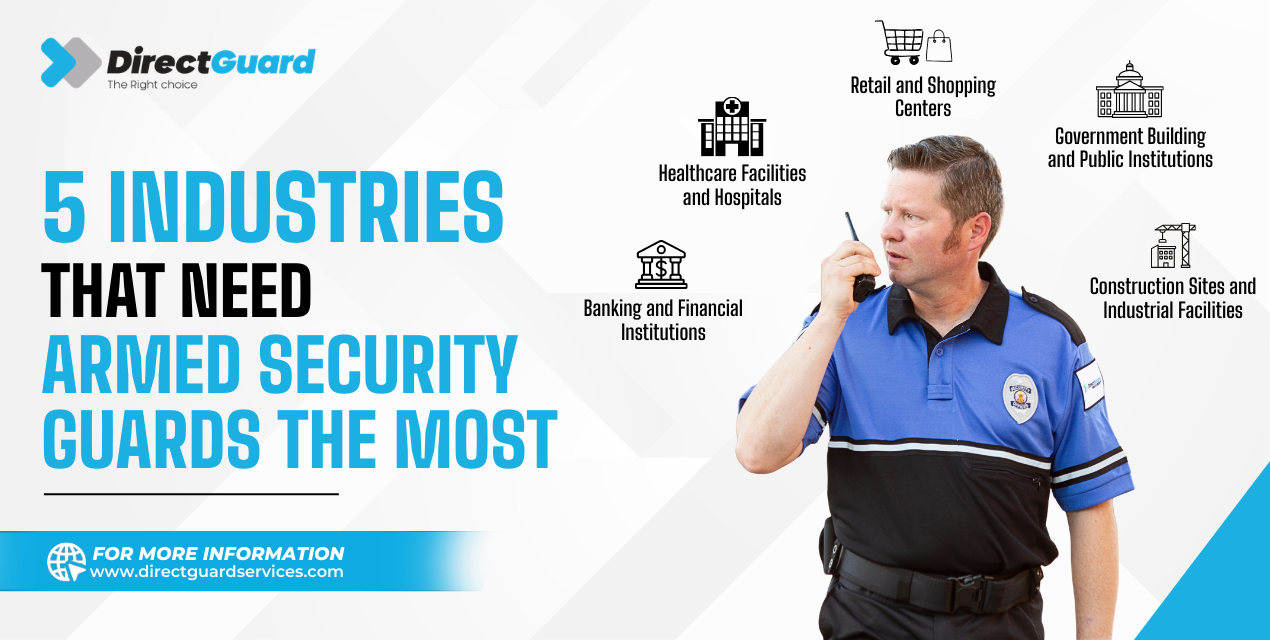
5 Industries That Need Armed Security Guards the Most

Introduction

Some threats don’t wait for business hours. And some environments are too high-risk to rely on standard security measures. That’s exactly why armed security guards exist — not to intimidate, but to protect people, assets, and operations when the stakes are highest.

If you run a business or manage a facility, you’ve probably asked yourself: Do we really need armed security? The answer depends on your industry. Some sectors face threats so frequent, so severe, or so unpredictable that unarmed security isn’t enough.

In this guide, we break down the 5 industries that need armed security guards the most — and why having the right protection in place can be the difference between a close call and a catastrophe.

Why Armed Security Guards Matter More Than Ever

Crime doesn’t discriminate by industry. But certain businesses attract more risk — whether it’s the cash they handle, the sensitive data they store, the vulnerable people they serve, or the high-value assets they protect.

Armed security guards bring a level of deterrence and response capability that goes far beyond a badge and a uniform. They are trained professionals equipped to respond when and where it matters most.

Here is what professional armed security guards do that unarmed guards simply cannot:

  • De-escalate volatile situations before they spiral into violence
  • Respond immediately to active threats, robbery, or workplace aggression
  • Protect employees, customers, and assets in real time
  • Coordinate effectively with law enforcement during emergencies
  • Provide a visible deterrent that discourages criminal activity before it starts

According to the Bureau of Justice Statistics, the presence of professional security personnel significantly reduces the likelihood of violent incidents in high-risk environments. When seconds count, armed guards are the difference between a controlled response and chaos.

1. Banking and Financial Institutions

Why Do Banks Need Armed Security Guards?

Let’s start with the most obvious one. Banks, credit unions, and financial service centers are prime targets for robbery, fraud-related violence, and internal theft. Large amounts of cash, valuable customer data, and the psychological pressure of financial environments make these facilities some of the most vulnerable in any city.

Armed security guards are essential in banking environments for the following reasons:

  • Cash vaults and ATM areas require constant physical deterrence around the clock
  • Teller windows and customer-facing areas are directly exposed to walk-in threats
  • High-profile branch locations attract repeat criminal targeting
  • Guards help manage crowd tension during loan disputes, foreclosure proceedings, and high-stress transactions
  • Armed presence dramatically reduces robbery attempt rates at financial branches

Armed guards in financial institutions don’t just prevent robberies — they create an environment where employees feel safe, and customers feel confident. Their visible presence alone dramatically lowers the risk of attempted crime.

Industry Insight

Financial institutions with professionally armed security report up to 70% fewer robbery attempts compared to unguarded branches. The presence of a trained armed guard is the single most effective deterrent available to financial facilities today.

According to the Bureau of Justice Statistics, robbery rates are significantly lower in guarded financial environments compared to those without dedicated security personnel.

2. Healthcare Facilities and Hospitals

Why Does Healthcare Need Armed Security Guards?

This one surprises people. Hospitals and healthcare facilities are among the most dangerous workplaces in the United States for staff. Violence in healthcare settings — from patients, visitors, or intruders — is a growing and deeply serious problem that demands professional, armed response teams.

Here is why armed security guards are critical in healthcare environments:

  • Emergency rooms are open 24/7, making them accessible to anyone — including unstable or aggressive individuals
  • Pharmacies within hospitals store controlled substances that are frequent targets of theft and robbery
  • Psychiatric wards and behavioral health units require heightened security awareness and de-escalation expertise
  • High emotions in waiting areas — grief, fear, and frustration — can quickly escalate into physical violence
  • Hospitals handle large amounts of cash through billing, gift shops, and administrative operations

The Occupational Safety and Health Administration (OSHA) recognizes healthcare as one of the highest-risk sectors for workplace violence. Healthcare workers face a 4x higher risk of workplace violence compared to employees in other industries. Armed security guards trained in de-escalation and emergency response are no longer optional in modern healthcare facilities — they are a necessity.

Did You Know:

According to OSHA, healthcare and social service workers experience the highest rates of injuries caused by workplace violence, accounting for nearly 73% of all nonfatal workplace violence injuries in the United States. That number demands a professional security response.

3. Retail and Shopping Centers

Why Does Retail Need Armed Security Guards?

Retail theft costs the industry billions of dollars every year. But beyond shoplifting, large retail environments — especially malls, big-box stores, and jewelry shops — face serious threats including organized retail crime, armed robbery, and increasingly violent confrontations between staff and criminals.

Here is why armed security guards are a must for retail environments:

  • Jewelry stores, electronics retailers, and luxury brand outlets are frequent targets of smash-and-grab robberies
  • Shopping malls see extremely high foot traffic, making crowd control and incident response complex
  • Organized retail crime groups have escalated from theft to direct physical confrontation with staff
  • Parking structures and loading docks create security blind spots that require active patrolling
  • High-value inventory requires constant protection during both open and closed hours

Armed security guards stationed at key entry and exit points provide visible deterrence that unarmed staff simply cannot. They also respond faster when a situation escalates from theft to violence, protecting both employees and customers in the process.

According to the National Retail Federation (NRF), organized retail crime costs the industry over $100 billion annually, and incidents involving physical violence have increased significantly year over year. Armed guards are the most effective frontline response to this growing threat.

4. Government Building and Public Institutions

Why Do Government Facilities Need Armed Security Guards?

From courthouses to city halls to federal offices — government buildings handle sensitive information, high-profile personnel, and public access simultaneously. That unique combination creates security challenges that demand a professional, armed response team operating with precision and sound judgment at all times.

Here is why armed security guards are non-negotiable in government environments:

  • Government buildings house records tied to law enforcement, legal proceedings, and public safety
  • Public access means anyone can walk in, requiring constant real-time threat assessment at entry points
  • Officials, judges, and government employees have increasingly been targets of politically motivated threats
  • Protests and public demonstrations can unexpectedly escalate beyond manageable levels
  • Critical infrastructure, like utility management offices and public service centers, needs 24/7 armed protection

Armed guards in government environments must balance public accessibility with strict security protocols — a skill that requires intensive training and professional judgment that goes far beyond standard guard duties. These are environments where the cost of a security failure is measured not just in dollars but in lives and public trust.

5. Construction Sites and Industrial Facilities

Why Do Construction Sites Need Armed Security Guards?

This is one of the most overlooked security needs in any industry. Construction sites are among the most frequently targeted locations for theft across the country. Heavy equipment, copper wiring, power tools, and raw materials are all high-value targets — and most sites operate with little to no overnight security coverage.

Here is why armed security guards are vital for construction and industrial sites:

  • Equipment theft at construction sites costs the industry over $1 billion annually, according to the National Equipment Register.
  • Remote locations and large open perimeters make surveillance cameras alone entirely insufficient.
  • Night-time vulnerability when workers are off-site creates open windows for organized theft operations.
  • Industrial facilities store hazardous materials requiring strict restricted access and professional oversight.
  • Trespassing incidents can result in serious personal injury liability for site owners and contractors.

According to the National Equipment Register construction equipment theft exceeds $1 billion annually, with recovery rates below 25%. Armed guards patrolling construction and industrial sites deter theft, enforce access control, and prevent unauthorized entry — protecting both valuable assets and the safety of the workforce.

Quick Reference: Industries vs Armed Security Guards

IndustryPrimary RiskArmed Guard Role
Banking and FinanceCash, robbery, data theftVault protection, visible deterrence
Healthcare FacilitiesWorkplace violence, drug theftDe-escalation, ER and ward security
Retail and MallsOrganized crime, armed robberyEntry control, floor and parking patrol
Government BuildingsThreats, unrestricted public accessAccess control, personnel protection
Construction SitesEquipment theft, trespassingPerimeter patrol, overnight guard coverage

Bonus Industries that Also Need Armed Security Guards

While the five above represent the highest-risk sectors, armed security guards are also increasingly deployed in these growing areas:

  • Cannabis Dispensaries — cash-heavy operations with strict regulatory security requirements and high robbery risk
  • Data Centers — protecting sensitive digital infrastructure from physical intrusion and insider threats
  • Private Schools and Universities — following increased incidents of campus violence and unauthorized access
  • Logistics and Transportation Hubs — securing high-value cargo in transit from loading to final destination
  • Event Venues and VIP Gatherings — crowd management and protection for high-profile attendees and performers

No matter the setting, if your business carries financial, physical, or reputational risk, a conversation with a professional armed security provider is always worth having.

How to Choose the Right Armed Security Guard Service

Not all security companies are created equal. When selecting an armed security guard provider for your business, here is what to look for:

  • State licensing and compliance — guards must be properly licensed to carry firearms in their state
  • Thoroughly background-checked and trained personnel — look for ongoing training programs, not just basic certification
  • Industry-specific experience — a healthcare environment requires different expertise than a construction site
  • Customizable security plans — your business is unique, and your security solution should reflect that
  • 24/7 availability and rapid response capability — threats do not follow a 9-to-5 schedule
  • Transparent reporting and communication — regular incident reports and open communication keep you fully informed

At Direct Guard Services, we specialize in providing highly trained, licensed armed security guards across multiple industries. Our team is built on professionalism, reliability, and an unwavering commitment to the safety of your people and your assets.

Final Thoughts

The need for armed security guards is not about fear — it is about preparedness. Industries that handle high-value assets, serve vulnerable populations, manage sensitive information, or operate in high-risk environments cannot afford to cut corners on security.

Whether you are managing a bank branch, running a retail chain, operating a hospital, overseeing a government facility, or managing a busy construction site, the right armed security team protects what matters most: your people, your assets, and your peace of mind.

Don’t wait for an incident to expose the gaps in your security plan.

Frequently Asked Questions

  1. Q: What industries need armed security guards the most?
    A:
    The industries that need armed security guards the most are banking and financial institutions, healthcare facilities and hospitals, retail and shopping centers, government buildings and public institutions, and construction sites and industrial facilities. Each of these sectors faces unique and elevated threats that unarmed security cannot adequately address.
  2. Q: What is the difference between armed and unarmed security guards?
    A: Armed security guards are licensed to carry firearms and trained to respond to active threats, robberies, and violent incidents. Unarmed guards rely on observation, communication, and deterrence only. Armed guards are best suited for higher-risk environments like banks, hospitals, government buildings, and industrial facilities where the potential for serious threats is significantly higher.
  3. Q: How do I know if my business needs armed security guards?
    A:
    If your business handles large amounts of cash, stores high-value assets, operates in a high-crime area, or serves vulnerable populations, armed security is strongly recommended. A professional security assessment from a licensed provider like Direct Guard Services can identify your specific risk level and recommend the right protection plan.
  4. Q: Are armed security guards required to be licensed?
    A:
    Yes. Armed security guards must hold a valid state firearms license, pass thorough background checks, and complete regular ongoing training. Licensing requirements vary by state. Always verify that your security provider’s guards are fully licensed and compliant before signing any contract.
  5. Q: How much do armed security guard services cost?
    A:
    Costs vary based on the number of guards required, hours of coverage needed, industry risk level, and your specific location. Contact Direct Guard Services for a free, customized security assessment and quote tailored to your business.
  6. Q: Can armed security guards legally use their firearms?
    A:
    Armed security guards are trained to use their firearm only as a last resort, when there is an imminent threat to life. They are trained extensively in de-escalation, threat assessment, and use-of-force law. Their primary role is deterrence and prevention — not confrontation.

Why You Need Event Security Guards?

Planning an event can be exciting, but it also comes with serious responsibilities. Whether it is a corporate gathering, concert, wedding, festival, or private party, ensuring the safety of guests should always be a top priority.

This is where event security guards become essential.

Professional event security guards help maintain order, manage crowds, prevent incidents, and respond quickly to emergencies. Without proper security, events can face risks such as unauthorized access, conflicts between guests, or safety hazards.

In this guide, we will explain why event security guards are important, how they protect your event, and why hiring trained professionals can make a major difference in the success of your event.

1. Ensuring Guest Safety

The primary reason to hire event security guards is to protect guests and staff.

Large gatherings often attract different types of people, and without proper monitoring, safety risks can arise.

How security guards ensure safety

  • Monitoring entry and exit points
  • Preventing unauthorized individuals from entering
  • Responding quickly to suspicious activity
  • Assisting guests

Professional security teams stay alert throughout the event to identify and address potential problems before they escalate.

When guests feel safe, they are more likely to enjoy the event and have a positive experience.

2. Managing Large Crowds Effectively

Crowd control is one of the biggest challenges during events. Without proper organization, overcrowding or panic can create dangerous situations.

Experienced event security guards are trained to manage crowds and maintain order.

Crowd control responsibilities

  • Directing guest movement
  • Monitoring crowded areas
  • Preventing overcrowding at entrances
  • Managing queues and lines

Security guards help keep everything organized, especially during high-traffic moments such as entry, exit, or popular performances.

Effective crowd management ensures that everyone can move safely throughout the event.

3. Preventing Unauthorized Access

Another major benefit of hiring event security guard is preventing unauthorized entry.

Events often have restricted areas such as VIP zones, backstage areas, or private sections.

Security guards help protect these areas by:

  • Checking tickets or passes
  • Monitoring entry points
  • Controlling access to restricted zones
  • Identifying suspicious individuals

By enforcing access control, security teams ensure that only authorized individuals enter sensitive areas.

This helps protect both guests and event organizers.

4. Quick Response to Emergencies

Unexpected situations can occur at any event, including medical emergencies, fires, or security threats.

Trained event security guards are prepared to respond quickly and manage emergencies effectively.

Emergency response duties

  • Coordinating evacuations if necessary
  • Assisting injured guests
  • Contacting emergency services
  • Managing crowd safety during emergencies

Security guards often act as first responders, helping to control the situation until emergency services arrive.

Their training and experience can significantly reduce risks during critical situations.

5. Preventing Conflicts and Disturbances

Large events can sometimes lead to disagreements or disruptive behavior among attendees.

Professional event security guards are trained in conflict management and de-escalation techniques.

How security guards manage conflicts

  • Identifying aggressive behavior early
  • Calming tense situations
  • Removing disruptive individuals if necessary
  • Protecting guests from potential harm

Their presence alone often discourages troublemakers from causing problems.

This helps maintain a peaceful and enjoyable environment for everyone.

6. Protecting Event Property and Equipment

Events often involve expensive equipment such as sound systems, lighting, decorations, and staging.

Without proper security, these assets may be at risk of theft or damage.

Event security guards help protect valuable property by:

  • Monitoring equipment areas
  • Preventing unauthorized access backstage
  • Patrolling event grounds
  • Monitoring suspicious activity

This protection helps event organizers avoid financial losses and ensures that the event runs smoothly.

7. Enhancing Event Organization

Security guards do more than protect people. They also contribute to the overall organization of the event.

Professional event security guards help maintain structure and coordination by:

  • Guiding guests to entrances or exits
  • Assisting with parking management
  • Providing directions to attendees
  • Supporting event staff when needed

Their assistance improves the overall experience for guests and helps the event run efficiently.

If you are planning an event, learn more about our professional event security services:

8. Creating a Professional and Secure Environment

The presence of event security guards also improves the overall image of an event.

Guests feel more comfortable knowing that trained professionals are present to protect them.

Benefits of visible security presence include:

  • Increased guest confidence
  • Reduced chances of crime
  • Better event reputation
  • Improved guest satisfaction

Security guards help create a professional atmosphere where attendees can focus on enjoying the event.

Why Professional Event Security Guards Matter

Hiring trained event security guards is one of the best ways to ensure a safe and successful event.

From managing crowds to handling emergencies, professional security teams provide essential protection that helps events run smoothly.

According to security industry standards published by the American Society for Industrial Security (ASIS), proper security planning is a key factor in preventing incidents during large gatherings.

Whether your event is large or small, investing in professional security services ensures safety for guests, staff, and organizers.

Final Thoughts

Organizing a successful event requires careful planning, and safety should always be a priority. Hiring professional event security guards ensures that guests, staff, and property remain protected throughout the event.

From crowd management to emergency response, trained security professionals play a critical role in maintaining order and preventing potential risks.

Whether you are hosting a corporate event, festival, concert, or private gathering, investing in reliable security services can help ensure a smooth and safe experience for everyone involved.

For professional event protection, visit Direct Guard Services

FAQs

  1. Why are event security guards important?
    Event security guards are important because they protect guests, manage crowds, prevent unauthorized access, and respond quickly to emergencies during events.
  2. What do event security guards do?
    Event security guards monitor entrances, control crowds, check tickets, protect property, and ensure the safety of guests and staff throughout the event.
  3. Do small events need security guards?
    Yes. Even small events can benefit from security guards to prevent conflicts, manage entry points, and maintain a safe environment.
  4. How many security guards are needed for an event?
    The number of guards depends on the event size, venue, crowd size, and security risks involved.