

Quick Answer
A virtual guard uses AI-powered cameras, motion detection, and live monitoring to detect threats instantly and respond without being physically present.
Hiring security today isn’t as simple as it used to be.
On one hand, traditional guards offer a physical presence. On the other hand, virtual guards promise 24/7 monitoring, faster detection, and lower costs. So naturally, businesses are asking:
Can a virtual guard actually replace traditional security guards?
This isn’t just a trend-driven question—it’s a business-critical decision that affects safety, costs, and operational efficiency.
In this guide, we’ll break down the virtual guard vs traditional security guards debate in depth—covering not just features, but real-world performance, risks, and the smartest way to secure your property.
What Is a Virtual Guard?
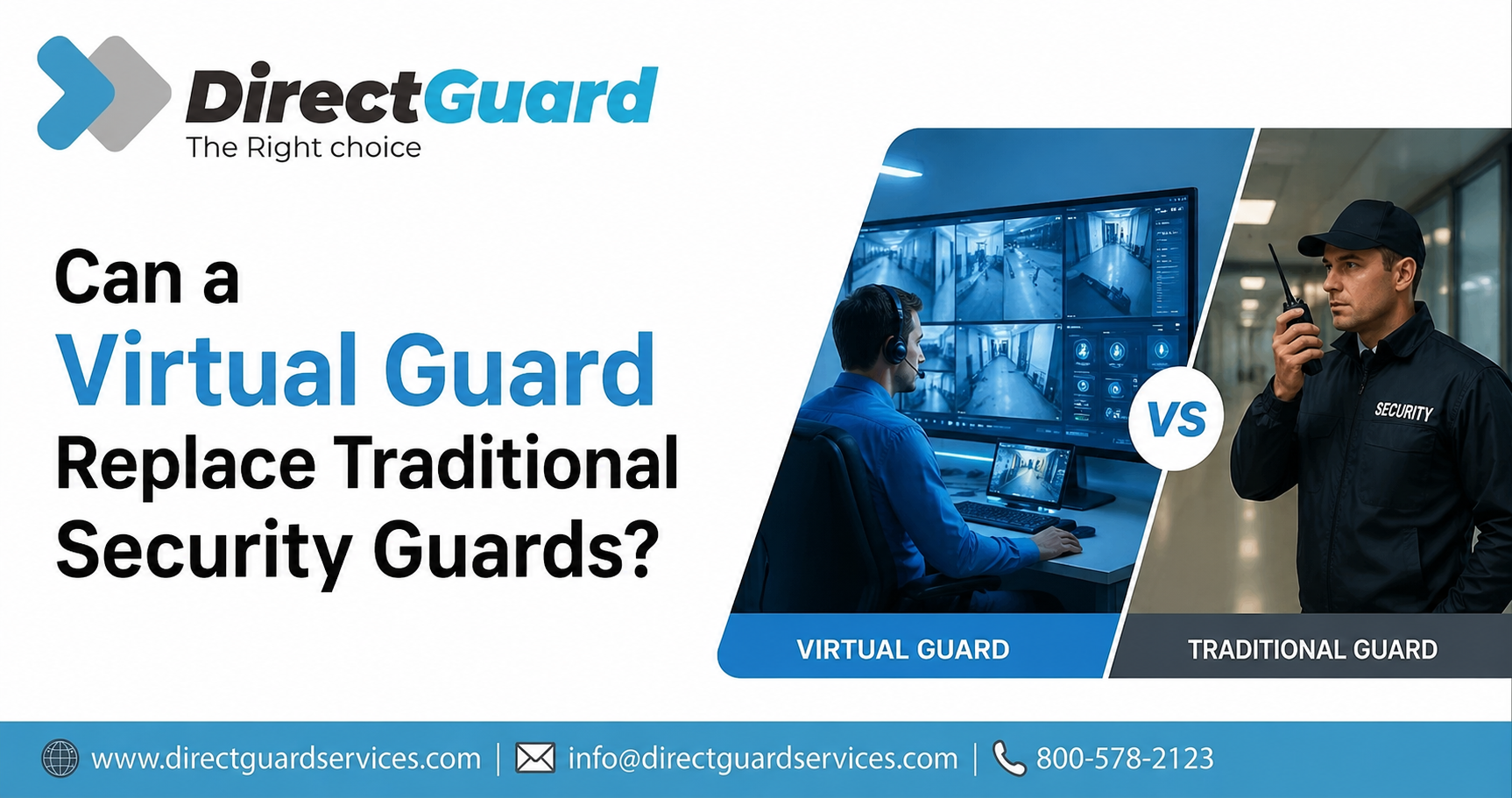
A virtual guard is a remote security professional supported by advanced surveillance technology to monitor and protect properties in real time.
How Virtual Guards Work in Practice
Virtual guarding is not just “watching cameras.” It’s an active, layered system:
- Smart cameras monitor your property 24/7
- AI detects unusual activity (movement, loitering, intrusion)
- Alerts are triggered instantly
- A trained remote guard verifies the threat
- Action is taken (audio warning, alarm, or police dispatch)
Why This Matters
Unlike passive CCTV systems, virtual guards actively intervene, which significantly reduces crime before it escalates.
What Are Traditional Security Guards?
Traditional security guards are physically present personnel responsible for protecting a location through observation and direct action.
Direct Answer:
Traditional guards provide on-site security by patrolling, monitoring activity, and physically responding to incidents.
How They Operate Daily
- Conduct patrols across the property
- Monitor entry and exit points
- Respond to suspicious activity
- Assist employees or visitors
Why They Are Still Important
Their physical presence creates an immediate sense of control and authority—something technology alone cannot fully replicate.
Virtual Guard vs Traditional Security Guards: Key Differences Explained
| Feature | Virtual Guard | Traditional Guard |
|---|---|---|
| Monitoring | 24/7 nonstop | Shift-based |
| Coverage | Multiple locations | One location |
| Cost | Lower | Higher |
| Response Speed | Instant alerts | Depends on proximity |
| Physical Action | No | Yes |
| Accuracy | AI-assisted | Human-dependent |
How Virtual Guards Actually Prevent Crime
Many people assume virtual guards only “watch” incidents—but in reality, they prevent them.
Step-by-Step Crime Prevention
- Detection: AI identifies suspicious behavior early
- Verification: A remote guard confirms the threat
- Intervention: Loudspeaker warnings are issued
- Escalation: Authorities are contacted if needed
Real Impact
For example, if someone enters a restricted area at night:
- A loud voice warns them immediately
- Most intruders leave before committing a crime
This proactive approach often stops incidents before damage occurs.
Advantages of Virtual Guards (Deep Dive)
1. True 24/7 Monitoring Without Human Limitations
Traditional guards work in shifts and can experience fatigue. Virtual guards operate continuously without breaks.
Result: No blind spots in surveillance
2. Major Cost Savings Over Time
Hiring multiple guards for round-the-clock coverage is expensive.
Example:
- 3 shifts per day = multiple guards
- Salaries + overtime + benefits
Virtual systems eliminate most of these costs.
Businesses often save 40–60% annually
3. Faster Detection and Response
AI systems don’t “miss” activity.
Example:
- A guard might overlook movement during patrol
- AI detects it instantly and triggers an alert
Result: Faster response = reduced risk
4. Scalable Across Multiple Locations
A single monitoring center can handle multiple properties.
Ideal for:
- Multi-site businesses
- Warehouses
- Retail chains
5. Data-Driven Security
Virtual systems provide:
- Incident reports
- Recorded footage
- Analytics
This helps improve long-term security planning.
Advantages of Traditional Security Guards (Deep Dive)
1. Immediate Physical Intervention
If a situation escalates, a guard can act instantly.
Example:
- Stop a trespasser
- Assist during emergencies
This is something virtual guards cannot do.
2. Strong Visual Deterrence
A physical guard can prevent crimes simply by being visible.
Criminals often avoid guarded locations entirely.
3. Human Judgment in Complex Situations
Not all threats are obvious.
Humans can:
- Read behavior
- De-escalate situations
- Make quick decisions
4. Customer Interaction and Support
In places like offices or malls, guards also:
- Guide visitors
- Provide assistance
This adds value beyond security.
Real-World Use Cases
1. Warehouses
Virtual guards monitor large spaces efficiently.
Result:
- Faster intrusion detection
- Lower costs
2. Construction Sites
These sites are often empty at night, making them vulnerable.
Virtual monitoring detects:
- Equipment theft
- Unauthorized access
3. Corporate Offices
Most offices now use a hybrid approach:
- Virtual monitoring overnight
- Physical guards during working hours
Hidden Costs of Traditional Security Guards
Many businesses underestimate the real cost of hiring guards.
Beyond Salary, You Pay For:
- Training and onboarding
- Employee turnover
- Insurance and liability
- Overtime and scheduling issues
Over time, these costs add up significantly.
Limitations of Virtual Guards
Direct Answer:
Virtual guards cannot physically intervene and rely heavily on technology.
Key Limitations
- No on-site presence
- Dependence on the internet and equipment
- Not ideal for high-risk or unpredictable environments
This is why they don’t fully replace guards in every scenario.
Risk of Choosing the Wrong Security Model
Choosing the wrong solution can lead to serious consequences:
Common Mistakes
- Using only guards for large areas → high costs
- Using only cameras in high-risk areas → weak response
- Ignoring hybrid solutions → missed opportunities
The wrong choice can mean:
- Increased theft
- Delayed response
- Higher long-term expenses
Hybrid Security Model: The Best Strategy Today
Instead of choosing one, many businesses combine both.
How It Works
- Virtual guards monitor continuously
- Physical guards respond when needed
Why It Works Best
- Reduces costs
- Improves response time
- Provides complete coverage
This is considered the most effective modern security solution.
How to Choose the Right Security Solution
1. Choose Virtual Guards If:
- You need 24/7 monitoring
- You want to reduce costs
- Your property is large or remote
2. Choose Traditional Guards If:
- You need physical presence
- Your location is high-risk
- Customer interaction is required
3. Choose Hybrid Security If:
- You want the best overall protection
- You need both efficiency and response
Expert Insight
Based on industry trends, most businesses are not fully replacing guards—they are optimizing them with virtual systems.
The future of security is not replacement—it’s integration.
Final Verdict
So, can a virtual guard replace traditional security guards?
Yes—but only in the right situations.
- Virtual guards = efficiency, cost savings, constant monitoring
- Traditional guards = physical presence, human response
- Hybrid model = the smartest and most effective solution
Call to Action
If you’re ready to upgrade your security with a smarter and more cost-effective approach, Direct Guard Services offers tailored solutions combining virtual monitoring and on-site protection.
FAQs
1. Can a virtual guard replace traditional security guards?
Yes, virtual guards can replace traditional guards in low-risk environments, but not where physical presence is required.
2. Are virtual guards reliable?
Yes, they offer consistent, real-time monitoring with AI support, reducing human error.
3. Do virtual guards prevent crime?
Yes, real-time detection and audio warnings help stop incidents before they escalate.
4. How much does a virtual guard cost?
Virtual guards can reduce costs by up to 60% compared to traditional security.
5. Is hybrid security better?
Yes, combining both provides the best balance of cost, coverage, and protection.