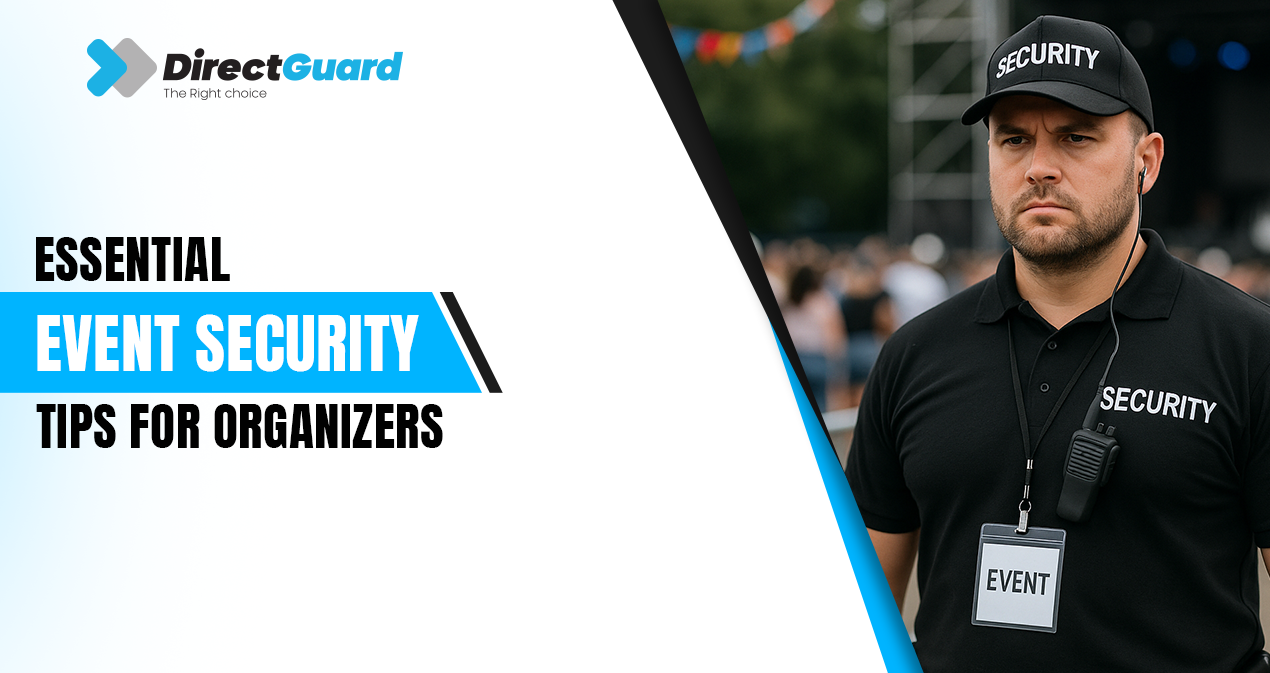
When planning an event, whether it’s a music festival, corporate conference, or community gathering, security is one of the most critical aspects that can’t be overlooked. The safety of attendees, staff, and vendors directly impacts the success and reputation of your event. At Direct Guard Services, we specialize in delivering reliable and professional event security solutions to help organizers like you achieve peace of mind.
In this guide, we’ll walk you through essential event security tips that every organizer should implement, no matter the size or type of event.
Conduct a Comprehensive Risk Assessment
Every successful event security plan begins with a detailed risk assessment. Understand the unique risks associated with your event’s location, type, size, and expected attendees. Consider:
- The venue’s layout and accessibility
- Potential for crowd surges or bottlenecks
- Nearby high-risk areas
- Weather conditions (for outdoor events)
- Political or social sensitivities
A proper risk assessment allows you to tailor your security plan and allocate resources effectively.
Hire Professional Security Personnel
While volunteers and in-house staff can be helpful, trained event security professionals are irreplaceable. They know how to:
- Manage access control
- De-escalate confrontations
- Respond to medical or criminal emergencies
- Patrol perimeters discreetly and efficiently
Choose a reputable company like Direct Guard Services with experience in securing events similar to yours. Our licensed officers are equipped to handle everything from entrance screening to crowd monitoring and emergency response.
Establish a Clear Chain of Command
Confusion in communication can lead to chaos. Set up a defined chain of command and clear communication channels for your security team. Use two-way radios and assign roles such as:
- Security lead
- Entrance monitors
- Crowd control officers
- Emergency response coordinators
This ensures swift decision-making and response during emergencies.
Plan Access Control And Screening Procedures
Controlling who enters and exits the event is fundamental to event security. Consider implementing:
- Ticket or credential checks
- Bag inspections
- Metal detectors
- VIP and staff-only zones
- Re-entry policies
Clearly mark all entry and exit points, and use barriers and signage to guide attendees.
Use Technology To Your Advantage
Modern security systems can greatly enhance physical security efforts. Some tools you might integrate include:
- CCTV surveillance cameras
- Mobile security apps for reporting incidents
- RFID wristbands for access control
- Drones for large outdoor events
These technologies not only provide real-time data but also help collect evidence if issues arise.
Have A Medical Emergency Plan
Medical emergencies can happen anytime, especially at crowded events. Have certified first-aid responders onsite, and establish:
- First-aid stations
- Clear evacuation routes
- Ambulance access
- A plan to quickly contact emergency services
Make sure all staff and volunteers know what to do in case of a health emergency.
Monitor Crowd Behavior Proactively
Crowd control is more than just managing numbers; it’s about observing behaviors and identifying signs of potential disturbances. Your security team should look for:
- Aggressive behavior
- Intoxication
- Suspicious packages or unattended items
- Sudden movement of crowds
Proactive crowd monitoring can prevent dangerous situations from escalating.
Train Your Staff and Volunteers
Security isn’t just the job of your hired officers. Your event staff and volunteers should be trained to:
- Recognize signs of trouble
- Follow evacuation protocols
- Report incidents promptly
- Use communication tools effectively
Hold a pre-event security briefing to ensure everyone is on the same page.
Secure Perimeters And Parking Areas
Security doesn’t start at the entrance gate. Make sure the entire perimeter is secure, including:
- Parking lots
- Loading docks
- Backstage and service areas
Unmonitored areas are common entry points for unauthorized personnel or criminal activity.
Develop A Crisis Management Plan
Despite your best efforts, emergencies can still occur. Prepare a crisis management plan that covers:
- Evacuation procedures
- Emergency contact lists
- Media communication protocols
- Post-incident documentation
Conduct drills to test your plan and update it based on feedback.
Ensure Cybersecurity For Virtual Or Hybrid Events
If your event includes virtual elements or uses online registration platforms, don’t forget about cybersecurity. Protect your data with:
- Encrypted ticketing platforms
- Secure Wi-Fi networks
- Firewalls and antivirus software
- Access limits for administrative dashboards
Cyber threats are real and can disrupt both online and in-person operations.
Communicate With Attendees
Keep attendees informed about safety policies, entry procedures, and emergency protocols. Use:
- Social media
- Event apps
- Printed signage
- Announcements during the event
Clarity builds trust and cooperation.
Review And Debrief Post-Event
After the event, conduct a security debrief with your team. Review:
- What worked well
- Areas of improvement
- Incident reports
- Feedback from staff and attendees
Use these insights to refine your event security plan for future events.
Why Choose Direct Guard Services?
At Direct Guard Services, we understand the importance of dependable, professional event security. Our officers are trained in:
- Conflict resolution
- Access control and guest screening
- Emergency response
- Surveillance and crowd monitoring
Whether you’re hosting a small private event or a large public gathering, we deliver tailored solutions that put safety first.
Final Thoughts
Event organizers have a responsibility to protect everyone involved. Implementing a robust event security strategy not only helps prevent incidents but also builds confidence among guests, sponsors, and stakeholders.
Partner with professionals like Direct Guard Services to ensure your event runs smoothly from start to finish. Safety isn’t optional; it’s essential.