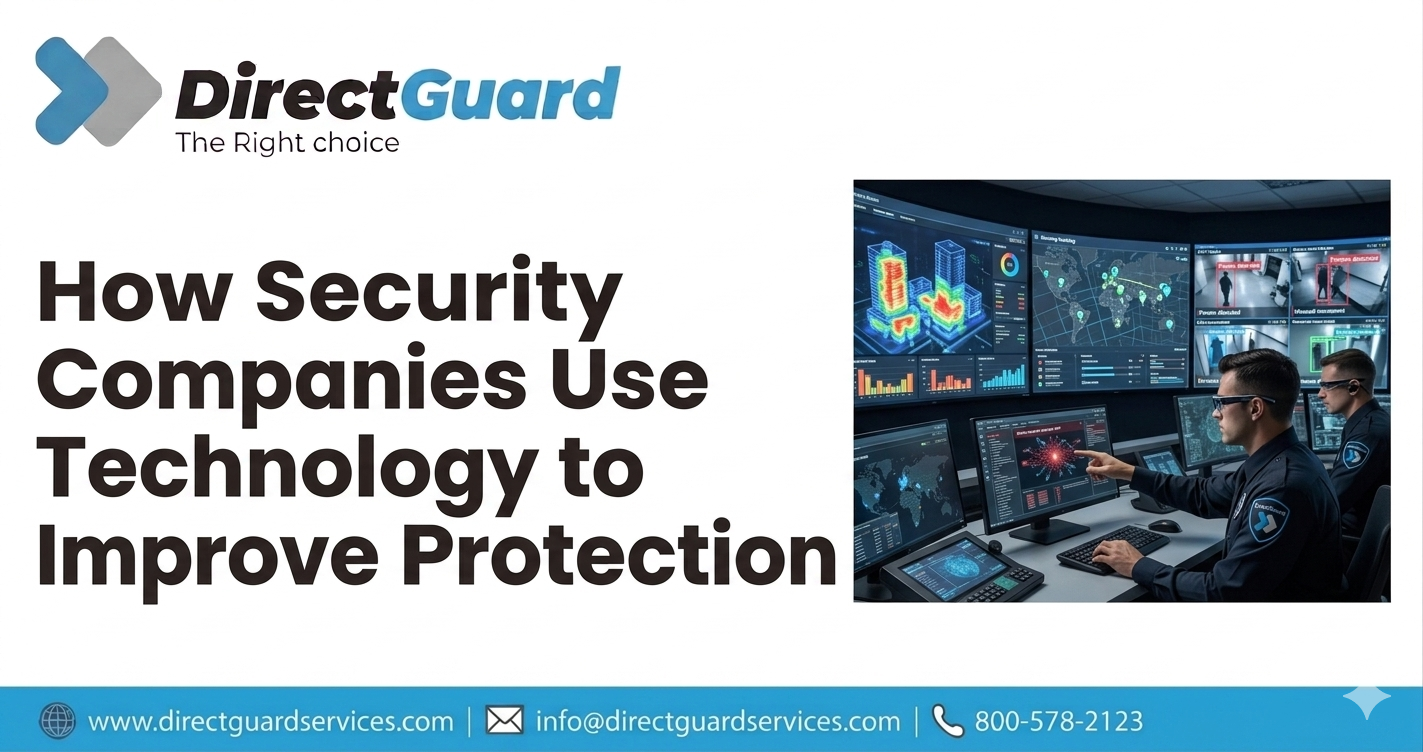
How Security Companies Use Technology to Improve Protection

Security has changed dramatically over the last few years. Traditional security methods alone are no longer enough to handle modern threats. Businesses, residential communities, construction sites, and commercial properties now require faster response times, smarter monitoring, and more advanced protection systems.

This is why modern security companies are increasingly using advanced technology to improve safety, reduce risks, and provide better protection for clients.

Today, professional security services combine trained personnel with smart technology such as AI surveillance cameras, access control systems, mobile patrol tracking, alarm monitoring, and real-time reporting tools. These technologies help security teams respond quickly, monitor properties more efficiently, and prevent incidents before they escalate.

Understanding how technology in security companies works can help businesses and property owners choose stronger and more reliable security solutions.

Security Technology at a Glance

  • Improves real-time threat detection
  • Enhances emergency response
  • Supports 24/7 monitoring
  • Reduces security risks
  • Improves guard accountability
  • Helps prevent unauthorized access
  • Provides faster incident reporting
  • Strengthens property protection

Why Technology Matters in Modern Security Services

Security threats are becoming more sophisticated. Criminals often target properties with weak surveillance, poor access control, and slow response systems.

Technology allows security companies to:

  • Detect suspicious activity faster
  • Monitor large properties efficiently
  • Improve communication between guards
  • Provide accurate incident reporting
  • Strengthen emergency response
  • Reduce human error

Modern security technology creates a more proactive approach to protection instead of simply reacting after incidents occur.

How Security Companies Use Technology to Improve Protection

AI-Powered Surveillance Cameras

One of the biggest advancements in modern security is AI-powered surveillance systems.

Unlike traditional cameras, smart surveillance systems can:

  • Detect unusual behavior
  • Recognize unauthorized access
  • Monitor movement patterns
  • Send instant alerts
  • Improve incident investigations

AI-powered cameras help security teams monitor properties more efficiently and identify potential threats in real time.

Benefits of Smart Surveillance Systems

  • 24/7 property monitoring
  • Faster threat detection
  • Improved video evidence
  • Reduced blind spots
  • Better crime prevention

Businesses and apartment communities benefit greatly from advanced surveillance technology.

Access Control Systems

Access control systems help security companies limit unauthorized entry into buildings and restricted areas.

Common Access Control Technologies

  • Keycard systems
  • Biometric scanners
  • Smart locks
  • PIN code entry
  • Mobile access systems
  • Visitor management software

These systems improve property security while giving businesses greater control over who enters the premises.

Mobile Patrol Tracking Technology

Modern mobile patrol services now use GPS tracking and digital reporting systems.

Security companies can monitor patrol activity in real time and ensure guards complete assigned routes properly.

Benefits of Patrol Tracking

  • Improved guard accountability
  • Real-time patrol verification
  • Faster emergency response
  • Better property coverage
  • Accurate activity reports

Real-Time Incident Reporting

Traditional paper reports are being replaced with digital incident reporting systems.

Security guards can now use mobile devices to:

  • Report incidents instantly
  • Upload photos and videos
  • Notify supervisors immediately
  • Share live updates
  • Create detailed digital records

This technology improves communication and speeds up response times.

Benefits of Real-Time Reporting

Real-time reporting helps businesses and property managers:

  • Receive immediate updates
  • Track incidents more accurately
  • Improve emergency coordination
  • Maintain digital security records
  • Reduce reporting delays

Faster reporting allows management teams to make quicker decisions during emergencies.

Alarm Monitoring Systems

Modern alarm systems are a major part of professional security services.

Security companies use alarm monitoring technology to detect:

  • Unauthorized entry
  • Fire emergencies
  • Suspicious activity
  • Motion detection alerts
  • Restricted area breaches

When alarms are triggered, security teams can respond immediately and coordinate with emergency services if necessary.

Remote Monitoring Technology

Remote monitoring allows security professionals to watch properties from centralized control centers.

Remote Monitoring Benefits

  • 24/7 live surveillance
  • Faster emergency response
  • Reduced security gaps
  • Continuous property protection
  • Improved monitoring efficiency

Remote monitoring is especially useful for:

  • Construction sites
  • Warehouses
  • Apartment complexes
  • Commercial properties
  • Parking lots

License Plate Recognition Technology

Many security companies now use license plate recognition systems to improve vehicle monitoring.

This Technology Helps:

  • Identify unauthorized vehicles
  • Monitor parking lot activity
  • Track vehicle entries and exits
  • Improve gated community security
  • Support investigations

License plate recognition improves access control and parking security significantly.

Body Cameras for Security Guards

Some professional security companies equip guards with body cameras to improve accountability and transparency.

Body Camera Benefits

  • Records incidents accurately
  • Reduces false claims
  • Supports investigations
  • Improves guard professionalism
  • Enhances safety during confrontations

Body cameras also help property owners review incidents more effectively.

Smart Communication Systems

Communication is critical during emergencies.

Modern security companies use advanced communication systems such as:

  • Two-way radios
  • Mobile communication apps
  • Real-time alert systems
  • Emergency notification software

These tools help security teams coordinate quickly during incidents.

How Technology Improves Emergency Response

Technology allows security teams to respond faster during emergencies.

Faster Emergency Response Includes:

  • Instant alerts
  • Live camera access
  • GPS-tracked patrol units
  • Direct communication systems
  • Real-time incident updates

Quick response times can help reduce damage, injuries, and safety risks.

Cybersecurity and Physical Security Integration

Modern businesses also face digital threats alongside physical security risks.

Many security companies now integrate:

  • Cybersecurity monitoring
  • Smart access management
  • Network-connected surveillance systems
  • Cloud-based security platforms

This combination strengthens overall protection for businesses and properties.

Technology Improves Security Guard Performance

Technology does not replace security guards. Instead, it helps guards work more effectively.

Technology Supports Guards By:

  • Providing real-time updates
  • Improving patrol tracking
  • Enhancing communication
  • Supporting evidence collection
  • Reducing manual paperwork

Combining trained personnel with smart technology creates stronger security coverage.

Security Technology Comparison Table

Security TechnologyMain BenefitBest Use
AI Surveillance CamerasReal-time threat detectionCommercial properties
Access Control SystemsRestricts unauthorized entryOffice buildings
Mobile Patrol TrackingImproves patrol accountabilityLarge properties
Alarm MonitoringEmergency detectionResidential and commercial sites
Remote Monitoring24/7 property oversightConstruction sites
License Plate RecognitionVehicle monitoringParking lots and gated communities

Industries That Benefit from Security Technology

Modern security technology helps many industries improve safety.

Common Industries Using Smart Security

  • Apartment complexes
  • Commercial buildings
  • Construction sites
  • Retail stores
  • Hospitals
  • Warehouses
  • Educational facilities
  • Gated communities
  • Hotels

Each industry benefits from customized technology-based security solutions.

Why Businesses Prefer Technology-Driven Security Services

Businesses today need stronger and more efficient protection strategies.

Technology-driven security services provide:

  • Better monitoring
  • Faster response times
  • Improved reporting
  • Increased accountability
  • Stronger threat prevention
  • Lower security risks

This improves overall business safety and operational efficiency.

Future Trends in Security Technology

The security industry continues to evolve rapidly.

Emerging Security Trends

  • AI-powered threat detection
  • Facial recognition systems
  • Drone surveillance
  • Cloud-based monitoring
  • Smart building integration
  • Predictive security analytics

Security companies that adopt modern technology can provide stronger and more reliable protection.

How to Choose a Technology-Driven Security Company

When selecting a professional security provider, look for companies that offer:

  • Modern surveillance systems
  • Real-time reporting tools
  • GPS patrol tracking
  • Access control expertise
  • 24/7 monitoring capabilities
  • Trained security personnel
  • Emergency response support

A security company that combines skilled guards with advanced technology can provide better long-term protection.

Improve Protection with Modern Security Technology

Security technology is transforming the way businesses and properties stay protected. From AI surveillance systems to mobile patrol tracking and real-time monitoring, modern tools help security companies provide faster, smarter, and more reliable protection.

Combining trained security professionals with advanced technology creates stronger safety strategies for businesses, apartment communities, construction sites, and commercial properties.

Investing in technology-driven security services helps reduce risks, improve response times, and create safer environments for everyone.

Frequently Asked Questions

  1. How do security companies use technology?
    Security companies use technology such as surveillance cameras, access control systems, patrol tracking, alarm monitoring, and real-time reporting to improve protection and emergency response.
  2. Why is technology important in modern security?
    Technology improves monitoring, speeds up emergency response, reduces human error, and helps prevent criminal activity more effectively.
  3. What are AI surveillance cameras?
    AI surveillance cameras use artificial intelligence to detect suspicious activity, monitor movement, and send real-time alerts.
  4. How does patrol tracking work?
    Patrol tracking uses GPS technology to monitor security patrol routes and verify guard activity in real time.
  5. Can technology replace security guards?
    No. Technology supports security guards by improving efficiency, communication, and monitoring capabilities, but trained personnel are still essential.

Why Security Presence Matters for Apartment Complexes

Feeling safe at home should never be a luxury. For apartment residents, safety affects daily comfort, peace of mind, and overall quality of life. Whether families are walking through parking lots at night, receiving packages, or letting children play outside, residents want to know their community is protected.

Unfortunately, apartment complexes often face security challenges like trespassing, vandalism, vehicle theft, package theft, and unauthorized visitors. These problems can quickly damage a property’s reputation and make residents feel unsafe.

This is why having a strong security presence for apartment complexes is more important than ever. Professional security services help prevent crime, improve resident confidence, and create a safer living environment for everyone.

For apartment owners and property managers, investing in security is not just about protection. It is also about improving tenant satisfaction, increasing lease renewals, and protecting long-term property value.

Apartment Security at a Glance

  • Helps prevent theft and vandalism
  • Improves resident safety and confidence
  • Protects parking lots and common areas
  • Supports faster emergency response
  • Reduces unauthorized access
  • Improves tenant retention
  • Enhances apartment community reputation
  • Protects long-term property value

What Does Security Presence Mean in Apartment Complexes?

A security presence refers to visible and active safety measures designed to protect apartment communities from security threats and criminal activity.

These measures can include:

  • On-site security guards
  • Mobile patrol security
  • CCTV surveillance systems
  • Access control systems
  • Visitor management
  • Parking lot patrols
  • Alarm monitoring
  • Emergency response support

A visible security team discourages criminal behavior while helping residents feel safer in their homes.

Why Security Presence for Apartment Complexes Is Important

Crime Prevention and Deterrence

One of the biggest benefits of apartment security is crime prevention. Criminals are less likely to target communities with visible security measures.

Professional security guards help deter:

  • Vehicle theft
  • Burglary
  • Trespassing
  • Package theft
  • Vandalism
  • Assaults
  • Loitering
  • Unauthorized visitors

Visible patrols create a strong deterrent effect and reduce opportunities for criminal activity.

Residents Feel Safer and More Comfortable

Residents are more likely to stay in communities where they feel protected. A strong security presence for apartment complexes creates peace of mind for families, children, and elderly residents.

Residents feel safer when they see:

  • Active security patrols
  • Monitored entrances
  • Well-lit parking lots
  • Fast emergency response
  • Controlled building access

This improved sense of safety leads to better tenant satisfaction and stronger community trust.

Why Apartment Security Matters for Property Managers

Property managers are responsible for maintaining safe and peaceful living environments. Without proper security, management teams often face:

  • Frequent complaints
  • Property damage
  • Tenant turnover
  • Liability risks
  • Negative online reviews

Professional apartment security services help reduce these issues while supporting smoother daily operations.

Benefits for Property Managers

  • Reduced tenant complaints
  • Better resident relationships
  • Improved community reputation
  • Lower property damage costs
  • Increased lease renewals
  • Better operational efficiency

Common Security Risks in Apartment Complexes

Many apartment communities face recurring safety concerns that require professional attention.

Unauthorized Entry

Open gates and unsecured entrances can allow unauthorized individuals to access the property.

Package Theft

Online shopping has significantly increased package theft in residential communities.

Parking Lot Crimes

Parking areas are common targets for vehicle theft and vandalism.

Loitering and Disturbances

Unwanted gatherings can create safety concerns and discomfort for residents.

Poor Lighting

Dark hallways and parking lots increase the risk of criminal activity.

Property Vandalism

Graffiti and damaged community areas negatively impact property appearance and resident satisfaction.

Signs Your Apartment Complex Needs Better Security

Some warning signs indicate your property may need stronger security measures.

Frequent Resident Complaints

If residents regularly report suspicious activity or safety concerns, stronger security may be necessary.

Rising Crime Incidents

An increase in theft, vandalism, or trespassing is a clear warning sign.

Poor Tenant Retention

Residents often move out of communities where they do not feel safe.

Damaged Property

Repeated vandalism and property damage increase maintenance costs.

Uncontrolled Visitor Access

Unauthorized visitors entering the property can create major security risks.

Best Security Solutions for Apartment Complexes

On-Site Security Guards

Professional security guards provide visible protection and immediate response during emergencies.

Benefits of Security Guards

  • Deter criminal activity
  • Monitor suspicious behavior
  • Respond to emergencies
  • Assist residents
  • Enforce community rules
  • Patrol parking lots and common areas

Apartment residents often feel more comfortable when trained guards are visibly present.

Mobile Patrol Security

Mobile patrols are ideal for larger apartment communities with multiple buildings and parking areas.

Mobile Patrol Benefits

  • Wide property coverage
  • Randomized patrol schedules
  • Faster incident detection
  • Parking lot monitoring
  • Reduced trespassing risks

CCTV Surveillance Systems

Security cameras help monitor apartment communities 24/7.

CCTV Benefits

  • Provides recorded evidence
  • Discourages criminal behavior
  • Monitors entrances and exits
  • Improves emergency investigations
  • Supports remote monitoring

Modern surveillance systems improve overall apartment security significantly.

Access Control Systems

Access control helps limit unauthorized entry into residential communities.

Common Access Control Features

  • Keycard access
  • Gated entry systems
  • Visitor check-in systems
  • Intercom systems
  • Smart locks

Controlled access improves resident safety and reduces trespassing incidents.

Alarm Monitoring Systems

Alarm systems help detect unauthorized access and emergencies quickly.

Alarm Monitoring Helps With

  • Break-in detection
  • Fire emergencies
  • Restricted area monitoring
  • Faster emergency response

Combining alarms with trained security personnel provides stronger protection.

Apartment Security Solutions Comparison

Security SolutionMain BenefitBest For
Security GuardsVisible crime deterrenceLarge apartment complexes
Mobile PatrolsWide-area monitoringGated communities
CCTV Cameras24/7 surveillanceParking lots and entrances
Access ControlLimits unauthorized accessResidential buildings
Alarm SystemsEmergency detectionHigh-risk properties

How Security Presence Improves Tenant Retention

Safety is one of the most important factors renters consider before renewing leases.

Residents are more likely to remain in apartment communities where they feel secure.

Security Improves Tenant Retention By:

  • Building resident trust
  • Reducing fear and anxiety
  • Creating peaceful living environments
  • Improving community reputation
  • Enhancing resident satisfaction

Satisfied tenants are also more likely to recommend the property to others.

How Security Presence Protects Property Value

Security investments help preserve and improve property value over time.

Properties with visible security measures often experience:

  • Lower vandalism costs
  • Reduced liability risks
  • Higher occupancy rates
  • Better online reviews
  • Increased market appeal

A secure apartment community is more attractive to both renters and investors.

Benefits of 24/7 Apartment Security

Some apartment communities benefit from around-the-clock protection.

24/7 Security Helps:

  • Monitor late-night activity
  • Respond quickly to emergencies
  • Protect parking lots overnight
  • Prevent unauthorized entry
  • Improve resident confidence

Continuous protection creates a safer environment for everyone.

Modern Security Trends for Apartment Communities

Apartment security is evolving with technology.

Modern apartment communities now use:

  • Smart access systems
  • AI-powered surveillance cameras
  • Remote monitoring
  • License plate recognition
  • Digital incident reporting
  • Real-time security alerts

Combining technology with trained guards creates stronger security coverage.

Why Visible Security Reduces Crime

Visible security measures discourage criminal activity by increasing the risk of detection.

According to crime prevention studies, criminals often avoid properties with:

  • Security guards
  • Surveillance cameras
  • Controlled access points
  • Active patrols
  • Well-lit environments

A strong security presence for apartment complexes creates a safer and more controlled environment.

Security Tips for Apartment Property Managers

Property managers can improve apartment safety by taking proactive steps.

Best Apartment Security Tips

  • Install quality lighting
  • Monitor parking areas
  • Conduct regular patrols
  • Upgrade access control systems
  • Encourage resident reporting
  • Maintain surveillance equipment
  • Secure common areas
  • Hire professional security services

These measures help reduce safety risks and improve resident satisfaction.

Why Residents Value Professional Security

Residents want to feel protected when:

  • Walking to their cars at night
  • Using apartment amenities
  • Receiving deliveries
  • Allowing children to play outside
  • Returning home late

Visible apartment security creates reassurance and confidence throughout the community.

Protect Your Apartment Community Today

A safe apartment community benefits everyone. Residents feel more comfortable, property managers experience fewer issues, and property owners protect their long-term investments.

Investing in a strong security presence for apartment complexes helps reduce crime, improve tenant satisfaction, and create a safer environment for residents and staff alike.

Whether you manage a small residential property or a large apartment community, professional security services can make a significant difference.

Frequently Asked Questions

  1. Why is security important for apartment complexes?
    Security helps prevent theft, vandalism, trespassing, and other criminal activity while improving resident safety and peace of mind.
  2. How do security guards help apartment communities?
    Security guards patrol the property, monitor suspicious activity, respond to emergencies, and support resident safety.
  3. What is the best security solution for apartment complexes?
    The best solution usually combines security guards, surveillance cameras, access control systems, and mobile patrol services.
  4. Does visible security reduce crime in apartment complexes?
    Yes. Visible security measures discourage criminal activity and improve overall safety within residential communities.
  5. Can apartment security improve tenant retention?
    Yes. Residents are more likely to renew leases when they feel safe and protected in their apartment community.
  6. How can property managers improve apartment security?
    Property managers can improve security by hiring professional guards, upgrading lighting, installing cameras, and controlling visitor access.

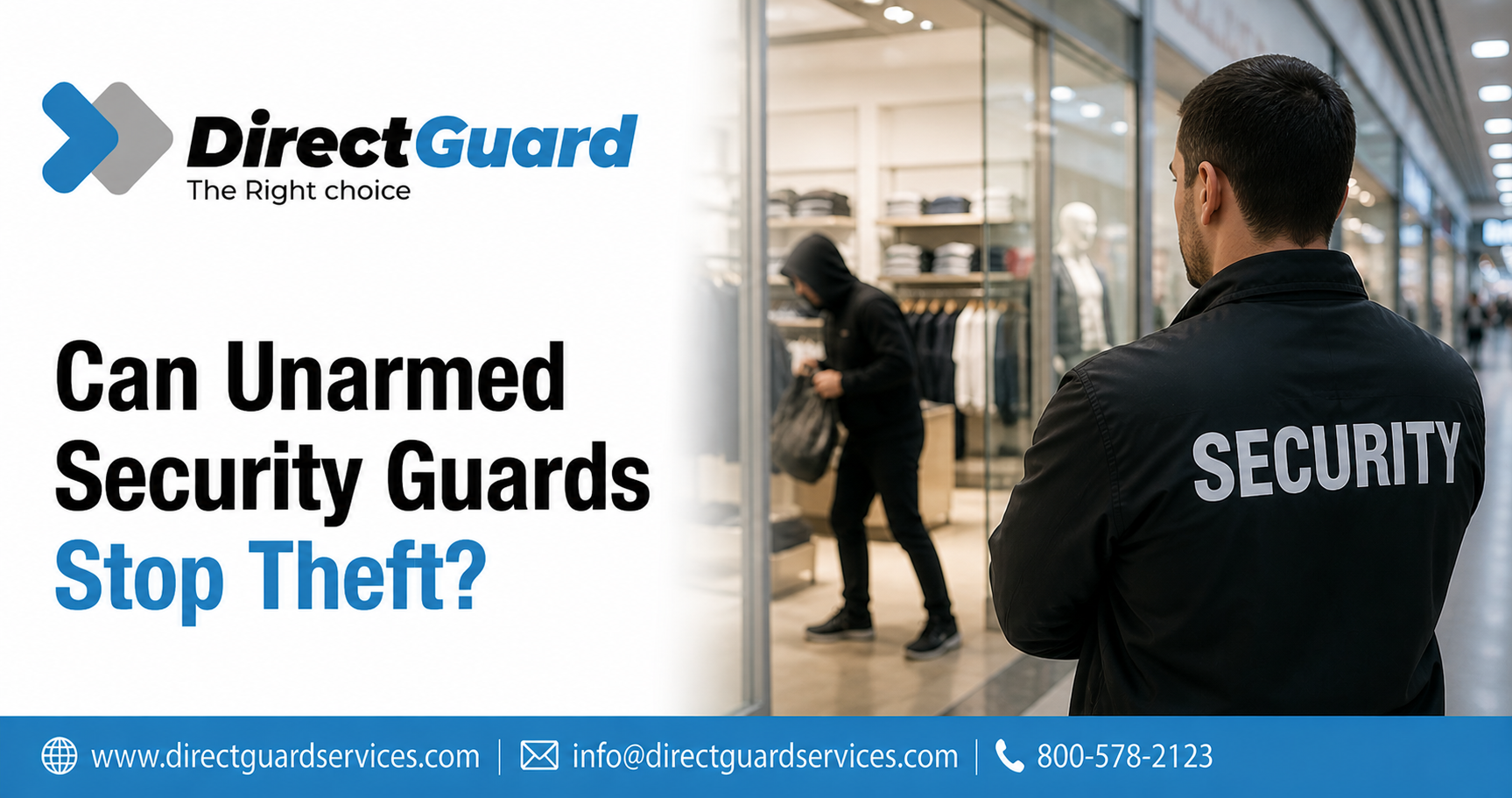
Can Unarmed Security Guards Stop Theft?

Quick Answer

Unarmed security guards can stop theft by acting as a visible deterrent, monitoring suspicious behavior, and responding quickly to incidents. While they may not physically confront criminals in high-risk situations, their presence significantly reduces the chances of theft.

If you are considering professional protection, you can explore reliable services at Direct Guard Services to find the right security solution for your needs.

When it comes to protecting a business, many people assume that only armed guards can effectively prevent theft. But that is not always the case. In many situations, unarmed security guards play a crucial role in stopping theft and maintaining safety.

The real question is not whether they carry weapons, but whether they are trained, alert, and positioned correctly. Understanding how unarmed security guards stop theft can help you make the right security decision for your business.

How Unarmed Security Guards Stop Theft

Unarmed security guards rely on prevention rather than force. Their effectiveness comes from awareness, visibility, and quick action.

Visible presence as a deterrent

The presence of a uniformed guard alone can discourage criminals. Most thefts are opportunistic, and thieves tend to avoid locations where they feel they are being watched.

Active monitoring and surveillance

Unarmed guards monitor:

  • Entry and exit points
  • CCTV systems
  • Customer behavior

By staying alert, they can detect suspicious activity before it turns into theft.

Immediate response to suspicious activity

When a guard notices unusual behavior, they can:

  • Approach the individual
  • Ask questions
  • Alert management or authorities

This quick response often prevents theft from happening.

Why Unarmed Security Guards are Effective in Many Situations

Unarmed security guards are widely used across different industries because they are effective without being intimidating.

Suitable for low to medium-risk environments

They work best in places like:

  • Retail stores
  • Office buildings
  • Residential communities
  • Hotels

In these environments, theft is usually non-violent, making unarmed guards a practical solution.

Better customer interaction

Unarmed guards are often more approachable, which helps create a welcoming environment while still maintaining security.

Cost-effective security solution

Hiring unarmed guards is typically more affordable than armed security, making it a smart choice for businesses with moderate risk levels.

Limitations of Unarmed Security Guards

While unarmed security guards can stop theft, they do have limitations that businesses should understand.

Limited ability to handle high-risk threats

In situations involving:

  • Armed criminals
  • Violent incidents

Unarmed guards may not be able to intervene physically.

Dependence on training and experience

Their effectiveness depends heavily on:

  • Training
  • Awareness
  • Communication skills

An untrained guard may fail to recognize or respond to threats properly.

When Should You Hire Unarmed Security Guards?

Choosing the right type of guard depends on your environment and risk level.

Unarmed guards are ideal when:

  • Theft risk is moderate
  • Violence is unlikely
  • Customer interaction is important
  • The budget is limited

For businesses looking for reliable and professional support, you can learn more about security guard services Direct Guard Services.

When Unarmed Guards May Not Be Enough

In some situations, unarmed security guards alone may not be sufficient.

Consider additional security if:

  • Your business handles high-value assets
  • You operate in a high-crime area
  • There is a risk of violent incidents

In such cases, a combination of security measures may be required.

Comparison: Unarmed vs Armed Security Guards

FactorUnarmed security guardsArmed security guards
Theft preventionEffective deterrentStrong deterrent
CostLowerHigher
Risk handlingLow to medium riskHigh-risk situations
Customer interactionMore approachableMore authoritative

How to Maximize the Effectiveness of Unarmed Security Guards

To ensure unarmed security guards stop theft effectively, follow these best practices:

Provide proper training

Make sure guards are trained in:

  • Surveillance techniques
  • Conflict resolution
  • Emergency response

Use technology support

Combine guards with:

  • CCTV systems
  • Alarm systems
  • Access control

Position guards strategically

Place guards in high-traffic or high-risk areas to maximize visibility.

Work with a professional security provider.

A trusted company ensures guards are well-trained and suitable for your environment. You can explore professional solutions at https://directguardservices.com/.

What Happens Without Proper Security

Without effective security, businesses may face:

  • Increased theft incidents
  • Financial losses
  • Safety concerns for staff and customers

Even a single incident can impact your operations and reputation.

Conclusion

Unarmed security guards play an important role in preventing theft. Their visibility, awareness, and quick response make them an effective solution for many businesses.

While they may not be suitable for every situation, they are a reliable and cost-effective option for environments with low to moderate risk.

Choosing the right security approach is key. By understanding your needs and working with experienced professionals, you can create a safer and more secure environment.

Frequently Asked Questions

Can unarmed security guards really stop theft?

Yes, unarmed security guards can stop theft by acting as a deterrent, monitoring activity, and responding quickly to suspicious behavior.

Are unarmed security guards enough for retail stores

In most retail environments, unarmed guards are effective because theft is usually non-violent and can be prevented through monitoring and presence.

What is the main advantage of unarmed security guards?

The main advantage is their ability to prevent theft without creating an intimidating environment, while also being cost-effective.

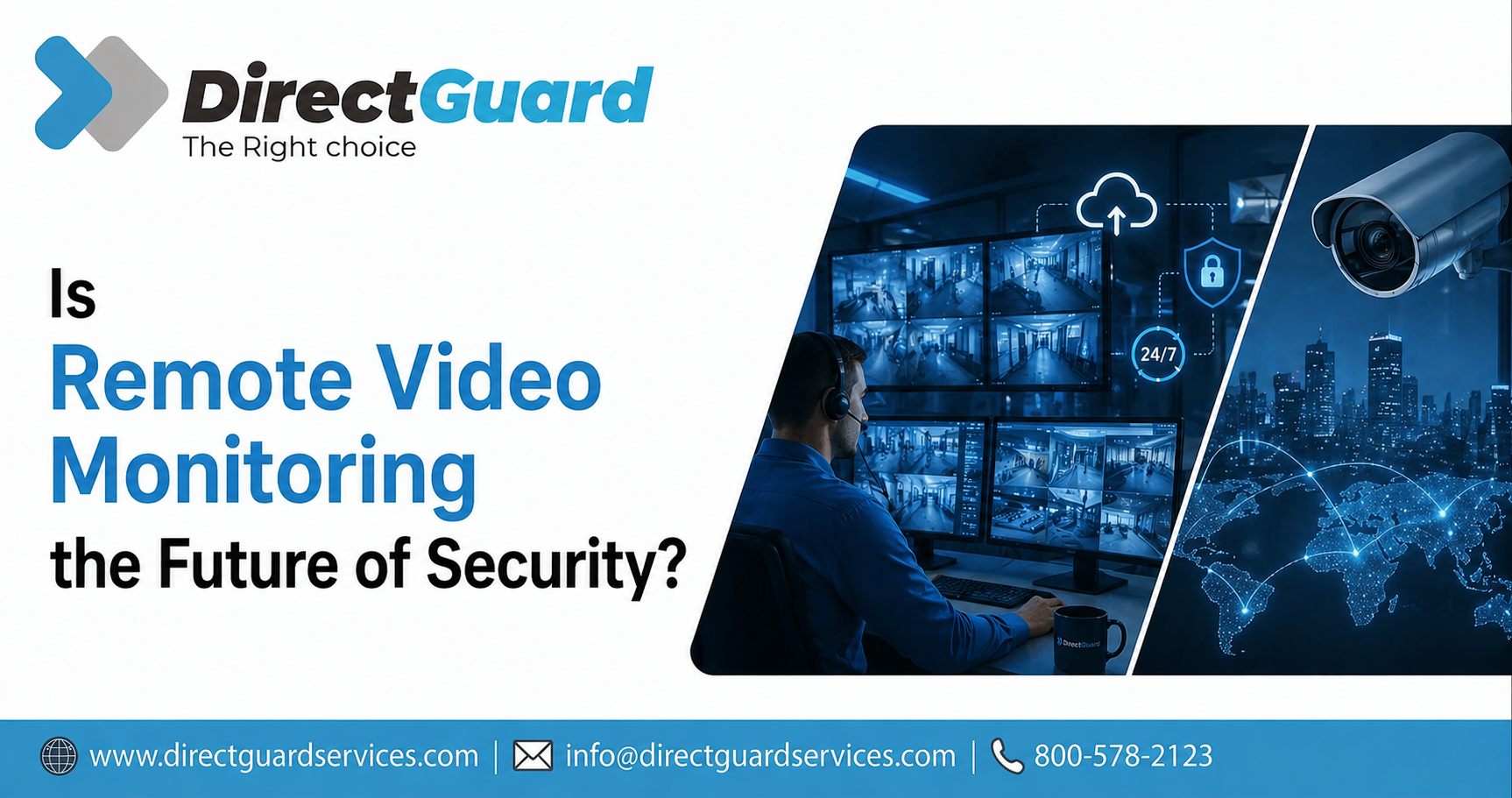
Is Remote Video Monitoring the Future of Security?

Security is evolving—and fast.

Not long ago, businesses relied almost entirely on on-site guards and basic CCTV systems. Today, a smarter, more efficient solution is taking over: remote video monitoring.

So the real question is:

Is remote video monitoring the future of security, or just another trend?

If you’re a business owner, property manager, or decision-maker, this isn’t just a theoretical question. It directly impacts your costs, safety, and operational efficiency.

In this guide, we’ll break down the reality behind the remote video monitoring future of security, including how it works, why it’s growing so fast, and whether it’s the right choice for you.

What Is Remote Video Monitoring?

Remote video monitoring is a security system where trained professionals monitor your property in real time using cameras, AI technology, and smart alerts.

Direct Answer:

Remote video monitoring uses live surveillance, AI detection, and remote guards to identify and respond to threats instantly without needing on-site personnel.

How Remote Video Monitoring Works (Step-by-Step)

Understanding how it works helps you see why it’s becoming the future of security.

1. Continuous Surveillance

Cameras monitor your property 24/7.

2. AI-Powered Detection

The system detects:

  • Motion
  • Unauthorized access
  • Suspicious behavior

3. Instant Alerts

Alerts are triggered in real time.

4. Human Verification

A remote security professional reviews the situation.

5. Immediate Action

  • Audio warning
  • Alarm activation
  • Police dispatch

This process ensures faster and more accurate responses than traditional methods.

Why Traditional Security Methods Are Changing

Security challenges today are different from those of the past.

Key Problems with Traditional Security

  • High labor costs
  • Limited coverage
  • Human fatigue
  • Delayed response

For example:

A guard patrolling a large warehouse may miss an incident happening on the other side of the property.

This is where remote monitoring provides a major advantage.

Key Benefits of Remote Video Monitoring (Deep Dive)

1. 24/7 Real-Time Protection

Unlike traditional guards, remote systems never stop monitoring.

Result: Zero gaps in surveillance

2. Faster Threat Detection

AI identifies suspicious activity instantly.

Example:

  • Motion detected at 2 AM
  • Alert triggered immediately
  • Guard responds within seconds

This reduces response time dramatically.

3. Significant Cost Savings

Hiring multiple guards is expensive.

Remote monitoring reduces:

  • Salaries
  • Overtime
  • Training costs

Businesses can save up to 60% on security expenses.

4. Crime Prevention (Not Just Detection)

Remote monitoring actively prevents crime.

How:

  • Loudspeaker warnings
  • Immediate intervention
  • Visible camera presence

Most intruders leave before committing a crime.

5. Scalable Security Solution

You can monitor multiple locations from one system.

Ideal for:

  • Retail chains
  • Warehouses
  • Construction companies

Data and Reporting

Remote systems provide:

  • Video recordings
  • Incident reports
  • Analytics

Helps improve long-term security strategy.

How Remote Video Monitoring Prevents Crime

Many people think security is about reacting—but modern systems focus on prevention.

Step-by-Step Prevention Model

  1. Detect suspicious activity early
  2. Verify the threat
  3. Issue a real-time warning
  4. Escalate if needed

Real Example

An intruder enters a restricted area:

  • The camera detects movement
  • The guard speaks through the speaker
  • The intruder leaves immediately

Result: No damage, no loss

Real-World Use Cases

1. Construction Sites

Construction sites are highly vulnerable after hours.

Remote monitoring helps:

  • Prevent equipment theft
  • Detect unauthorized access

2. Warehouses

Large spaces are difficult to patrol manually.

Remote monitoring:

  • Covers all areas simultaneously
  • Detects activity instantly

3. Retail Stores

Stores use remote monitoring for:

  • After-hours security
  • Theft prevention

4. Parking Lots

Parking areas are common targets for crime.

Remote systems:

  • Monitor multiple entry points
  • Deter suspicious activity

Cost Comparison: Remote Monitoring vs Traditional Security

Remote Monitoring

Direct Answer:

Remote video monitoring is significantly more cost-effective than traditional security due to lower labor and operational expenses.

Breakdown

Traditional Security Costs

  • Salaries
  • Overtime
  • Benefits
  • Training

Remote Monitoring Costs

  • Equipment setup
  • Monitoring service

Over time, remote monitoring is more scalable and affordable.

Limitations of Remote Video Monitoring

Direct Answer:

Remote monitoring depends on technology and cannot physically intervene in emergencies.

Key Limitations

  • No physical presence
  • Requires a stable internet
  • Equipment setup is essential

This is why it may not fully replace guards in all situations.

Is Remote Video Monitoring Better Than Security Guards?

Direct Answer:

Remote monitoring is better for cost efficiency, continuous surveillance, and large properties, while security guards are better for physical response and human interaction.

The Future of the Security Industry

So, is remote video monitoring the future of security?

Short Answer:

Yes—remote monitoring is a major part of the future, but not the only solution.

Industry Trend

Businesses are moving toward:

  • AI-powered monitoring
  • Automation
  • Hybrid security models

The future is technology-driven security combined with human response.

Hybrid Security: The Real Future

The most effective solution today is a combination of both.

How It Works

  • Remote monitoring detects threats
  • On-site guards respond when needed

Why It Works

  • Reduces costs
  • Improves efficiency
  • Ensures full protection

How to Choose the Right Security Solution

Choose Remote Monitoring If:

  • You need 24/7 coverage
  • You want to reduce costs
  • Your property is large

Choose Traditional Security If:

  • You need physical presence
  • Your environment is high-risk

Choose Hybrid If:

  • You want maximum protection
  • You need both monitoring and response

Final Verdict

So, is remote video monitoring the future of security?

Yes—but as part of a smarter, hybrid system.

  • Remote monitoring = efficiency, speed, cost savings
  • Traditional security = physical presence, human response
  • Hybrid approach = the future of complete protection

Ready to upgrade your security?

Direct Guard Services offers advanced remote video monitoring solutions designed to protect your property 24/7 while reducing costs.

FAQs

1. Is remote video monitoring reliable?

Yes, it provides consistent, real-time surveillance with AI support, reducing human error.

2. Does remote monitoring reduce crime?

Yes, proactive detection and real-time intervention significantly lower crime rates.

3. How much does remote video monitoring cost?

It is generally more affordable than hiring multiple security guards.

4. Can remote monitoring call the police?

Yes, monitoring teams can immediately alert law enforcement.

5. Is remote monitoring suitable for small businesses?

Yes, it is scalable and cost-effective for businesses of all sizes.

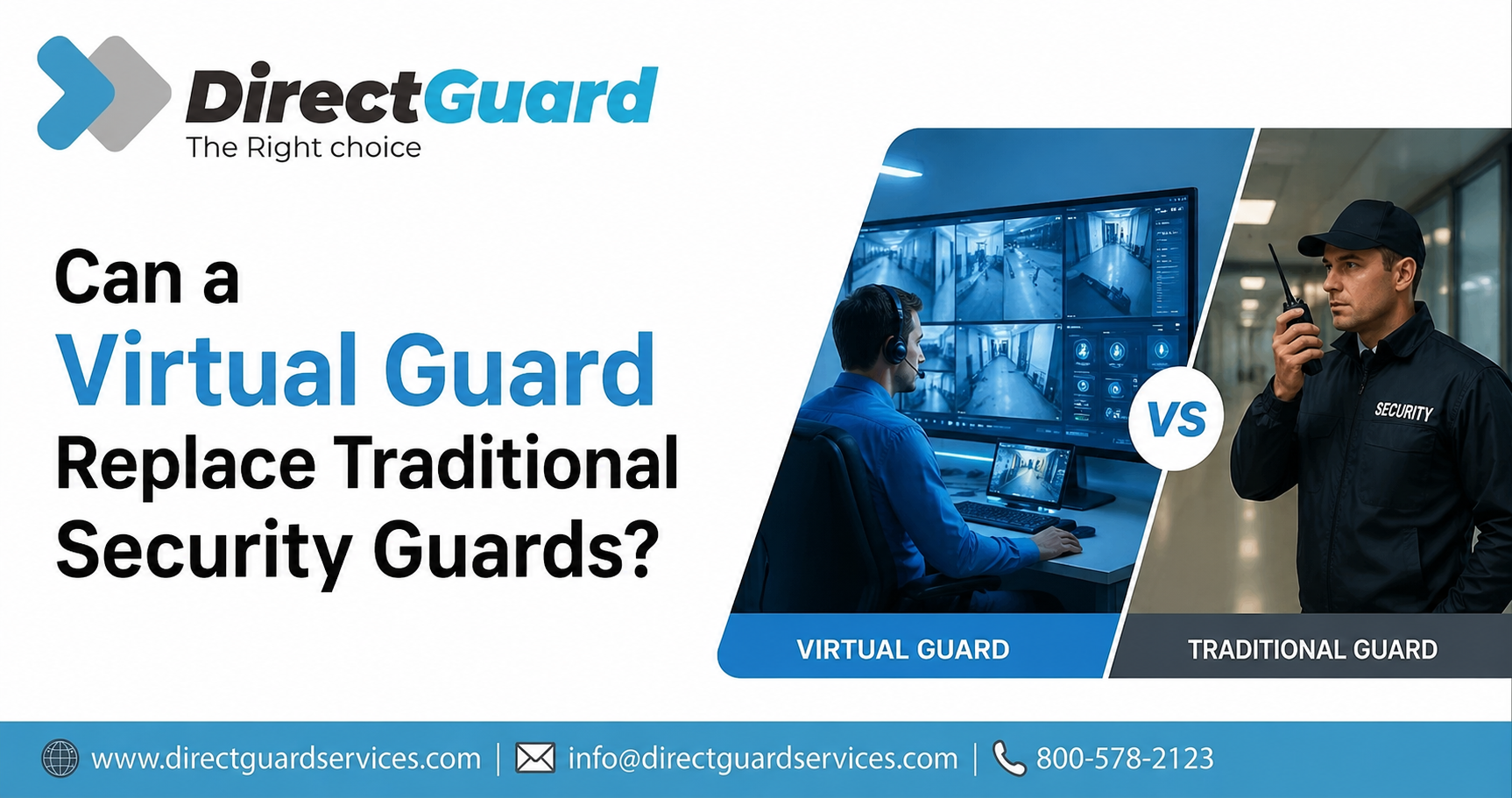
Can a Virtual Guard Replace Traditional Security Guards?

Quick Answer

Hiring security today isn’t as simple as it used to be.

On one hand, traditional guards offer a physical presence. On the other hand, virtual guards promise 24/7 monitoring, faster detection, and lower costs. So naturally, businesses are asking:
Can a virtual guard actually replace traditional security guards?

This isn’t just a trend-driven question—it’s a business-critical decision that affects safety, costs, and operational efficiency.

In this guide, we’ll break down the virtual guard vs traditional security guards debate in depth—covering not just features, but real-world performance, risks, and the smartest way to secure your property.

What Is a Virtual Guard?

A virtual guard is a remote security professional supported by advanced surveillance technology to monitor and protect properties in real time.

How Virtual Guards Work in Practice

Virtual guarding is not just “watching cameras.” It’s an active, layered system:

  1. Smart cameras monitor your property 24/7
  2. AI detects unusual activity (movement, loitering, intrusion)
  3. Alerts are triggered instantly
  4. A trained remote guard verifies the threat
  5. Action is taken (audio warning, alarm, or police dispatch)

Why This Matters

Unlike passive CCTV systems, virtual guards actively intervene, which significantly reduces crime before it escalates.

What Are Traditional Security Guards?

Traditional security guards are physically present personnel responsible for protecting a location through observation and direct action.

Direct Answer:

Traditional guards provide on-site security by patrolling, monitoring activity, and physically responding to incidents.

How They Operate Daily

  • Conduct patrols across the property
  • Monitor entry and exit points
  • Respond to suspicious activity
  • Assist employees or visitors

Why They Are Still Important

Their physical presence creates an immediate sense of control and authority—something technology alone cannot fully replicate.

Virtual Guard vs Traditional Security Guards: Key Differences Explained

FeatureVirtual GuardTraditional Guard
Monitoring24/7 nonstopShift-based
CoverageMultiple locationsOne location
CostLowerHigher
Response SpeedInstant alertsDepends on proximity
Physical ActionNoYes
AccuracyAI-assistedHuman-dependent

How Virtual Guards Actually Prevent Crime

Many people assume virtual guards only “watch” incidents—but in reality, they prevent them.

Step-by-Step Crime Prevention

  • Detection: AI identifies suspicious behavior early
  • Verification: A remote guard confirms the threat
  • Intervention: Loudspeaker warnings are issued
  • Escalation: Authorities are contacted if needed

Real Impact

For example, if someone enters a restricted area at night:

  • A loud voice warns them immediately
  • Most intruders leave before committing a crime

This proactive approach often stops incidents before damage occurs.

Advantages of Virtual Guards (Deep Dive)

1. True 24/7 Monitoring Without Human Limitations

Traditional guards work in shifts and can experience fatigue. Virtual guards operate continuously without breaks.

Result: No blind spots in surveillance

2. Major Cost Savings Over Time

Hiring multiple guards for round-the-clock coverage is expensive.

Example:

  • 3 shifts per day = multiple guards
  • Salaries + overtime + benefits

Virtual systems eliminate most of these costs.

Businesses often save 40–60% annually

3. Faster Detection and Response

AI systems don’t “miss” activity.

Example:

  • A guard might overlook movement during patrol
  • AI detects it instantly and triggers an alert

Result: Faster response = reduced risk

4. Scalable Across Multiple Locations

A single monitoring center can handle multiple properties.

Ideal for:

  • Multi-site businesses
  • Warehouses
  • Retail chains

5. Data-Driven Security

Virtual systems provide:

  • Incident reports
  • Recorded footage
  • Analytics

This helps improve long-term security planning.

Advantages of Traditional Security Guards (Deep Dive)

1. Immediate Physical Intervention

If a situation escalates, a guard can act instantly.

Example:

  • Stop a trespasser
  • Assist during emergencies

This is something virtual guards cannot do.

2. Strong Visual Deterrence

A physical guard can prevent crimes simply by being visible.

Criminals often avoid guarded locations entirely.

3. Human Judgment in Complex Situations

Not all threats are obvious.

Humans can:

  • Read behavior
  • De-escalate situations
  • Make quick decisions

4. Customer Interaction and Support

In places like offices or malls, guards also:

  • Guide visitors
  • Provide assistance

This adds value beyond security.

Real-World Use Cases

1. Warehouses

Virtual guards monitor large spaces efficiently.

Result:

  • Faster intrusion detection
  • Lower costs

2. Construction Sites

These sites are often empty at night, making them vulnerable.

Virtual monitoring detects:

  • Equipment theft
  • Unauthorized access

3. Corporate Offices

Most offices now use a hybrid approach:

  • Virtual monitoring overnight
  • Physical guards during working hours

Hidden Costs of Traditional Security Guards

Many businesses underestimate the real cost of hiring guards.

Beyond Salary, You Pay For:

  • Training and onboarding
  • Employee turnover
  • Insurance and liability
  • Overtime and scheduling issues

Over time, these costs add up significantly.

Limitations of Virtual Guards

Direct Answer:

Virtual guards cannot physically intervene and rely heavily on technology.

Key Limitations

  • No on-site presence
  • Dependence on the internet and equipment
  • Not ideal for high-risk or unpredictable environments

This is why they don’t fully replace guards in every scenario.

Risk of Choosing the Wrong Security Model

Choosing the wrong solution can lead to serious consequences:

Common Mistakes

  • Using only guards for large areas → high costs
  • Using only cameras in high-risk areas → weak response
  • Ignoring hybrid solutions → missed opportunities

The wrong choice can mean:

  • Increased theft
  • Delayed response
  • Higher long-term expenses

Hybrid Security Model: The Best Strategy Today

Instead of choosing one, many businesses combine both.

How It Works

  • Virtual guards monitor continuously
  • Physical guards respond when needed

Why It Works Best

  • Reduces costs
  • Improves response time
  • Provides complete coverage

This is considered the most effective modern security solution.

How to Choose the Right Security Solution

1. Choose Virtual Guards If:

  • You need 24/7 monitoring
  • You want to reduce costs
  • Your property is large or remote

2. Choose Traditional Guards If:

  • You need physical presence
  • Your location is high-risk
  • Customer interaction is required

3. Choose Hybrid Security If:

  • You want the best overall protection
  • You need both efficiency and response

Expert Insight

Based on industry trends, most businesses are not fully replacing guards—they are optimizing them with virtual systems.

The future of security is not replacement—it’s integration.

Final Verdict

So, can a virtual guard replace traditional security guards?

Yes—but only in the right situations.

  • Virtual guards = efficiency, cost savings, constant monitoring
  • Traditional guards = physical presence, human response
  • Hybrid model = the smartest and most effective solution

Call to Action

If you’re ready to upgrade your security with a smarter and more cost-effective approach, Direct Guard Services offers tailored solutions combining virtual monitoring and on-site protection.

FAQs

1. Can a virtual guard replace traditional security guards?

Yes, virtual guards can replace traditional guards in low-risk environments, but not where physical presence is required.

2. Are virtual guards reliable?

Yes, they offer consistent, real-time monitoring with AI support, reducing human error.

3. Do virtual guards prevent crime?

Yes, real-time detection and audio warnings help stop incidents before they escalate.

4. How much does a virtual guard cost?

Virtual guards can reduce costs by up to 60% compared to traditional security.

5. Is hybrid security better?

Yes, combining both provides the best balance of cost, coverage, and protection.

What is Difference Between Bodyguards and Executive Protection Security Guards

You’ve seen it in movies — a hulking figure standing behind a celebrity, scanning the crowd with sunglasses on. But real-world personal security is a lot more nuanced than Hollywood makes it look. If you’ve ever wondered whether you need a bodyguard or an executive protection specialist, you’re not alone — and the answer genuinely matters.

Many people use the terms bodyguard and executive protection security guard interchangeably. But in the professional security industry, these are two meaningfully different roles — with different training, different skill sets, and different purposes. Understanding the distinction helps you make the right choice when protecting yourself, your family, or your business leadership.

This guide breaks it all down clearly so you can make an informed decision about your personal security needs in California.

Who is a Bodyguard?

The term “bodyguard” comes from a tradition of personal protection that dates back centuries — loyal individuals assigned to shield a person from harm physically. In modern usage, a bodyguard typically refers to a close protection officer whose primary job is to intervene when a client is threatened physically.

Bodyguards are commonly associated with celebrities, high-profile athletes, and public figures who face direct, immediate personal threats — fans getting too close, paparazzi becoming aggressive, or credible threats from hostile individuals.

What a bodyguard typically focuses on:

  • Physical presence and visible deterrence at events or public appearances
  • Immediate physical response to threats or confrontations
  • Escorting clients through crowds, venues, and high-exposure situations
  • Standing watch at residences, hotels, or temporary locations
  • Short-term or event-specific protective assignments

While bodyguards are often highly skilled in physical defense and conflict management, their role is generally more reactive — responding to threats as they emerge rather than planning to prevent them in advance.

Who is an Executive Protection Security Guard?

Executive protection — sometimes called EP or close protection — is a significantly more sophisticated and comprehensive discipline. An executive protection security guard doesn’t just react to danger. Their job is to engineer an environment where danger is unlikely to reach the client in the first place.

EP officers are trained professionals who combine threat intelligence, route planning, coordination with law enforcement, crisis communication, and physical security skills into a seamless protective detail. They’re typically deployed for corporate executives, high-net-worth individuals, diplomats, politicians, and family members who require sustained, professional protection — not just for a single event, but as part of their ongoing daily life.

What executive protection security involves:

  • Comprehensive threat assessment and risk analysis before any movement
  • Advance work — scouting venues, routes, and entry/exit points before the client arrives
  • Coordinating multi-person security details for high-profile principals
  • Intelligence gathering and monitoring potential threats over time
  • Secure travel logistics, including motorcade planning and airport coordination
  • Emergency response planning and rehearsed evacuation protocols
  • Crisis communication and media management in high-exposure situations
  • Cyber and digital threat awareness for high-value individuals
  • 24/7 residential and office security integration

Key Differences: Bodyguard vs Executive Protection Security

Let’s look at this side by side. The contrast between a bodyguard and executive protection security guard becomes clearest when you look at their approach, training depth, scope of work, and the nature of the clients they serve.

Side-by-Side Comparison

FactorBodyguardExecutive Protection Officer
Primary rolePhysical close protectionFull-spectrum threat prevention
ApproachReactiveProactive and intelligence-led
DurationEvent-based or short-termOngoing, sustained engagement
Planning depthLimited pre-event preparationExtensive advance work, route planning, threat analysis
Team sizeUsually solo or small teamCoordinated multi-officer details
Client profileCelebrities, athletes, public figuresExecutives, diplomats, HNWIs, political figures
Training backgroundPhysical security, self-defenseTactical ops, intelligence, crisis mgmt, communications
Digital/cyber awarenessRarely includedOften integrated into protection plan
Cost levelModeratePremium — reflects broader scope and expertise

Not Sure Which Protection Level is Right for You

Our security consultants assess your personal risk profile and recommend the right solution — at no cost to you.


When Do You Need a Bodyguard?

A traditional bodyguard service is the right choice when your security need is specific, immediate, and primarily physical in nature. Here are situations where hiring a bodyguard makes sense:

  • You’re a public figure, entertainer, or athlete attending a high-profile event or public appearance.
  • You’ve received a specific, credible personal threat that requires immediate protective response.
  • You need personal protection during a short trip, tour, or one-time occasion.
  • You’re navigating a volatile personal situation — such as a contentious legal dispute — that increases personal risk temporarily.
  • You need someone to manage crowd control around yourself or your family in a public setting.
  • You want a visible deterrent presence at a private party, business meeting, or media event.

“Bodyguard protection is about having the right person standing between you and a threat. Executive protection is about ensuring that the threat never reaches you.”

When Do You Need Executive Protection?

Executive protection security is appropriate when the risks are sustained, complex, and multi-dimensional — not just physical, but reputational, logistical, and strategic. You should consider professional EP services when:

  • You’re a C-suite executive, business owner, or high-net-worth individual with an elevated public profile.
  • You regularly travel domestically or internationally in high-risk contexts.
  • Your business or personal decisions have created credible, ongoing threats from hostile parties.
  • You need coordinated security across your home, office, and travel — not just at events.
  • Your family members — including children — require protective coverage.
  • You’re a diplomat, government official, or political figure requiring protocol-sensitive protection.
  • Your organization is managing a high-stakes event, merger, or situation that elevates personal risk temporarily but substantially.

68%

Fortune 500 CEOs have some form of personal security protection

3x

more effective — proactive EP vs reactive bodyguard at preventing incidents

24/7

coverage standard for full executive protection details

What Executive Protection Officers Do Every Day

People often underestimate how much work goes into a professional executive protection detail before the client even leaves their front door. Here’s what a typical day looks like for an EP officer:

Before the client moves:

  • Conduct advance reconnaissance of all locations on the day’s itinerary
  • Identify entry and exit routes — primary and emergency alternatives
  • Verify venue security protocols and coordinate with on-site staff
  • Review current threat intelligence for the client and their known adversaries
  • Brief the full security team on the updated movement plan and contingency protocols

During client movements:

  • Maintain formation integrity — controlling the space around the principal at all times
  • Communicate in real time with support team members via secure channels
  • Monitor surroundings for behavioral anomalies and potential hostile actors
  • Manage unexpected schedule changes with rapid re-routing and threat re-assessment
  • Coordinate with local law enforcement when crossing jurisdictions or high-risk zones

After the assignment:

  • File detailed incident and observation reports
  • Debrief team on anomalies observed during the day
  • Update the client’s ongoing threat assessment with any new intelligence
  • Review and refine security protocols based on the day’s experience

This level of operational depth is why professional executive protection services require dedicated, highly trained specialists — not general-purpose security guards.

Training and Qualifications Compared

The training gap between a standard bodyguard and a certified executive protection officer is significant. This isn’t a knock on bodyguards — it’s simply a reflection of the different demands each role places on the individual.

Bodyguard training typically includes:

  • California Guard Card certification (BSIS)
  • Physical defense and conflict management
  • Basic first aid and CPR
  • Crowd management fundamentals
  • Firearms training (for armed assignments)

Executive protection officer training typically includes:

  • California Guard Card + advanced EP certification
  • Threat assessment and intelligence analysis
  • Tactical driving and evasive vehicle maneuvers
  • Advance work methodology and venue security protocols
  • Counter-surveillance and anti-surveillance techniques
  • Emergency medical training — often EMT-level
  • Crisis communications and media management
  • Cybersecurity awareness for high-value principals
  • Firearms proficiency and use-of-force continuum training
  • International travel security protocols

In California, all security guards — including EP officers — must hold a valid Guard Card issued by the Bureau of Security and Investigative Services (BSIS). For armed personnel, additional permits and ongoing qualification requirements apply. Direct Guard Services ensures all its EP officers meet and exceed California’s licensing requirements.

Cost Considerations: Bodyguard vs Executive Protection

Cost is often one of the first questions clients ask — and it’s an important one. Here’s an honest framework for thinking about the investment in bodyguard vs executive protection security.

Standard bodyguard services are generally charged on an hourly or event-day rate, reflecting their focused, reactive scope. Costs vary based on armed vs. unarmed status, geographic location, and risk level of the assignment.

Executive protection services are typically priced at a higher rate — reflecting the depth of pre-assignment preparation, the specialized skill set of EP officers, team coordination requirements, and the ongoing nature of the engagement. However, for the right client profile, the value of preventing a single serious incident far outweighs the cost differential.

Important: The cheapest option is rarely the right one when it comes to personal security. What matters is whether the service level matches the actual risk your situation presents. Direct Guard Services will always recommend the right solution — not the most expensive one.

For an accurate quote tailored to your specific needs, contact our team at Direct Guard Services. We serve clients across Los Angeles, San Diego, Orange County, Sacramento, San Francisco, and throughout California.

How to Choose the Right Personal Security Service in California

Choosing between a bodyguard and an executive protection security guard ultimately comes down to an honest assessment of your risk profile, the nature of your daily movements, and how long the protective need is likely to last.

Ask yourself these questions:

  • Is my security need event-specific or ongoing?
  • Am I facing a physical, immediate threat or a broader, sustained risk pattern?
  • Do I need protection only for myself, or also for family members?
  • Does my professional profile or public visibility create exposure that requires proactive intelligence management?
  • Do I travel frequently in ways that create predictable vulnerability windows?
  • Has my risk environment changed recently — new business deal, public dispute, raised media profile?

If your answers skew toward immediate, isolated, and physical, a professional bodyguard service is likely sufficient. If your answers point to sustained, complex, and multi-layered risk, executive protection services are the appropriate solution.

Direct Guard Services offers both, and our experienced consultants can help you determine exactly what level of protection your situation calls for. You can also explore our full range of security services or learn about our approach to client-centered security planning.


Your personal security deserves a professional assessment

Whether you need a bodyguard for an event or a full executive protection detail, we’ll build the right plan around your needs.


Final Thoughts: The Right Protection Starts with the Right Question

The difference between a bodyguard and an executive protection security guard isn’t just a matter of titles or price points. It’s a fundamental difference in philosophy, capability, and scope. One reacts. The other prevents.

If your situation calls for a visible, reliable physical presence at an event or during a specific high-risk period, a professional bodyguard service will serve you well. If your life, career, or business creates ongoing, complex security demands, then investing in a professional executive protection security program is not just smart, it’s essential.

At Direct Guard Services, we’ve spent years building both capabilities — deploying trained, licensed, professional security personnel for everything from event security to full executive protection details across California. We take the time to understand your actual risk environment before recommending a single officer or designing a multi-person detail.

Because the best security isn’t the most expensive security — it’s the right security, delivered by people who know what they’re doing.

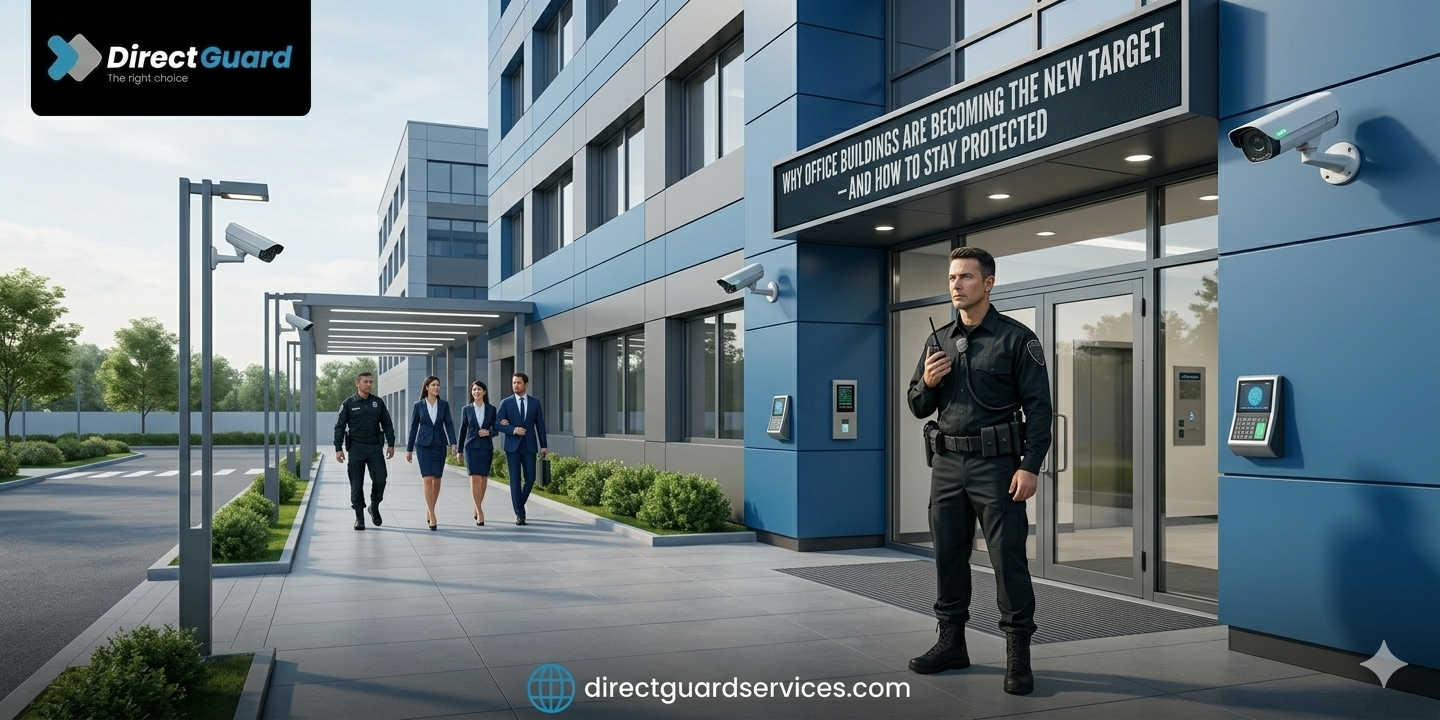
Why Office Buildings Are Becoming the New Target — And How to Stay Protected

Introduction

Office buildings were once considered safe and controlled environments where employees could work without major security concerns. However, that reality has changed.

Today, office spaces are increasingly becoming targets for theft, unauthorized access, and workplace incidents. As businesses evolve, so do the risks surrounding them. A lack of proper security can expose companies to serious financial and operational damage.

Understanding why this shift is happening is the first step toward building a strong protection strategy.

Why Office Buildings Are Becoming Easy Targets

Modern office environments have introduced several vulnerabilities that make them attractive targets.

Increased Public Access

Many office buildings allow frequent entry for visitors, vendors, and delivery personnel. Without proper monitoring, this creates opportunities for unauthorized access, suspicious activity, and theft.

Hybrid Work Environment

Flexible work schedules mean offices are often partially empty. This creates gaps in monitoring and increases the chances of incidents going unnoticed.

High-Value Equipment

Office spaces contain valuable assets such as computers, servers, and sensitive data systems. These items are easy targets when proper protection is not in place.

Lack of Visible Security

Buildings without a visible security presence often appear vulnerable. This can attract individuals looking for easy opportunities.

Rising Workplace Safety Concerns

Workplace incidents, including unauthorized entry and internal conflicts, are becoming more common, increasing the need for proactive measures.

Common Security Risks in Office Buildings

Understanding the risks helps businesses prepare effectively.

Unauthorized Access

Individuals entering restricted areas without permission can compromise safety and operations.

Theft and Burglary

Office equipment, employee belongings, and sensitive materials are common targets.

Vandalism

Property damage often occurs after working hours when buildings are less monitored.

Data Security Threats

Physical access to systems can lead to serious data breaches.

Workplace Violence

Conflicts within or outside the organization can escalate if not properly managed.

How to Stay Protected

A proactive approach to office building security can significantly reduce risks.

Hire Professional Security Guards

A trained security presence provides real-time monitoring, quick response, and strong deterrence against threats.

Implement Access Control Systems

Using ID cards, visitor logs, and controlled entry points ensures only authorized individuals can enter the premises.

Install Surveillance Systems

CCTV systems help with continuous monitoring, evidence collection, and threat detection.

Secure Entry and Exit Points

Limiting and monitoring entrances improves overall control and reduces vulnerability.

Conduct Regular Risk Assessments

Evaluating potential weaknesses allows businesses to identify risks early and take preventive action.

Emergency Preparedness

Having clear procedures for emergencies ensures quick and organized responses to unexpected situations.

The Impact on Employees

Security plays a major role in employee well-being.

When employees feel safe:

  • Productivity improves
  • Stress levels decrease
  • Workplace satisfaction increases

A secure environment supports both individual performance and overall business success.

Long-Term Benefits of Strong Security

Investing in office building security provides long-term advantages.

  • Reduced financial losses
  • Lower legal and liability risks
  • Improved business reputation
  • Higher employee retention
  • Better operational stability

Security is not just about preventing incidents—it supports long-term growth and continuity.

Real-World Perspective

Consider a situation where an office building operates without proper security measures.

An unauthorized individual enters unnoticed, leading to stolen equipment and compromised data. The business then faces financial losses, operational delays, and reputational damage.

Such incidents highlight how easily risks can turn into serious problems when security is overlooked.

Final Thoughts

Office buildings are no longer low-risk environments. As threats continue to evolve, businesses must take security seriously.

A well-planned approach helps protect assets, employees, and daily operations. Ignoring security is no longer an option, especially when the cost of inaction can be far greater than the investment in protection.

Businesses that prioritize security are better prepared, more resilient, and positioned for long-term success.

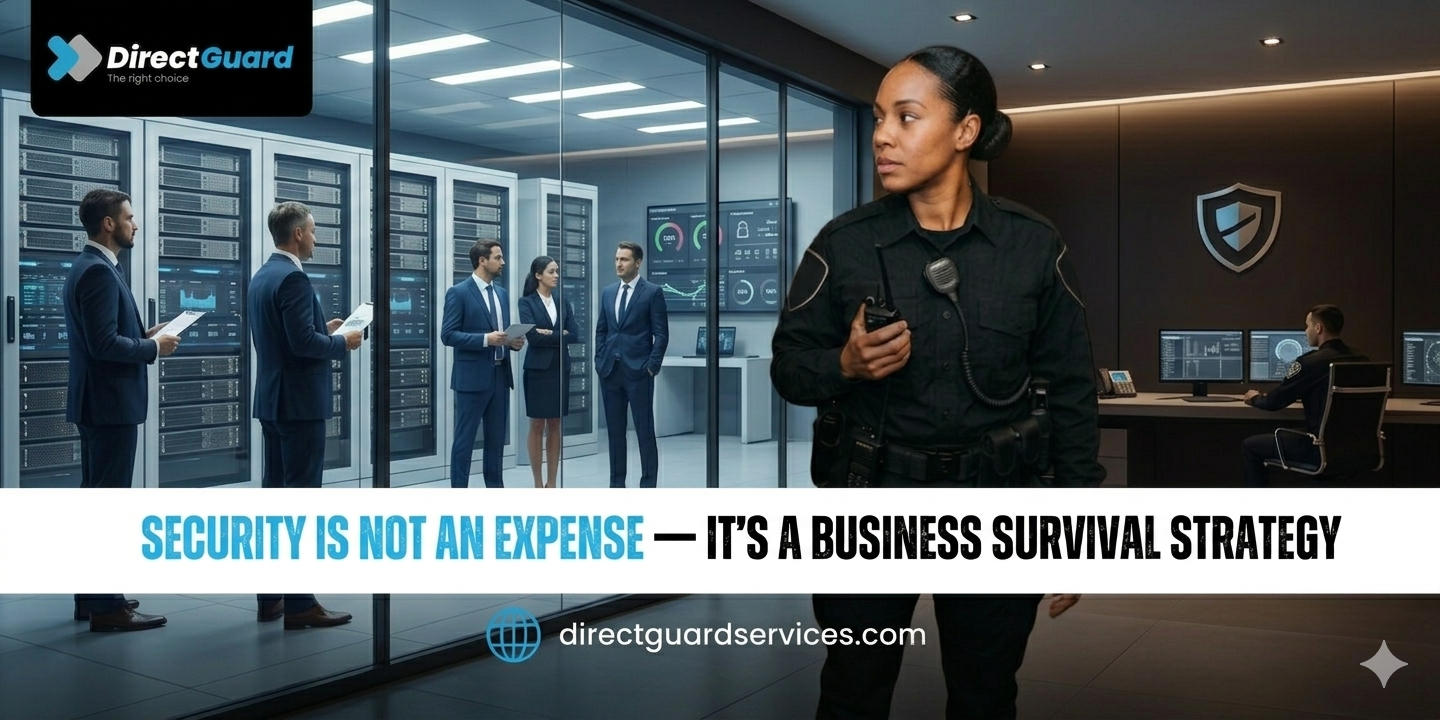
Security Is Not an Expense — It’s a Business Survival Strategy

Introduction

Most business owners think of security as just another cost on the balance sheet. Something to “handle later” or reduce when budgets get tight.

But here’s the truth: a strong business security strategy is not an expense — it’s what keeps your business alive.

From theft and vandalism to liability risks and safety threats, businesses today face more challenges than ever before. Without proper protection, one incident can cost thousands—or even shut operations down completely.

In this blog, we’ll break down why investing in a business security strategy is one of the smartest decisions you can make.

The Real Cost of Ignoring Security

Many businesses underestimate how expensive not having security can be.

Here’s what you risk without a proper business security strategy:

  • Financial Losses: Theft, property damage, and fraud
  • Operational Downtime: Business interruptions due to incidents
  • Legal Liability: Lawsuits due to negligence or unsafe environments
  • Reputation Damage: Loss of customer trust
  • Employee Safety Risks: Unsafe workplaces reduce productivity and morale

One security breach can cost far more than years of professional security services.

What Is a Business Security Strategy?

A business security strategy is a complete plan designed to protect your:

  • Property
  • Employees
  • Customers
  • Assets
  • Daily operations

It combines:

  • Physical security (guards, patrols)
  • Surveillance systems
  • Risk assessment
  • Emergency response planning

Instead of reacting to problems, it helps you prevent them before they happen.

Why Security Is a Business Survival Strategy

1. Prevention Is Always Cheaper Than Recovery

Recovering from an incident is expensive and time-consuming.

With a solid business security strategy:

  • Risks are identified early
  • Threats are reduced before escalation
  • Losses are minimized or completely avoided

Prevention saves money, time, and stress.

2. Protecting Revenue and Assets

Your business relies on:

  • Equipment
  • Inventory
  • Infrastructure

Without proper security:

  • Theft can disrupt operations
  • Damage can delay projects
  • Losses directly impact profits

Professional security ensures your assets are protected 24/7.

3. Enhancing Employee Safety and Productivity

Employees perform better when they feel safe.

A strong business security strategy:

  • Reduces workplace incidents
  • Builds confidence among staff
  • Improves overall productivity

Safe environments lead to better performance and lower turnover.

4. Building Customer Trust

Customers notice security.

Whether it’s a retail store, office building, or event:

  • Visible security creates confidence
  • Customers feel protected
  • Businesses appear more professional

Trust leads to repeat business and long-term growth.

5. Avoiding Legal and Compliance Issues

Many industries require security measures to meet regulations.

Without proper protection:

  • You may face fines
  • You risk lawsuits
  • You can lose operating licenses

A proper business security strategy helps ensure:

  • Compliance with safety standards
  • Reduced legal risks
  • Smooth operations

Industries That Need Strong Security the Most

Every business benefits from security, but some industries face higher risks:

Commercial Buildings

  • Unauthorized access
  • Property damage
  • Employee safety concerns

Construction Sites

  • Equipment theft
  • Vandalism
  • Trespassing

Retail Stores

  • Shoplifting
  • Organized retail crime
  • Inventory loss

Warehouses

  • High-value goods storage
  • Internal theft risks

Events and Public Spaces

  • Crowd control
  • Emergency situations
  • Safety management

Each industry requires a tailored business security strategy.

Key Components of an Effective Business Security Strategy

To truly protect your business, your security plan should include:

1. Professional Security Guards

  • On-site presence deters crime
  • Quick response to incidents
  • Monitoring of suspicious activity

2. Risk Assessment

  • Identifying weak points
  • Evaluating threats
  • Creating prevention plans

3. Surveillance Systems

  • CCTV monitoring
  • Real-time tracking
  • Evidence collection

4. Access Control

  • Restricted entry points
  • Visitor management
  • Employee access systems

5. Emergency Response Planning

  • Fire incidents
  • Security breaches
  • Evacuation procedures

Real-World Scenario: One Incident Can Change Everything

Imagine this:

A business skips security to save money.

One night:

  • Equipment gets stolen
  • Property is damaged
  • Operations stop for days

The result:

  • Thousands in losses
  • Missed deadlines
  • Lost clients

This is exactly why a business security strategy is not optional—it’s essential.

Security as a Long-Term Investment

Security doesn’t just protect—it adds value.

With a proper business security strategy:

  • Insurance costs may decrease
  • Business risks are minimized
  • Operations become more stable
  • Growth becomes easier

Smart businesses treat security as an investment, not an expense.

Final Thoughts

At the end of the day, security is not about spending money—it’s about protecting everything you’ve worked hard to build.

A strong business security strategy ensures:

  • Stability
  • Safety
  • Long-term success

Because when security fails, businesses don’t just lose money—they risk losing everything.